


Everything You Need to Know About Control Valves in Industrial Systems
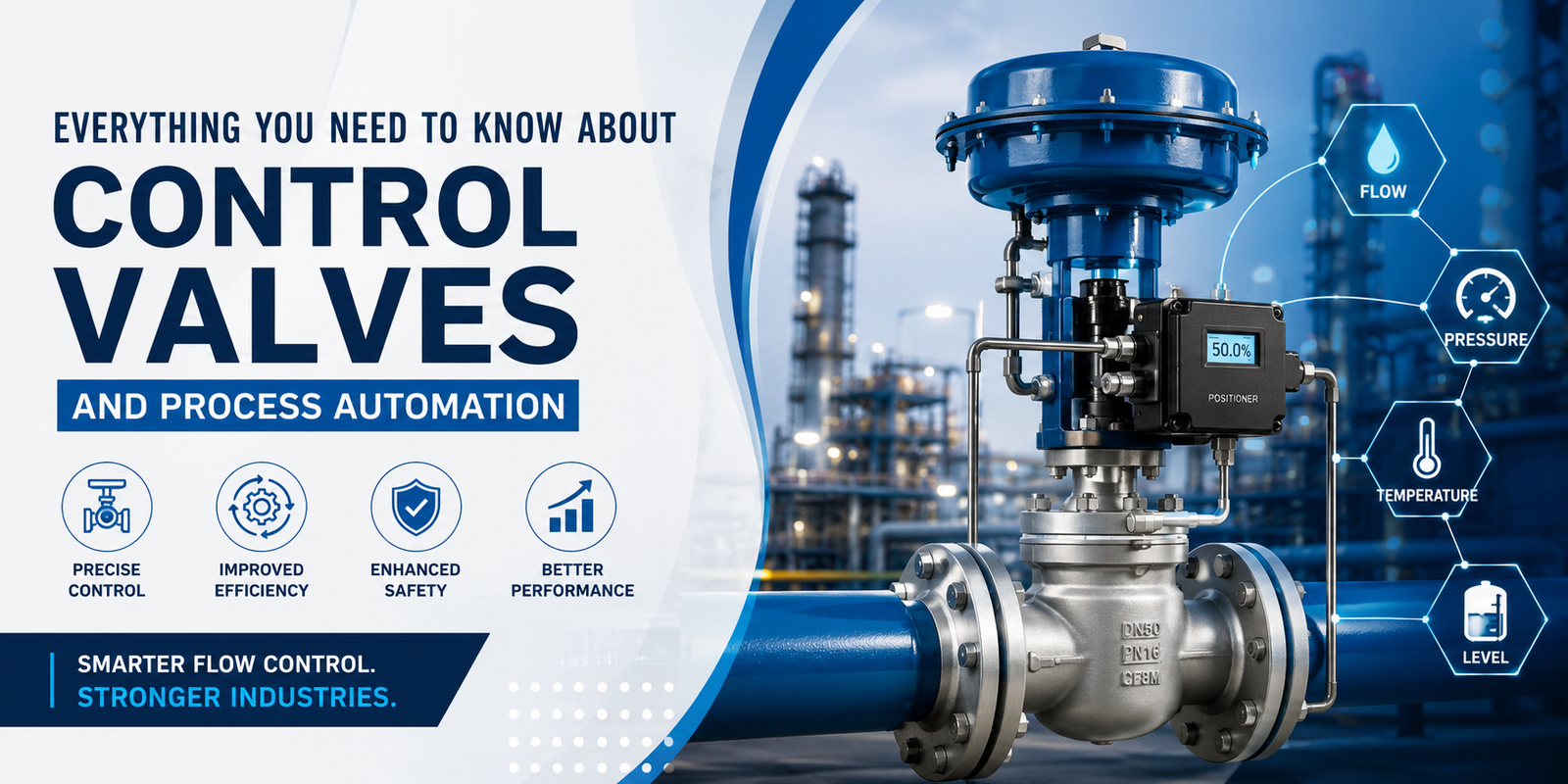
In today's industrial environment, efficiency, safety, and process accuracy are essential for maintaining productivity. Whether in power generation, chemical manufacturing, oil and gas processing, or water treatment facilities, controlling the flow of fluids and gases is a critical requirement. This is where Control Valves become indispensable.
Control valves are among the most important components in industrial automation systems. They regulate the flow of liquids, gases, steam, and other process media to ensure that operations remain within desired parameters. By maintaining consistent pressure, temperature, and flow rates, these valves help industries improve performance, reduce waste, and enhance operational safety.
Many organizations rely on trusted control valve manufacturers in india to obtain high-quality valve solutions that meet the demanding requirements of modern industrial processes.
What Are Control Valves?
Control valves are mechanical devices designed to regulate fluid flow within a process system. They work by adjusting the size of the flow passage based on signals received from a control system.
In an automated process, sensors continuously monitor variables such as pressure, temperature, flow rate, or liquid level. When a deviation from the desired set point occurs, the controller sends a signal to the valve actuator, which adjusts the valve position accordingly. This automatic response helps maintain stable operating conditions throughout the system.
Because of their ability to precisely control process variables, control valves are often referred to as the final control element in industrial automation.
How Control Valves Work
The operation of a control valve involves a coordinated interaction between several components. Sensors collect process data and transmit it to a controller. The controller compares the measured value with the desired set point and determines whether corrective action is needed.
If an adjustment is required, a signal is sent to the actuator. The actuator then moves the valve stem and internal trim components to either increase or decrease fluid flow. This process happens continuously, ensuring that the system remains balanced and efficient.
The ability to make precise adjustments allows industries to maintain product quality while minimizing energy consumption and operational disruptions.
Main Components of a Control ValveValve Body
The valve body forms the primary structure of the valve and contains the internal flow path. It must be designed to withstand the pressure, temperature, and chemical properties of the process fluid.
Actuator
The actuator provides the force needed to move the valve. Common actuator types include pneumatic, electric, and hydraulic systems.
Valve Trim
The trim consists of internal components such as the stem, plug, seat, and cage. These parts directly influence flow regulation and valve performance.
Positioner
A positioner ensures that the valve reaches the exact position required by the controller signal, improving accuracy and responsiveness.
Common Types of Control Valves
Different industrial applications require different valve designs. Some of the most widely used types include:
Globe Valves
Globe valves are known for their excellent throttling capabilities and precise flow control. They are commonly used in applications where accuracy is critical.
Ball Valves
Ball valves provide quick operation and reliable shut-off performance. They are suitable for handling liquids, gases, and steam in various industrial environments.
Butterfly Valves
Butterfly valves offer a compact and cost-effective solution for controlling large flow volumes. Their lightweight design makes them ideal for large piping systems.
Plug Valves
Plug valves utilize a rotating plug mechanism and are frequently used in chemical and petrochemical applications where reliable flow control is required.
Diaphragm Valves
These valves use a flexible diaphragm to regulate flow and are commonly found in pharmaceutical, food processing, and corrosive fluid applications.
Benefits of Using Control ValvesImproved Process Efficiency
Accurate flow regulation helps maintain optimal operating conditions, leading to higher productivity and reduced resource consumption.
Enhanced Safety
Control valves prevent excessive pressure, temperature fluctuations, and unstable operating conditions that could damage equipment or create safety hazards.
Better Product Quality
Consistent process control ensures uniform production conditions, resulting in improved product quality and reduced variation.
Energy Savings
Efficient valve operation minimizes unnecessary energy usage, helping organizations lower operating costs.
Reduced Equipment Wear
By maintaining stable process conditions, control valves reduce stress on pumps, compressors, boilers, and other critical equipment.
Industrial Applications of Control ValvesOil and Gas Industry
Control valves regulate the movement of crude oil, natural gas, and refined products throughout production and processing facilities.
Power Generation
Power plants use control valves to manage steam flow, cooling water systems, feedwater control, and turbine operations.
Chemical Processing
Chemical manufacturers depend on precise flow regulation to maintain reaction conditions and ensure consistent product quality.
Water and Wastewater Treatment
Control valves help manage water distribution, filtration systems, and wastewater processing operations.
Food and Beverage Industry
In food processing facilities, valves maintain precise control of ingredients, steam, and cleaning processes while supporting hygiene requirements.
Pharmaceutical Manufacturing
Pharmaceutical companies rely on precise process control to maintain strict quality standards and regulatory compliance.
Factors to Consider When Selecting a Control Valve
Choosing the right valve requires careful evaluation of several operating conditions.
Important considerations include:
- Flow rate requirements
- Operating pressure
- Temperature range
- Fluid characteristics
- Material compatibility
- Control accuracy
- Maintenance accessibility
Working with experienced control valve manufacturers in india can help businesses identify the most suitable valve design for their specific applications. Proper valve selection improves performance, extends equipment life, and reduces maintenance costs.
The Growing Role of Smart Valve Technology
Industrial automation continues to evolve through digital technologies and intelligent monitoring systems. Modern control valves are increasingly equipped with advanced diagnostics, digital positioners, and predictive maintenance capabilities.
These smart features provide real-time performance data, allowing operators to identify potential issues before they become major failures. As a result, plants can reduce downtime, improve reliability, and optimize maintenance schedules.
Many leading control valve manufacturers in india are investing in advanced valve technologies that support Industry 4.0 initiatives and modern process automation requirements.
Conclusion
Control valves are essential components that help industrial facilities maintain efficient, safe, and reliable operations. Their ability to regulate flow, pressure, temperature, and liquid levels makes them critical to a wide range of industries, including power generation, chemical processing, oil and gas, water treatment, and manufacturing.
As industrial systems become more automated and performance-driven, the demand for high-quality valve solutions continues to grow. Partnering with trusted control valve manufacturers in india ensures access to reliable products, technical expertise, and advanced technologies that support long-term operational success. By selecting the right control valve and implementing proper maintenance practices, organizations can improve productivity, enhance safety, and achieve greater process efficiency.


 Arabic
 Français
 Español
 Português
 Deutsch
 Türkçe
 Dutch
Dutch
 Italiano
 Russian
 Romaian
 Portuguese (Brazil)
 Greek
Greek