


Boarding Schools in India Launch Teen Policy Labs to Simulate Governance
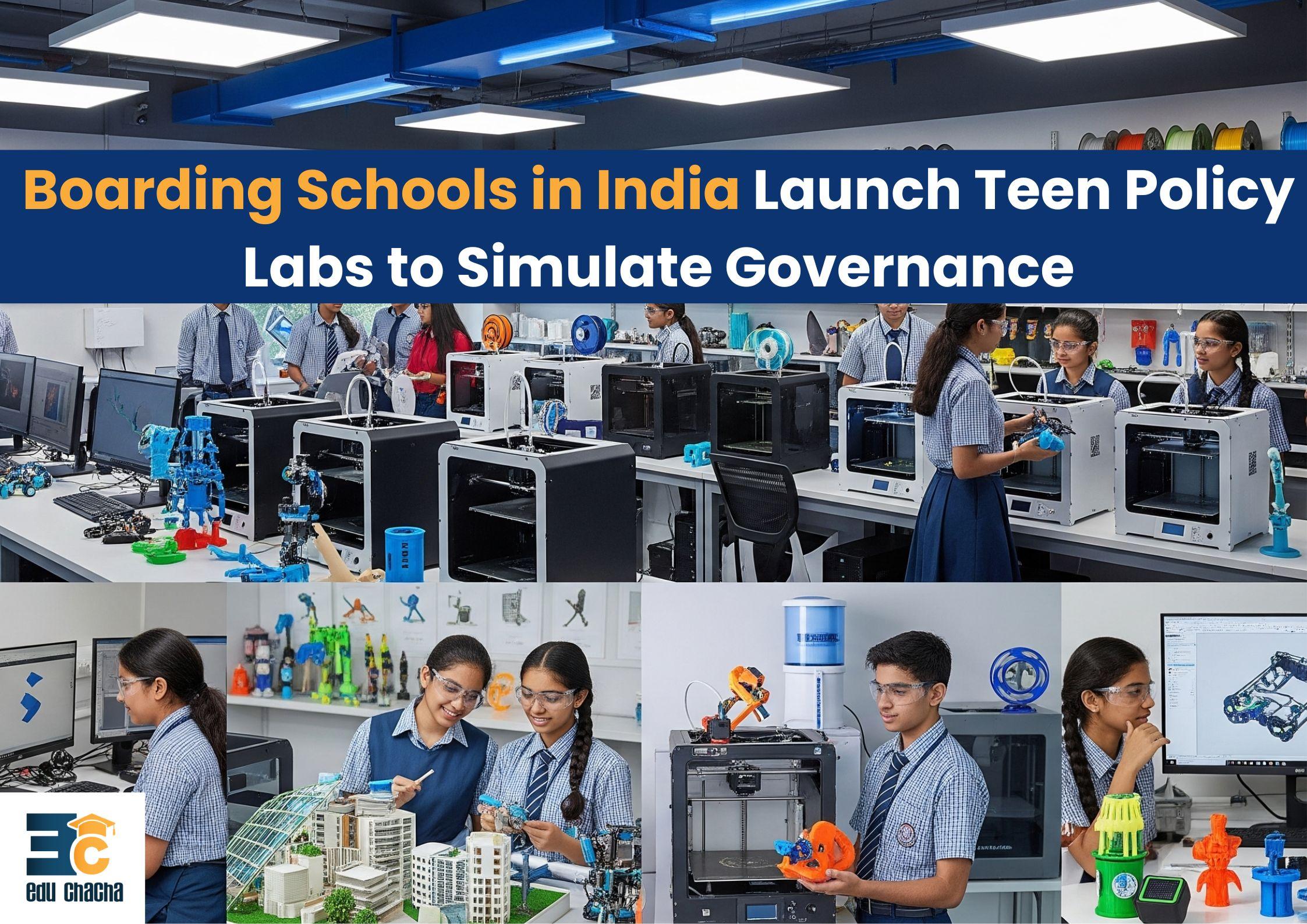
Boarding schools in India are constantly finding innovative methods to prepare students for an ever-changing world.
A recent development showing great promise is the Teen Policy Lab. These unique spaces allow students to grasp how government and policymaker operate—as well as taking part in those processes.
By confronting real issues within a controlled setting— one designed for learning— youngsters enhance skills (such as leadership, critical thinking, and problem-solving) with applications that reach far beyond school walls.
What Are Teen Policy Labs?
Teen Policy Labs are interactive programs designed to immerse students in the processes of government and policymaking. Students participate in simulations that mimic legislative, administrative, and judicial functions, often taking on roles such as lawmakers, ministers, or advisors. These labs encourage students to debate, draft policies, analyze social issues, and propose actionable solutions, all under the guidance of educators and mentors.
Why Boarding Schools Are Adopting Policy Labs
Boarding schools provide a unique environment for such initiatives because of their residential and collaborative setup. Key reasons for their adoption include:
-
Holistic Education: Beyond academics, policy labs help students develop life skills such as negotiation, collaboration, and leadership.
-
Safe Experimental Space: Students can test ideas and learn from failures without real-world consequences.
-
Exposure to Governance: Teens gain firsthand insights into policymaking, civic responsibility, and the challenges of governance.
-
Teamwork and Collaboration: Simulations require students to work in teams, building communication and interpersonal skills essential for future leaders.
How Teen Policy Labs Work
Typical activities in a teen policy lab include:
-
Role-Playing Simulations: Students take on roles such as ministers, legislators, judges, or citizens, engaging in debates, drafting policies, and making governance decisions.
-
Case Study Analysis: Students examine current social, environmental, or economic issues, learning to approach problems critically and devise practical solutions.
-
Mock Elections and Referendums: Students participate in democratic exercises, understanding voting systems, campaign strategies, and public engagement.
-
Workshops and Mentorship: Experts in governance, law, and public policy guide students through real-world applications of their simulations.
Benefits of Teen Policy Labs
The impact of these labs extends far beyond the immediate classroom experience:
-
Enhanced Critical Thinking: Students learn to evaluate multiple perspectives, assess risks, and make informed decisions.
-
Leadership Development: By assuming roles of responsibility, students build confidence and decision-making skills.
-
Civic Awareness: Students gain a deeper understanding of societal issues, democracy, and the responsibilities of citizenship.
-
Career Inspiration: Exposure to governance and policymaking can inspire careers in public service, law, social entrepreneurship, and diplomacy.
Success Stories in India
Several boarding schools across India have already embraced Teen Policy Labs:
-
Welham Boys’ School, Dehradun: Runs a policy lab program that allows students to simulate government committees and draft policy proposals for social issues.
-
The Doon School, Dehradun: Students engage in structured simulations of parliamentary proceedings and policy debates, fostering critical reasoning and public speaking skills.
-
Rishi Valley School, Andhra Pradesh: Focuses on sustainable development and local governance, encouraging students to propose community-centered policy solutions.
The Future of Teen Policy Labs
As India’s education landscape evolves, Teen Policy Labs are likely to become a standard feature in boarding schools. Future directions may include:
-
Collaboration with Government and NGOs: Students could participate in real-world projects and policy consultations.
-
Integration with Technology: Virtual reality and AI simulations could enhance the realism and scale of policy exercises.
-
Global Exchanges: Collaborations with international schools could enable students to work on transnational issues, fostering global citizenship.
Conclusion
Teen policy labs provide a new way of looking at civic education in boarding schools across India.
These labs combine experiential learning with simulations to equip students with the skills, knowledge, and attitudes they need for leadership roles as well as being good citizens— and it appears to be working!
As more schools get on board using this innovative approach, more students will be prepared for dealing with the complexities of governance societal changes, and policymaking today.




 English
 Arabic
 French
 Spanish
 Deutsch
 Turkish
 Dutch
Dutch
 Italiano
 Russian
 Romaian
 Portuguese (Brazil)
 Greek
Greek