


What is Teeth Whitening? Benefits, Process, Safety & Facts Explained
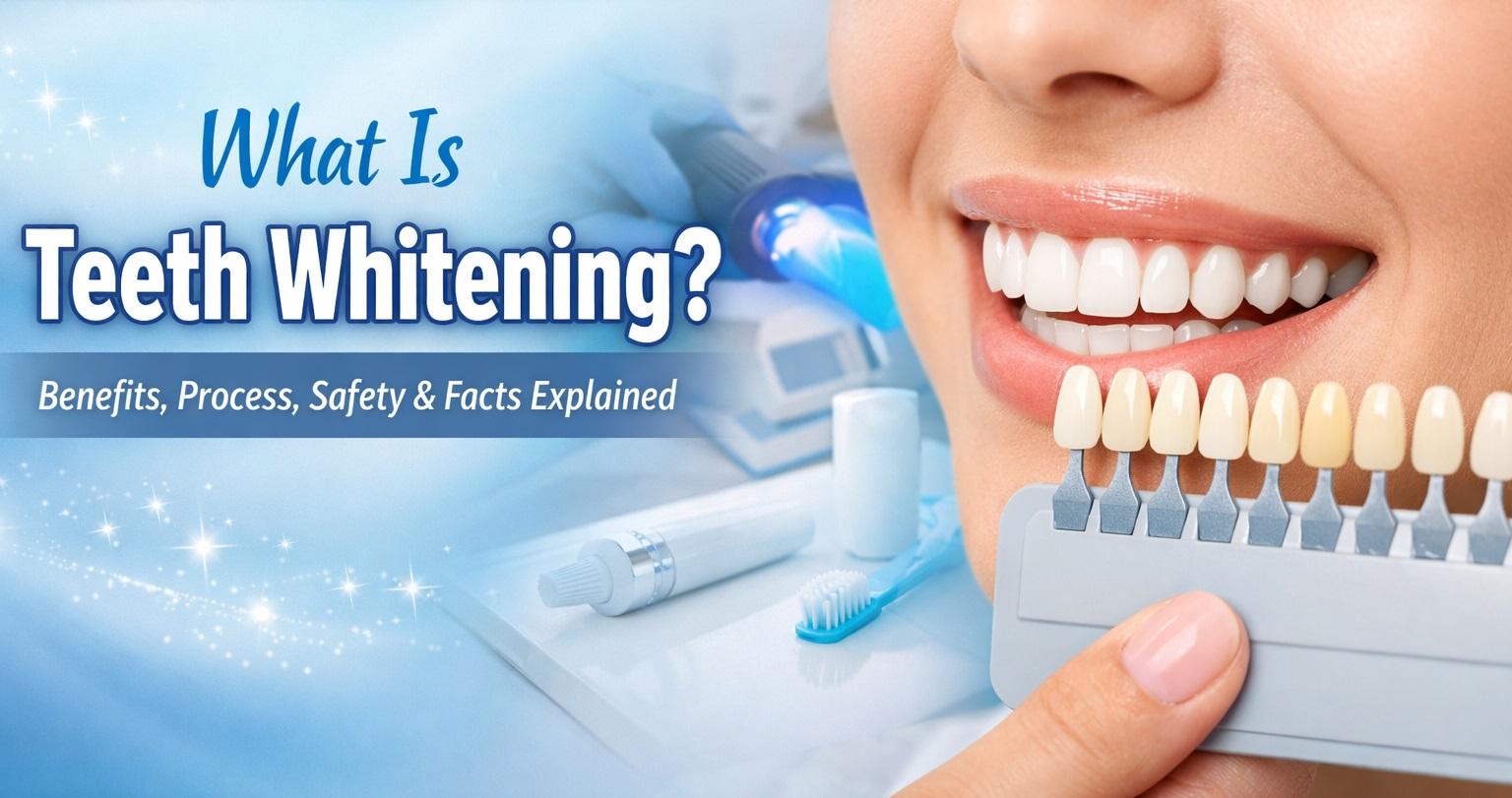
Teeth whitening is one of the most commonly discussed dental cosmetic procedures, yet many people are unsure what it actually involves. While the term is widely used, the process, science, benefits, limitations, and safety aspects of teeth whitening are often misunderstood. This article provides a detailed, factual, and educational explanation and answer for users asking what is teeth whitening, how it works, and what to expect.
What is Teeth Whitening?
Teeth whitening is a cosmetic dental procedure designed to lighten the color of teeth and reduce stains or discoloration. It does not change the natural structure of the teeth but works by breaking down stain molecules that cause discoloration.
Whitening is considered a non-invasive smile design treatment and focuses solely on improving tooth color, not tooth health or alignment.
Understanding Teeth Discoloration
It is important to understand why teeth become discolored in the first place. Teeth are naturally off-white rather than pure white. Over time, their color can change due to several internal and external factors.
Types of Tooth Stains
Tooth discoloration generally falls into three categories:
1. Extrinsic stains: These occur on the outer layer of the tooth (enamel). Common causes include:
- Coffee and tea
- Red wine
- Tobacco use
- Dark-colored foods
- Poor oral hygiene
2. Intrinsic stains: These stains develop inside the tooth structure (dentin) and are often more difficult to remove. Causes include:
- Aging
- Excessive fluoride exposure during childhood
- Certain medications, such as tetracycline antibiotics
- Trauma to the tooth
3. Age-related discoloration: This is a combination of extrinsic and intrinsic staining. As enamel thins over time, the yellowish dentin beneath becomes more visible.
Understanding the type of stain is important because not all whitening methods are equally effective for every type of discoloration.
How Teeth Whitening Works
Most teeth whitening methods rely on bleaching agents, primarily hydrogen peroxide or carbamide peroxide. These chemicals penetrate the enamel and dentin to break down stain compounds into smaller, less visible particles.
The Whitening Process Explained
- The bleaching agent is applied to the surface of the teeth.
- Oxygen molecules from the whitening agent interact with stain molecules.
- This chemical reaction breaks the stains apart.
- The result is a lighter tooth appearance without physically scrubbing or removing enamel.
The effectiveness of whitening depends on factors such as the concentration of the bleaching agent, duration of exposure, and the type of stains present.
Common Teeth Whitening Methods
There are several approaches to teeth whitening, each varying in strength, speed, and application method.
In-Office Professional Whitening
This method is performed by a licensed dental professional. It typically involves:
- High-concentration bleaching agents
- Protective barriers for gums
- Light or laser activation in some cases
In-office whitening usually produces faster and more noticeable results compared to other methods.
At-Home Whitening Kits
At-home kits may be dentist-prescribed or over-the-counter. They commonly include:
- Whitening gels
- Custom or generic trays
- Strips or pens
Results take longer to appear compared to professional treatments, but gradual whitening is common with consistent use.
Whitening Toothpaste and Mouthwash
These products contain mild abrasives or low concentrations of whitening agents. They help remove surface stains but do not significantly change tooth color.
Natural or Non-Bleaching Methods
Some people use natural substances such as baking soda or activated charcoal. These methods primarily remove surface stains through abrasion and do not alter intrinsic tooth color.
How Long Does Teeth Whitening Last?
The longevity of teeth whitening results varies depending on lifestyle and oral habits. Factors that influence how long whitening lasts include:
- Consumption of staining foods and drinks
- Smoking or tobacco use
- Oral hygiene practices
- Frequency of whitening treatments
In general, results may last from several months to a few years. Whitening is not permanent, as teeth naturally accumulate stains over time.
Is Teeth Whitening Safe?
When performed correctly and according to instructions, teeth whitening is generally considered safe. However, safety depends on:
- Proper application
- Appropriate concentration of whitening agents
- Individual tooth sensitivity
Potential Side Effects
Some individuals may experience temporary side effects, including:
- Tooth sensitivity
- Gum irritation
- Mild discomfort during or after treatment
These effects usually subside within a few days and are more common with stronger bleaching agents.
Who Is a Suitable Candidate for Teeth Whitening?
Teeth whitening works best for individuals with healthy teeth and gums. It is most effective on yellow or light brown stains and less effective on gray or bluish discoloration.
Whitening May Be Less Effective For:
- Dental crowns or veneers
- Fillings and restorations
- Severe intrinsic stains
- Teeth damaged by trauma
Whitening does not change the color of artificial dental materials.
Teeth Whitening vs. Teeth Cleaning
Teeth whitening and teeth cleaning are often confused, but they serve different purposes.
Teeth cleaning removes plaque, tartar, and surface stains to improve oral health.
Teeth whitening focuses specifically on lightening tooth color for cosmetic purposes.
Both procedures can complement each other, but are not interchangeable.
How Many Shades Can Teeth Be Whitened?
The degree of whitening varies by individual. Teeth can typically be whitened by several shades, depending on:
- Original tooth color
- Whitening method used
- Duration of treatment
There is a natural limit to how white teeth can become, as dentin color affects final results.
Myths and Misconceptions About Teeth Whitening
Myth 1: Whitening damages enamel
When used properly, whitening agents do not permanently damage enamel.
Myth 2: Whiter teeth are always healthier
Tooth color does not directly indicate oral health. Healthy teeth can be naturally off-white.
Myth 3: Whitening works on all stains
Certain stains, especially deep intrinsic stains, may not respond well to whitening treatments.
Maintenance After Teeth Whitening
Maintaining whitening results involves consistent oral care and mindful habits.
Best practices include:
- Brushing twice daily
- Flossing regularly
- Limiting staining foods and drinks
- Rinse your mouth after consuming dark beverages
- Periodic touch-up whitening if needed
Teeth Whitening and Aging
As people age, enamel naturally thins, revealing more of the dentin underneath. Whitening can improve the appearance of teeth at any age, but results may be more subtle in older individuals due to natural structural changes.
Scientific Perspective on Teeth Whitening
Research supports the effectiveness of peroxide-based whitening systems when used as directed. Numerous clinical studies confirm that teeth whitening can safely lighten tooth color without long-term harm when supervised or properly administered.
Conclusion
Teeth whitening is a cosmetic dental procedure aimed at improving tooth color by reducing stains and discoloration. It works through chemical processes that break down stain molecules, resulting in a brighter appearance. While whitening is widely accessible and generally safe, results vary based on individual factors such as stain type, age, and oral habits.
Understanding what teeth whitening is, how it works, and its limitations helps individuals make informed decisions and maintain realistic expectations. As with any dental procedure, proper guidance and responsible use are essential for safe and effective outcomes.



 English
 Arabic
 French
 Spanish
 Portuguese
 Deutsch
 Dutch
Dutch
 Italiano
 Russian
 Romaian
 Portuguese (Brazil)
 Greek
Greek