


Intermittent Fasting 2.0: Why It’s Back and Better Than Ever
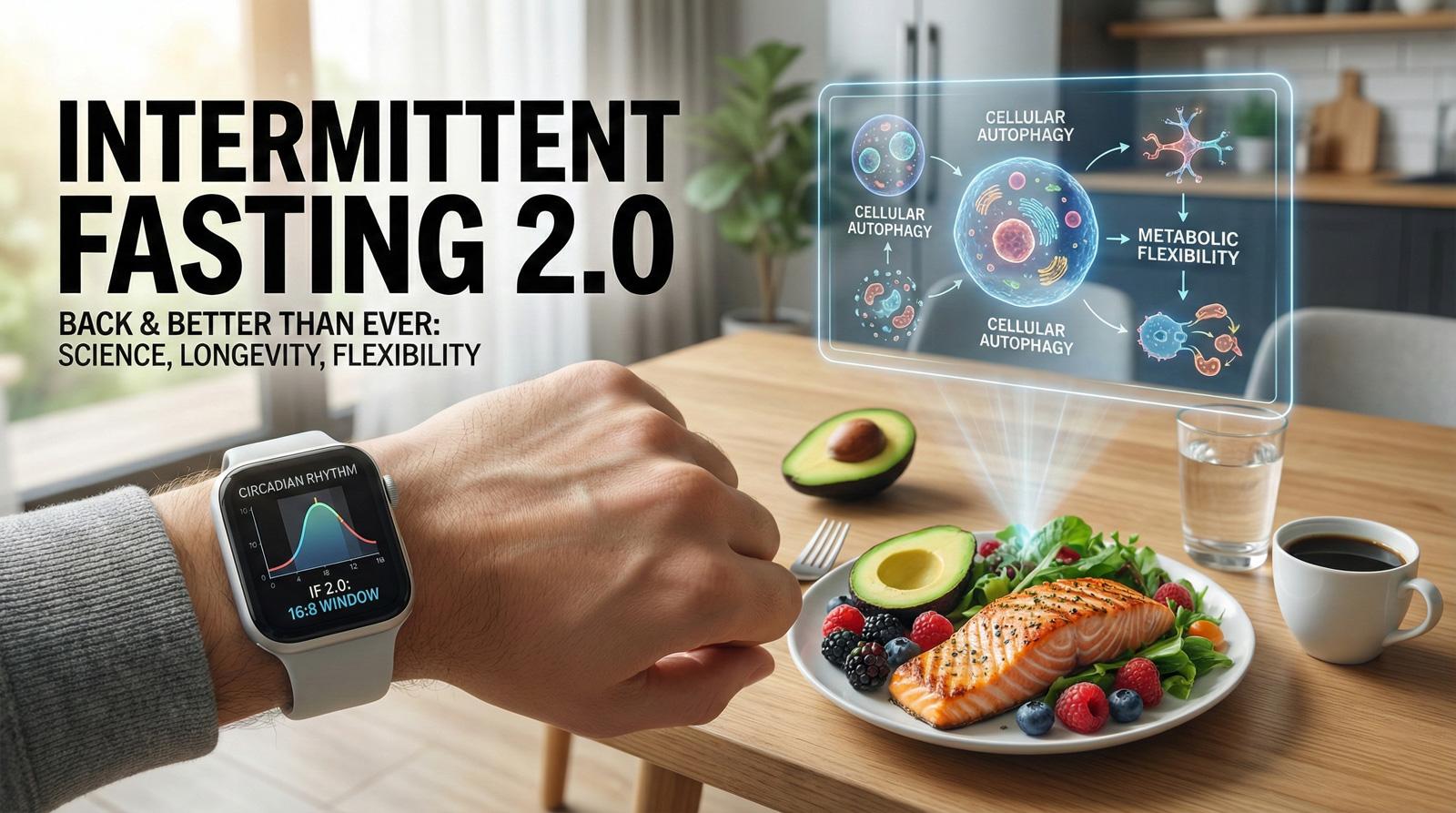
For a few years, it seemed like Intermittent Fasting (IF) was just another dietary trend destined to fade away alongside the grapefruit diet and juice cleanses. However, unlike fleeting fads, intermittent fasting has not only returned to the spotlight—it has evolved. We are now entering the era of Intermittent Fasting 2.0.
Gone are the days of rigid starvation and “white-knuckling” through hunger pangs just to fit into a smaller pair of jeans. Today, fasting is backed by robust clinical data focusing on longevity, metabolic flexibility, and cognitive repair. It is no longer just about when you don’t eat; it is about how you fuel your body when you do. Here is why intermittent fasting is back, why the science is stronger than ever, and how you can leverage modern protocols for optimal health.
The Evolution: From Fad to Foundational Health
When IF first exploded onto the scene, the narrative was simple: skip breakfast, cut calories, lose weight. While effective for fat loss, this simplistic approach often led to hormonal imbalances, stress, and eventual burnout.
The resurgence of fasting is driven by a shift in perspective. We now understand that fasting is not a diet—it is a biological reset. The human body evolved to function in cycles of feasting and fasting. In our modern food environment, where we have 24/7 access to hyper-palatable calories, we remain in a constant state of “fed,” never allowing our bodies to switch into repair mode.
The “better than ever” aspect of modern fasting involves data. With the rise of wearable technology, continuous glucose monitors (CGMs), and advanced metabolic research, we can now personalize fasting windows. We aren’t guessing anymore; we are bio-hacking with precision.
The New Science: Beyond Just Weight Loss
While weight management remains a primary draw, the current excitement around fasting centers on cellular biology. The benefits extend far beyond the scale.
Autophagy: Taking Out the Trash
One of the most compelling reasons IF is trending again is autophagy. Derived from the Greek for “self-eating,” this is the body’s cellular recycling process. When you fast for extended periods (typically 16+ hours), your cells begin to scour themselves for damaged components, misfolded proteins, and dysfunctional mitochondria.
New research suggests that activating autophagy is crucial for:
- Slowing down the aging process.
- Reducing inflammation.
- Protecting against neurodegenerative diseases like Alzheimer’s and Parkinson’s.
Metabolic Flexibility
The modern goal of fasting is metabolic flexibility—the ability of your body to switch effortlessly between burning glucose (sugar) for fuel and burning ketones (fat). Most people are stuck in “sugar burner” mode. Intermittent fasting trains your mitochondria to access fat stores efficiently, providing stable energy levels without the mid-afternoon crash.
Modern Protocols: Finding Your Sweet Spot
The “one-size-fits-all” approach is dead. Intermittent Fasting 2.0 is about adaptability. Here are the updated protocols that are gaining traction:
The 16:8 Method (The Standard)
This remains the most popular entry point. You fast for 16 hours and eat within an 8-hour window.
The Upgrade: Instead of skipping breakfast and eating late into the night, new data suggests shifting the window earlier (e.g., 10 AM to 6 PM) creates better metabolic outcomes.
The 5:2 Approach
This involves eating normally for five days and restricting calories (usually to 500-600) for two non-consecutive days.
The Upgrade: Rather than counting calories, many now opt for two days of “clean fasting” or “OMAD” (One Meal A Day) to simplify the process.
Intuitive Fasting
Perhaps the healthiest evolution is intuitive fasting. This involves listening to your body’s hunger signals. Somedays you might fast for 13 hours; other days, 18. This flexibility prevents metabolic adaptation (where your metabolism slows down to match intake) and reduces psychological stress.
The Game Changer: Circadian Rhythm Fasting
If there is one concept defining the resurgence of IF, it is Circadian Rhythm Fasting (also known as Time-Restricted Eating or TRE). This method aligns your eating window with your body’s internal clock and the sun.
Research from leading chronobiologists has shown that insulin sensitivity is highest in the morning and drops significantly in the evening. Eating a large meal at 9 PM forces your body to process glucose when it is preparing for sleep, leading to fat storage and poor rest.
Actionable Advice:
- Stop eating at least 3 to 4 hours before bed.
- Make lunch your largest meal of the day, not dinner.
- Expose yourself to morning sunlight to anchor your circadian rhythm, which aids hunger regulation.
Nuance Matters: Fasting Differently for Women
A major criticism of early fasting trends was the negative impact on women’s hormonal health. Aggressive fasting can spike cortisol, which in turn can disrupt thyroid function and the menstrual cycle.
Intermittent Fasting 2.0 emphasizes cycle-syncing for women:
- Follicular Phase (Days 1-14): Estrogen is building. Women are generally more resilient to stress and insulin sensitive. Longer fasts (14-16 hours) are usually well-tolerated.
- Luteal Phase (Days 15-28): Progesterone rises, and the body requires more glucose and consistency. Stress sensitivity increases. During the week before menstruation, it is often recommended to shorten fasting windows (12 hours) or pause fasting entirely to support hormone production.
This nuanced approach ensures women reap the benefits of autophagy and fat loss without sacrificing hormonal balance.
Common Mistakes That Break Your Fast
Even with the best intentions, small errors can hinder your progress. Here is how to troubleshoot your routine.
1. “Dirty” Fasting
Some proponents claim you can add cream to your coffee or consume bone broth during the fasting window. While this might keep you in ketosis, it generally stops autophagy. If your goal is gut rest and cellular repair, stick to water, black coffee, and tea.
2. Binge Eating During the Window
Fasting is not a permission slip to consume processed junk. The quality of food matters more than ever. Breaking a fast with high-glycemic carbohydrates spikes insulin rapidly, leading to lethargy. Break your fast with protein, healthy fats, and fiber.
3. Ignoring Electrolytes
When insulin levels drop during a fast, the kidneys flush out water and electrolytes (sodium, potassium, magnesium). This causes the infamous “keto flu” or fasting headaches. Supplementing with unflavored electrolytes is a game-changer for energy levels.
Conclusion: The Future of Feeding
Intermittent fasting is back because the science has matured. We have moved past the vanity metrics of rapid weight loss and entered a holistic understanding of how meal timing affects our DNA, our brain health, and our longevity. By aligning your eating patterns with your circadian rhythm, respecting your hormonal needs, and focusing on nutrient density, IF becomes more than a diet—it becomes a sustainable lifestyle strategy.
Whether you are looking to sharpen your mental clarity, improve metabolic markers, or simply simplify your relationship with food, the new era of intermittent fasting offers a flexible, evidence-based path forward.


 Arabic
 Français
 Español
 Português
 Deutsch
 Türkçe
 Dutch
Dutch
 Italiano
 Russian
 Romaian
 Portuguese (Brazil)
 Greek
Greek