


Why Oversized Mailer Boxes Create Hidden Costs
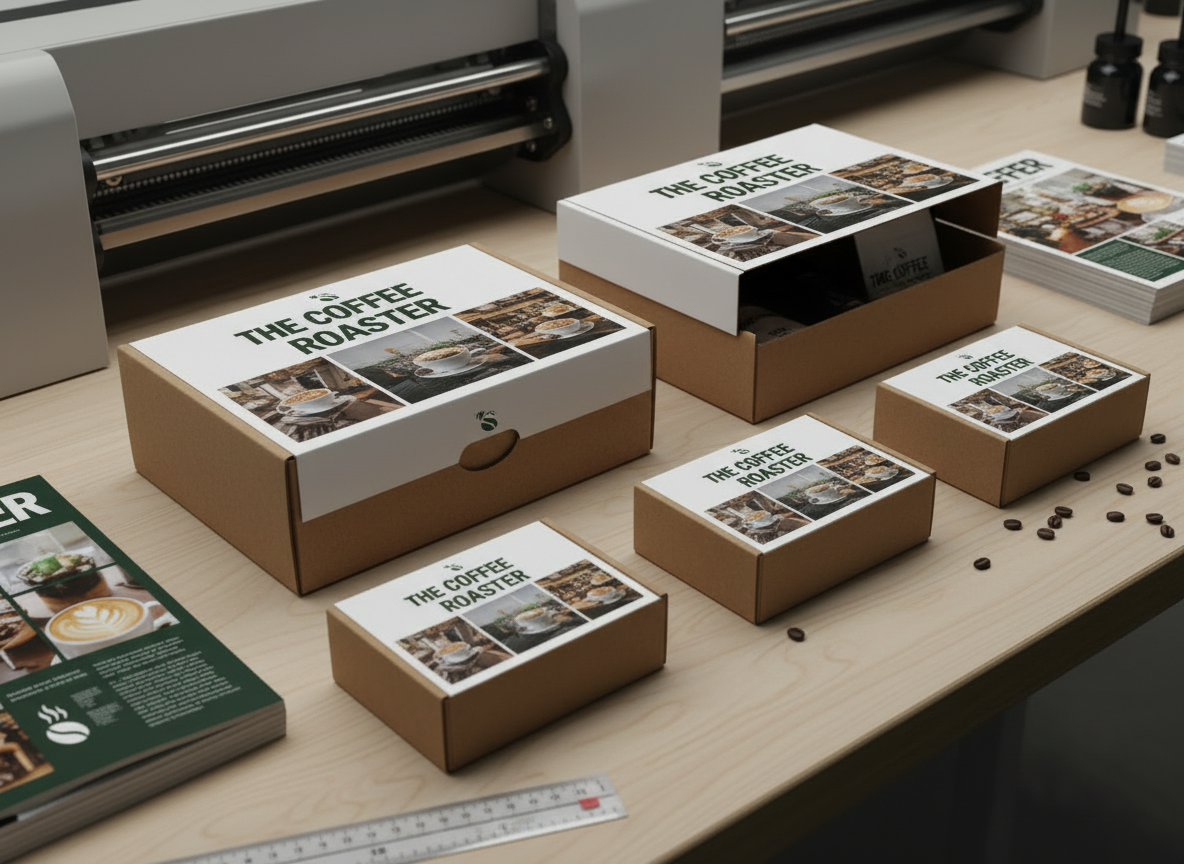
Oversized mailer boxes rarely look like mistakes at ordering stage. The product fits. The lid closes. There is space around the item, which feels safer rather than risky. For many businesses, choosing a slightly larger box seems sensible — a small margin for error that avoids packing issues later.
In real use, however, that extra space becomes expensive in ways that are rarely visible at first.
Oversizing does not usually cause immediate damage or delivery failures. Instead, it introduces inefficiencies that accumulate quietly across storage, packing time, postage, returns, and customer perception. By the time the cost becomes noticeable, it has already been absorbed into everyday operations.
This is why oversized mailer boxes are one of the most common packaging decisions that appear reasonable yet underperform in practice.
How Oversizing Becomes Normal Without Being Questioned
Why Boxes Are Often Chosen Larger Than Needed
Most oversized mailer boxes are not chosen carelessly. They are chosen defensively.
Businesses oversize because product dimensions vary slightly, because tolerance feels safer than precision, or because a standard box already exists in storage. In fast-moving fulfilment environments, convenience often overrides optimisation.
Once a larger box is introduced, it quickly becomes the default. Packing teams adapt to it. Systems are adjusted. Reordering continues without re-evaluation.
The box works — so it is never questioned.
Why Oversizing Rarely Causes Immediate Failure
Unlike under-sized packaging, oversized boxes do not produce visible problems straight away. Nothing tears. Nothing breaks. Deliveries still arrive.
Because the consequences are indirect, they are rarely linked back to the box itself. Costs rise elsewhere instead — postage, filler usage, labour time — and are treated as unavoidable overheads.
This separation is what allows inefficiency to persist unnoticed.
The Relationship Between Space and Movement
Why Empty Space Creates Instability
Inside a mailer box, empty space is not neutral. It allows movement.
When products shift during transit, force transfers unpredictably. Impact is no longer absorbed evenly across panels but concentrated on corners, edges, or product surfaces.
Void fill compensates for this, but only partially. Even well-packed boxes experience internal compression and rebound as parcels move through conveyor systems.
Movement inside a box increases wear on both the packaging and the contents.
How Movement Changes Structural Stress
Mailer boxes are designed to carry load across flat surfaces. When internal movement occurs, stress is redirected to joints and folds.
This accelerates softening at hinges and closure points, especially in self-locking mailer designs. The box may remain intact, but its rigidity declines faster than expected.
Oversizing indirectly shortens usable lifespan.
Hidden Material Costs That Add Up
Increased Use of Void Fill
Larger boxes almost always require filler. Paper, honeycomb, kraft padding, or foam inserts become necessary to stabilise contents.
Individually, filler costs seem minor. Across hundreds or thousands of shipments, they become substantial.
More importantly, filler adds time to packing.
Every additional step compounds labour cost.
Wasted Board Without Added Protection
A larger box uses more material without increasing protective performance proportionally. The additional board does not strengthen critical stress areas — it simply expands surface area.
This is why oversizing is not equivalent to upgrading strength. It increases consumption, not resilience.
Courier Pricing and Dimensional Weight
Why Size Often Matters More Than Weight
Modern courier pricing relies heavily on dimensional weight. A box that weighs very little can still be charged as if it were heavy, purely due to its volume.
Oversized mailer boxes trigger higher shipping boxes bands even when contents are light.
This cost is often misattributed to courier increases rather than packaging design.
How Small Size Differences Create Large Cost Gaps
A few centimetres added to length, width, or height can move a parcel into a higher pricing tier.
Over time, this can represent one of the largest avoidable costs in ecommerce shipping.
Dimensional Impact Example
|
Box Size Change |
Courier Effect |
Resulting Cost Impact |
|
+20mm in height |
Tier threshold crossed |
Higher rate applied |
|
Wider box |
Reduced pallet density |
Increased logistics cost |
|
Longer box |
Manual handling required |
Surcharge risk |
These increases rarely appear as packaging costs — yet they originate there.
Packing Efficiency and Labour Time
Why Oversized Boxes Slow Fulfilment
Packing speed depends on rhythm. When box sizes are consistent and well-fitted, teams work quickly.
Oversized boxes interrupt that rhythm. More filler is required. Positioning takes longer. Closing becomes less predictable.
Seconds per box feel insignificant until multiplied by daily volume.
At scale, oversizing increases labour cost silently.
Inconsistency Between Orders
When one product uses multiple box sizes interchangeably, packing becomes variable. This variability increases errors, mis-picks, and rework.
Standardisation suffers.
Well-sized mailer boxes support predictable packing behaviour.
Customer Perception and Experience
Why Large Boxes Feel Wasteful
Customers notice oversized packaging immediately.
A small product inside a large box creates a sense of waste, regardless of branding quality. Even when materials are recyclable, the perception of excess remains.
This directly affects how customers judge sustainability claims.
Unboxing Experience vs Spatial Imbalance
Mailer boxes are often chosen to enhance presentation. Oversizing undermines that intention.
Products appear lost inside the packaging. Inserts shift. Presentation feels accidental rather than deliberate.
A box that is too large weakens perceived care.
Returns and Reverse Logistics
Why Oversized Boxes Increase Return Costs
Customers often reuse the original packaging for returns. Large boxes require more tape, more filler, and sometimes additional packaging.
This discourages correct resealing and increases the chance of transit damage during return shipping.
Oversized packaging creates friction where simplicity matters most.
Storage After Delivery
Many customers temporarily store products in their original packaging. Oversized boxes take up unnecessary space, increasing the likelihood of early disposal.
Packaging that fits well tends to remain visible longer.
Visibility supports brand recall.
Environmental Impact Beyond Material Choice
Why Oversizing Undermines Sustainability Goals
Sustainability is not determined solely by recyclable materials.
A larger box uses more board, more filler, more transport space, and more energy per delivery.
Even eco-friendly materials lose their advantage when overused.
Right-sizing is one of the most effective sustainability actions available — and one of the least discussed.
Reuse Rates and Box Longevity
Smaller, well-fitted boxes are reused more frequently. Oversized boxes are harder to repurpose and more likely to be discarded immediately.
Longevity reduces total packaging demand more effectively than symbolic material changes.
Second Cost Comparison Table
|
Factor |
Right-Sized Mailer Box |
Oversized Mailer Box |
|
Material usage |
Efficient |
Excessive |
|
Packing time |
Consistent |
Slower |
|
Courier charges |
Controlled |
Elevated |
|
Void fill |
Minimal |
Required |
|
Customer perception |
Intentional |
Wasteful |
|
Reuse likelihood |
High |
Low |
These differences compound quietly over time.
Why Oversizing Persists Despite the Costs
Oversized boxes persist because they reduce short-term decision pressure.
They feel safe. They avoid tight tolerances. They reduce thinking at packing stage.
But what they save in attention, they cost in efficiency.
Packaging rarely creates dramatic problems when oversized. It simply becomes more expensive than necessary — slowly, consistently, and invisibly.
When Oversizing Is Actually Justified
There are limited cases where oversizing is appropriate:
-
Fragile products requiring layered protection
-
Mixed-item orders with variable contents
-
Temporary packaging during scaling phases
The mistake occurs when these exceptions become permanent standards.
Designing Mailer Boxes Around Behaviour
Effective mailer box design begins with understanding movement.
How the box is packed.
How it travels.
How it is opened.
How it may be reused.
Boxes that fit closely behave predictably. Boxes with excess space behave unpredictably.
Predictability reduces cost.
Final Perspective
Oversized mailer boxes rarely appear problematic at first. They hold the product. They survive delivery. They feel safe.
The cost emerges later — in postage, labour, filler, storage, customer perception, and sustainability performance.
These costs do not appear as line items labelled “box size”. They surface elsewhere, making them difficult to trace.
This is why experienced UK packaging providers such as I YOU PRINT approach mailer box specification through behaviour rather than dimensions alone.
When boxes are designed around how they are actually used — not how safe they feel — packaging becomes more efficient, more economical, and far easier to scale.
Hidden costs thrive in unused space.
Precision removes them.



 English
 French
 Spanish
 Portuguese
 Deutsch
 Turkish
 Dutch
Dutch
 Italiano
 Russian
 Romaian
 Portuguese (Brazil)
 Greek
Greek