


How Greenhouse Farming Is Supporting Agricultural Transformation in the UAE
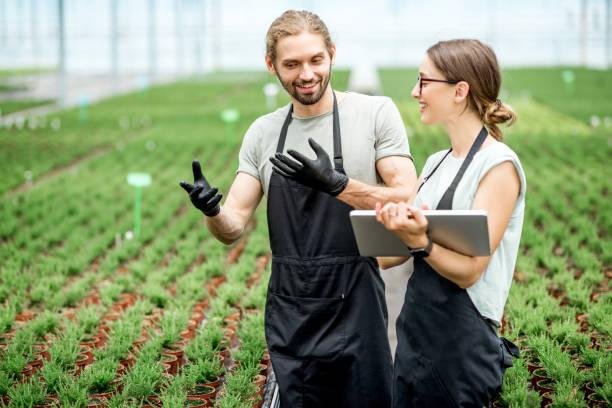
Agriculture in the United Arab Emirates faces unique challenges, including limited arable land, high temperatures, water scarcity, and harsh climatic conditions. Despite these constraints, the country continues to strengthen its food security strategy through technological innovation and sustainable farming practices. Among the most important developments supporting this transformation is the increasing adoption of greenhouse farming, which enables year-round crop production while optimizing water and resource utilization. As demand for locally grown produce rises, greenhouse cultivation is becoming a critical component of the UAE's agricultural future.
According to a study published by MarkNtel Advisors, the UAE Greenhouse Market was valued at around USD 126 million in 2025 and is projected to reach USD 254 million by 2032, growing at a CAGR of approximately 12.39% during 2026-32. The report provides insights into industry growth trends, highlighting the growing adoption of controlled-environment agriculture, increasing investments in food security initiatives, and rising demand for high-quality agricultural output across the UAE.
Greenhouse Farming Is Transforming Food Production
Greenhouses provide controlled growing environments that allow farmers to manage temperature, humidity, irrigation, and nutrient delivery more effectively than traditional open-field agriculture. These controlled conditions help improve crop yields, reduce weather-related risks, and enhance resource efficiency.
For a country like the UAE, where extreme temperatures can significantly impact conventional farming, greenhouse technology offers a practical solution for maintaining agricultural productivity throughout the year. The ability to grow vegetables, fruits, herbs, and specialty crops under controlled conditions is helping reduce dependence on imported produce while supporting local food production.
As food security remains a national priority, greenhouse cultivation is expected to play an increasingly important role in meeting domestic agricultural demand.
Food Security Initiatives Are Driving Market Growth
One of the primary drivers of greenhouse adoption in the UAE is the government's continued focus on strengthening food security. The country has introduced various initiatives aimed at increasing local agricultural production and improving resilience against global supply chain disruptions.
Controlled-environment agriculture enables farmers to maximize productivity while minimizing the impact of challenging climatic conditions. Greenhouses also support more efficient use of water resources, which is particularly important in a region where water conservation is a strategic priority.
The UAE Ministry of Climate Change and Environment (MOCCAE) continues to promote sustainable agricultural practices and advanced farming technologies that contribute to long-term food security objectives.
Gutter-Connected Greenhouses Lead Market Demand
By greenhouse structure type, gutter-connected greenhouses accounted for approximately 65% of the UAE Greenhouse Market in 2025, making them the dominant segment within the industry.
These structures offer several advantages, including efficient land utilization, improved climate control, and scalability for commercial farming operations. Gutter-connected systems allow multiple greenhouse units to be linked together, creating larger cultivation areas that support higher production volumes.
Their ability to accommodate advanced irrigation, cooling, and automation technologies makes them particularly attractive for large-scale agricultural operations. As commercial farming activities continue to expand, demand for gutter-connected greenhouse structures is expected to remain strong.
Commercial Growers Remain the Largest End Users
The Commercial Growers segment represented approximately 62% of the UAE Greenhouse Market in 2025. This dominance reflects the increasing investment by agricultural enterprises seeking to enhance productivity and meet growing consumer demand for fresh produce.
Commercial growers are increasingly adopting greenhouse technologies to achieve higher yields, improve crop quality, and reduce exposure to environmental risks. Controlled growing conditions also allow producers to supply crops consistently throughout the year, supporting stable market availability.
The expansion of organized agriculture and agribusiness operations across the UAE is creating favorable conditions for continued greenhouse adoption among commercial growers.
Advanced Technologies Are Improving Efficiency
Technological innovation is playing a major role in shaping the future of greenhouse farming. Modern greenhouse facilities increasingly incorporate automation systems, precision irrigation technologies, climate control equipment, and data-driven monitoring tools.
These technologies help farmers optimize growing conditions, reduce operational costs, and improve resource efficiency. Automated irrigation systems, for example, can deliver precise amounts of water and nutrients based on crop requirements, minimizing waste while maximizing productivity.
The adoption of smart agriculture technologies aligns closely with broader sustainability goals and supports more efficient agricultural production practices.
According to the Food and Agriculture Organization (FAO), controlled-environment agriculture and resource-efficient farming systems are becoming increasingly important in addressing food production challenges in arid and water-constrained regions.
Sustainability and Water Conservation Are Key Priorities
Water conservation remains one of the most important considerations for agriculture in the UAE. Greenhouse systems help address this challenge by significantly reducing water consumption compared with conventional farming methods.
Many modern greenhouse operations utilize drip irrigation, hydroponics, and recirculating water systems that improve efficiency while maintaining crop health. These approaches support sustainable agricultural development and help reduce pressure on limited water resources.
The growing emphasis on environmentally responsible farming practices is encouraging greater investment in greenhouse infrastructure and advanced cultivation technologies.
The International Center for Biosaline Agriculture (ICBA) continues to support research and innovation focused on sustainable agriculture and resource-efficient farming systems suitable for arid environments.
Future Outlook
The UAE greenhouse industry is expected to continue expanding as food security, sustainability, and agricultural innovation remain national priorities. Increasing consumer demand for fresh, locally produced food, combined with ongoing technological advancements, is creating strong growth opportunities for greenhouse operators and agricultural technology providers.
Investments in controlled-environment agriculture are likely to accelerate as farmers seek more efficient ways to increase productivity while addressing environmental and resource-related challenges.
Conclusion
Greenhouse farming is becoming a cornerstone of the UAE's agricultural transformation strategy. By enabling year-round cultivation, improving resource efficiency, and supporting local food production, greenhouse technologies are helping address some of the country's most significant agricultural challenges.
With the market projected to grow from USD 126 million in 2025 to USD 254 million by 2032 at a CAGR of 12.39%, the UAE greenhouse industry is positioned for substantial expansion. Supported by government initiatives, technological innovation, and increasing demand for sustainable food production, greenhouse cultivation will continue to play a vital role in strengthening the country's agricultural resilience and food security objectives.


 Arabic
 Français
 Español
 Português
 Deutsch
 Türkçe
 Dutch
Dutch
 Italiano
 Russian
 Romaian
 Portuguese (Brazil)
 Greek
Greek