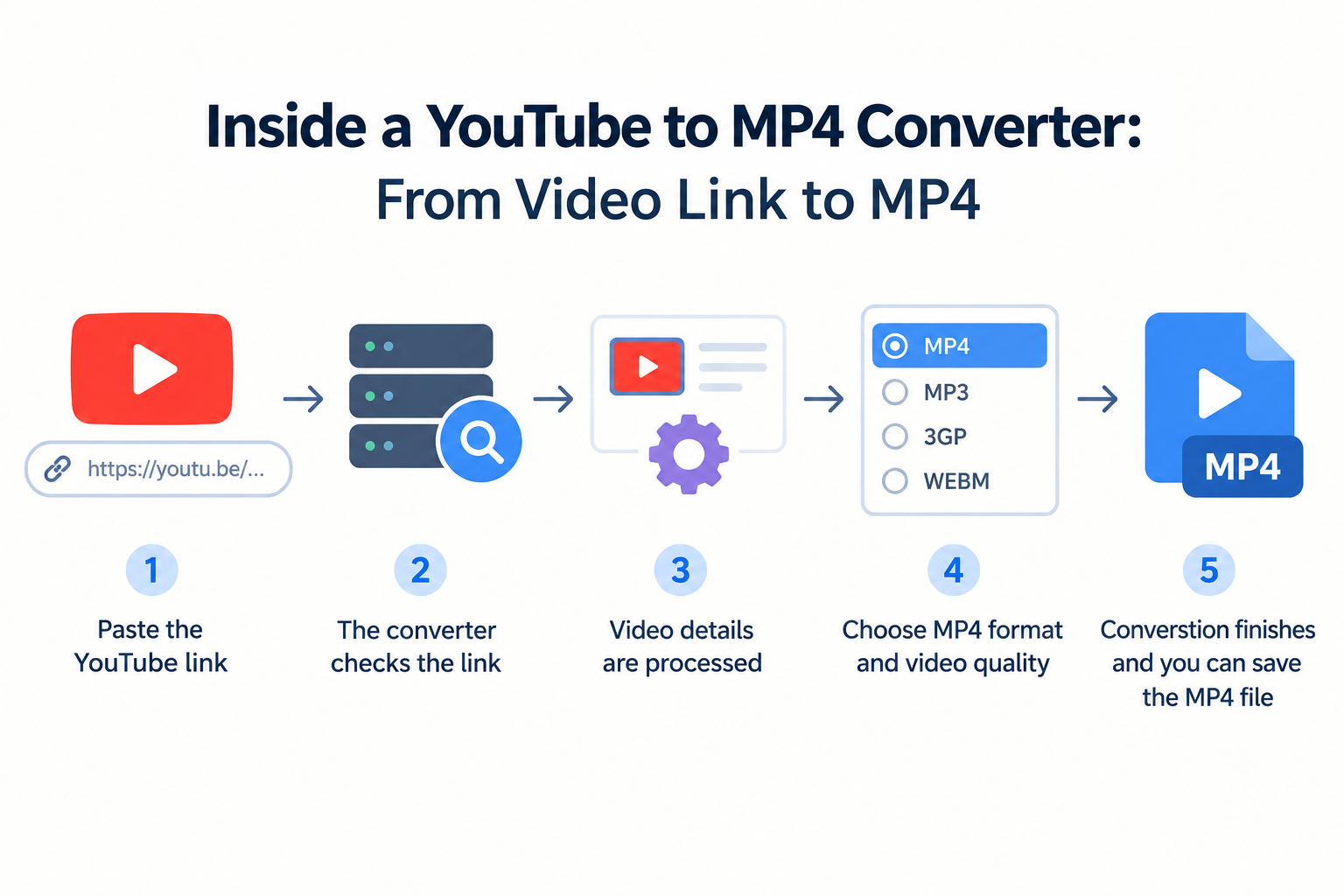
Inside a YouTube to MP4 Converter: From Video Link to MP4

YouTube to MP4 converter helps users turn a video link into an MP4 file. The process usually starts by entering a video URL and choosing the available format and quality. Once the conversion is complete, the file can be saved to a device for later viewing. Understanding how this process works can help users choose the right format and know what to check before saving a video.
How a YouTube to MP4 Converter Works
A YouTube to MP4 converter can offer different video quality options, depending on the source and the service. Before starting the process, it is useful to check the available resolution, file size, and format. Higher video quality may take up more storage space, while a lower resolution may be suitable for smaller screens or devices with limited storage.
After the conversion, users should check whether the MP4 file plays properly on their device. Video playback, sound, and picture quality are a few things worth checking before keeping the file. It is also important to use a service that is safe and to download videos only when permitted by the content owner and the platform’s rules.
What Happens After Adding a Video Link?
When a video link is added to a YouTube to MP4 converter, the service first tries to read the link and find the video details. If the link works, users may see options for choosing a format and video resolution. These options help users decide which type of file suits their device and viewing needs.
The next step is to select the required option and start the process. Depending on the converter, the video may take a few moments to process. After the process is complete, users can check the available file and save it if downloading is supported. It is always a good idea to check the file size and make sure the video plays correctly before using it.
From a Video Link to an MP4 File
-
Copy the video link
-
Open a YouTube to MP4 converter
-
Paste the video URL
-
Click the convert option
-
Wait for the link to load
-
Check the available formats
-
Select MP4 format
-
Choose the video quality
-
Start the conversion process
-
Save the file when ready
Popular Alternatives to a YouTube to MP4 Converter
1. YT1s
YT1s provides an online interface for working with YouTube video links and MP3 or MP4 format options. Users can check the available options and choose a suitable format based on their needs.
2. Flvto
Flvto is known for YouTube video and audio conversion services. Users looking for an MP4 video or MP3 audio option can check the formats supported by the service.
3. Y2Mate
Y2Mate is an online service associated with YouTube video conversion. Its interface lets users enter a video link and check the available download or format options, depending on the service’s current availability.
4. Keepvid
Keepvid is another name associated with online video downloading services. Users can explore its available video format options and check whether the service supports their needs and devices.
5. YTMP4
YTMP4 is associated with online YouTube to MP4 conversion. Users can check the supported links and available video quality options before choosing a format.
Understanding Video Formats and File Sizes
Video format and file size are important things to consider when converting a video to MP4. MP4 is a widely supported format that works on many phones, computers, and tablets. It is commonly used because it can store video and audio in a single file. Choosing a suitable format makes it easier to play and manage videos on different devices.
File size usually depends on the video length, resolution, bitrate, and compression settings. A video saved in higher quality generally takes up more storage space, while a lower-resolution version may use less space. Before converting a video, check the available quality options and consider how much storage you have. This can help you choose a file that suits your viewing needs without using more space than necessary.
Why MP4 Is a Common Video Format
MP4 is often used for video files because it is supported by many modern devices and applications. Whether someone wants to watch a clip on a phone or play a video on a computer, this format is usually a practical choice. Its wide support makes it easier to keep videos in a format that works across different devices.
The format can also store video and audio together in one file. This helps keep the picture and sound in a single place instead of managing them separately. The final file size depends on the video’s length, resolution, and encoding settings, so two MP4 files can have very different sizes even when they use the same format.
Another benefit is that MP4 offers flexible options for different viewing needs. Someone with limited storage may prefer a lower resolution, while another user may choose a higher resolution for a clearer picture. When selecting MP4 through a converter, checking the quality options and available storage can help you choose a suitable file.
What Makes MP4 Files Easy to Use?
-
Works on many devices.
-
Supports video and audio in one file.
-
Plays on most common media players.
-
Offers different video quality options.
-
Can balance video quality and file size.
-
Easy to store on phones and computers.
-
Suitable for everyday video playback.
-
Supported by many video editing programs.
-
Makes video files easier to organize.
-
Can be shared through compatible platforms.
Conclusion
In conclusion, choosing the right video format can make saving and playing video files easier. A YouTube to MP4 converter lets users check available formats and video quality before starting the process. MP4 is a practical option for many devices, but the final file size and quality depend on the settings selected. By understanding how video links are processed and what to check before saving a file, users can make better choices for their viewing needs. Always follow the platform’s rules and make sure you have permission to save the content.