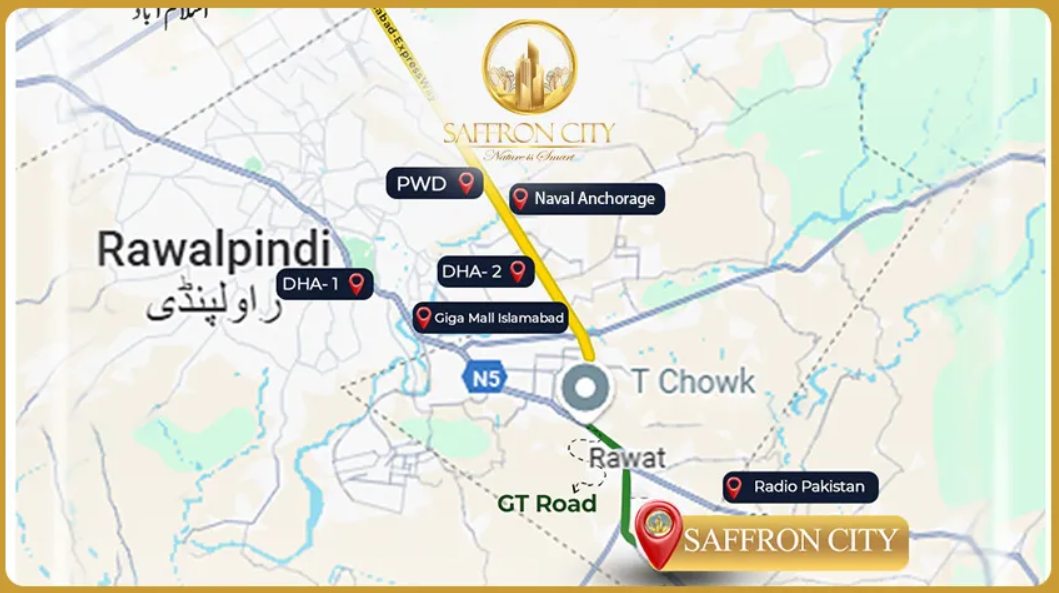
Saffron City Master Plan: Reading the Layout Like a Regulator

Saffron City Master Plan: Reading the Layout Like a Regulator
Introduction
Saffron City master plan is usually read like a brochure, page by page, with attention on the amenities and the price. A regulator reads it differently: they look for the approved boundary, the sanctioned land, and the layout plan that carries legal weight. Buyers who learn to read the layout the same way avoid the most common mistake in Pakistani real estate, which is trusting a drawing that has no approval behind it. This blog explains how to read Saffron City master plan the way an authority would.
Start With the Approved Boundary
The first thing a regulator checks is the boundary of the sanctioned land. For Saffron City, the Rawalpindi Development Authority has approved about 882.85 Kanal, and a detailed source confirms the project holds only a Letter of Permission for approximately 882 Kanal, which is a preliminary approval rather than a final NOC. Marketing pages, by contrast, refer to roughly 15,000 Kanal. That gap is not a rounding error; it is the difference between a sanctioned layout and an aspiration. Until the approved boundary is clear, everything else in the Saffron City master plan is secondary.
Look for Your Plot Inside the Boundary
A layout plan is only meaningful if your specific plot number and block appear inside the approved boundary. Ask the developer to mark your plot on the approved plan, not a marketing map, and then verify that position with the RDA. If the seller cannot connect your plot number to the approved layout, the drawing is not protecting you. Buyers should also establish whether they are purchasing a plot with possession or a file, since a file is generally a claim to a future allotment and carries more uncertainty.
Compare the Drawing With the Ground
A regulator visits the site as well. Note which roads are paved, which are cleared, and which are absent. Look for boundary walls, utility poles, drainage covers, and water connections near your block. Identify which schools, mosques, shops, or parks exist and which are only empty land marked on the plan. Dated photographs and written notes make these observations reliable, especially if a seller's claims change later.
Read the Payment Plan as a Contract
Advertised plans list a 5 Marla plot around PKR 2,750,000, a 10 Marla plot near PKR 4,900,000, and a 1 Kanal plot around PKR 9,200,000, though rates vary by block and seller. A regulator reads the schedule for obligations, not just numbers. Ask for the full written breakdown covering development charges, late payment penalties, transfer fees, and taxes, plus the expected possession date and what happens if development slips. The headline price rarely reflects the total outlay.
Treat the Notice as a Record
In September 2026, the RDA issued a show-cause notice to Saffron City for allegedly marketing, advertising, and booking plots without obtaining the requisite NOC, confirming 882.85 Kanal as approved while flagging sales outside that sanction. A notice is a matter of record, and it deserves more weight than a dealer's assurance. Partial approval does not legalise every plot sold under a project's name, because the regulator sanctions specific land on a specific layout plan, not a brand.
Conclusion
Saffron City master plan is worth reading, but only as a set of claims to test against the regulator's records and the ground itself. Start with the approved boundary, locate your plot inside it, compare the drawing with reality, read the payment plan as a contract, and treat the notice as a record. Saffron City master plan is only as strong as the approval behind it.