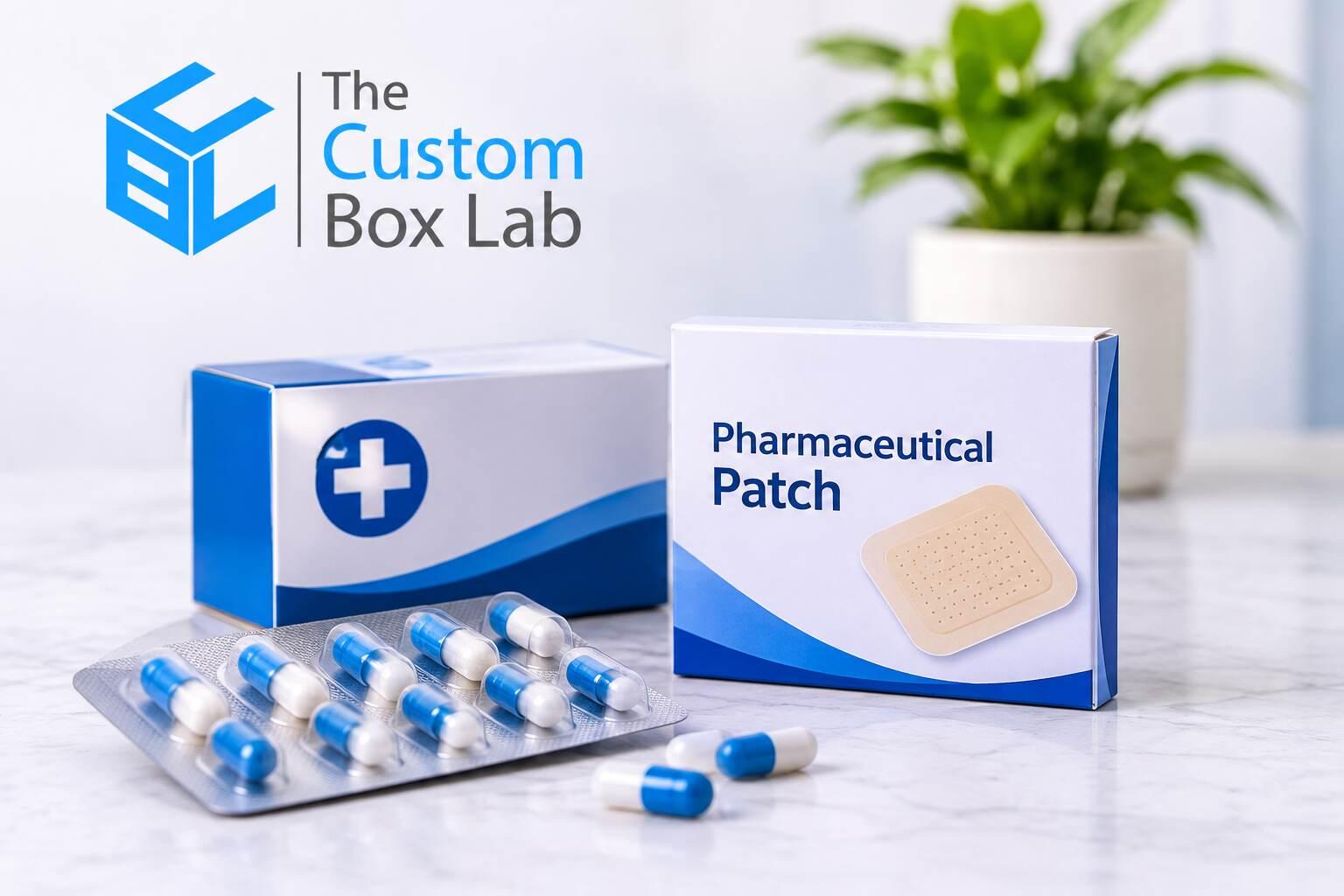
Custom Pharmaceutical Packaging for Safe Product Storage

Custom pharmaceutical packaging supports safe product storage by shielding medicines and supplements from light, moisture, heat, and physical damage, while holding the primary container in place and carrying the storage instructions customers need. The carton works alongside the bottle, blister pack, or vial, so material, structure, and label space should be chosen for the specific product. This guide covers materials, formats, tamper evidence, labeling, and ordering.
The Custom Box Lab produces custom pharma boxes for pharma brands, supplement companies, and health and wellness businesses, with free 3D mockups and design support.
What Does Pharmaceutical Packaging Do for Product Storage?
A pharma carton protects what's inside from the outside world, and it keeps the product organized, readable, and intact from the warehouse to the pharmacy shelf to the customer's cabinet. It's a second layer of protection around the primary container, not a replacement for it.
The outside factors that most often shorten a product's usable life are:
- Light, which affects sensitive compounds
- Humidity and moisture, especially for powders and tablets
- Heat, during storage and transit
- Oxygen exposure, which can affect gels and liquids
- Crushing, dropping, and rubbing during handling
- Dirt and contamination
- Tampering or counterfeit substitution
A carton cannot make up for a weak bottle or blister film, since the primary container does most of the barrier work. What the carton adds is shielding from light, dirt, and impact, a secure fit, and a clear place for storage instructions.
Which Materials Protect Medicines and Supplements Best?
There's no single best material. Cardboard, corrugated, kraft, and card stock each suit a different job, and the right choice depends on the product's sensitivity, weight, and how it ships.
| Material | Best For | What It Offers |
|---|---|---|
| Cardboard (SBS card stock) | Folding cartons, medical boxes with inserts | Smooth surface for fine text, crisp die-cuts |
| Corrugated | Outer shipping cartons, bulk packs | Cushioning, stacking strength, light weight |
| Kraft | Vial and bottle cartons, sustainability-minded brands | Natural look, recyclable, biodegradable |
| Card stock | Inserts, dosage cards, small-diameter cartons | Rigid feel, precise folds, clean adhesion |
How Do You Match Material to Product Sensitivity?
Start with what the product is sensitive to, then discuss it with the supplier before production. Light-sensitive compounds, humidity-sensitive powders, and oxygen-reactive gels each call for a different approach, and coated card stock and kraft trade off differently on barrier and appearance. The Custom Box Lab reviews this at the mockup stage, so bring your product's storage requirements to that conversation.
For brands that want a lower environmental footprint, kraft and recyclable card stock options are available.
Which Box Formats Fit Different Products?
The carton should be built around the product inside it. A blister pack, a glass vial, and a gel tube each fail in different ways when the box is wrong, so format and structure matter as much as material.
The Custom Box Lab's pharma range includes boxes for:
- Capsules, pills, and pill bottles
- Vials, ampoules, and syringes
- Medicine and medical boxes with inserts
- Patches and gels
- Facemasks, toothpaste, and scar gel
- Herbal and supplement products
| Structure | Good For |
|---|---|
| Tuck end | Bottles, tubes, and blister packs |
| Auto-bottom tuck | Heavier bottles or jars; the base locks without tape |
| Flip-top lid | Products that are opened repeatedly |
| Bottle neck-lock | Bottles that need to stay upright and fixed |
| Wallet or sleeve slide | Blister packs, patches, and flat items |
Why Do Inserts Matter for Vials and Ampoules?
Glass products need clearance and a fixed position. An insert holds each vial or ampoule in place, stops pieces knocking together, and absorbs impact in transit. When you request a quote for a medical box with an insert, share the exact dimensions of the vial or ampoule, including the cap.
How Do Tamper Evidence and Labeling Work in Pharma Packaging?
Tamper-evident features show whether a pack has been opened, and labeling space makes sure the required information fits without crowding. Both are decided at the structural design stage, so raise them before artwork is finalized.
Tamper and counterfeit protection options include tamper-evident seals, specialty closures, and holographic foiling, which also helps deter counterfeits.
| Label Type | Purpose |
|---|---|
| Prescription and dispensing labels | Patient-specific details applied by pharmacists |
| Warning and auxiliary stickers | Alerts such as "Keep Refrigerated" or "Take with Food" |
| Clinical and laboratory labels | Small-diameter tags for vials, ampoules, and syringes |
| Over-the-counter labels | Branding, active ingredients, directions, and safety information |
Regulatory requirements depend on the product. In the US, labeling is overseen by the FDA, and many products must use child-resistant packaging under the Poison Prevention Packaging Act, which generally applies to the primary container. A packaging supplier can build a carton with the right space and structure, but your regulatory consultant should confirm the final layout and wording.
What Printing and Finishes Suit Pharma Boxes?
Pharma printing has to keep small text sharp, so the method matters. Offset suits fine print, digital suits short runs and updates, and flexographic printing suits higher volumes.
| Printing Method | Best For |
|---|---|
| Offset | Fine text, dosage information, accurate color on prescription cartons |
| Digital | Short runs, content updates, market-specific versions without plate waste |
| Flexographic | Higher-volume runs with inline varnish or lamination |
Finishes include gloss, matte, embossing, debossing, soft-touch, and holographic foiling. Keep the design clean, since legibility and clear storage instructions matter more than decoration.
Who Orders Custom Pharmaceutical Packaging?
Buyers include pharmaceutical manufacturers, nutraceutical and supplement brands, biotech and clinical labs, and medical device and supply companies. Each has different priorities, from prescription legibility to vial protection to retail shelf presence for supplements.
How Much Does Custom Pharmaceutical Packaging Cost?
Cost depends on material, structure, size, print method, finishes, inserts, and quantity, and per-unit price falls as volume increases. Wholesale pharmaceutical boxes are available for larger runs, with custom prints, logos, and dosage instructions kept consistent across the order.
| Factor | Effect on Price |
|---|---|
| Material | Corrugated, kraft, and cardstock differ in cost |
| Structure and inserts | More complex builds add material and tooling |
| Print method and finishes | Offset, foil, and embossing change the total |
| Quantity | Higher volume lowers per-unit price |
| Setup and freight | Can be hidden in some quotes |
The Custom Box Lab lists no die or plate charges, free shipping, free design support, and a free 3D digital mockup before production once an order is confirmed. Ask any supplier for an itemized quote so you compare the full delivered cost.
What About Minimum Orders?
The Custom Box Lab advertises no MOQ across its custom packaging, which suits smaller supplement brands and startups testing a new product. Confirm the minimum for your specific pharma format when you request a quote, since structure and printing requirements can vary from product to product.
How Long Does It Take to Make Pharma Boxes?
There are three production tiers, and an assigned account manager confirms the timeline for your order.
| Tier | Turnaround |
|---|---|
| Express | 7 to 10 days |
| Standard | 15 to 20 days |
| Cost Saver | 45 to 55 days |
Build in time for the mockup and for your regulatory review of the label layout, since changes after approval can add time.
How Do You Order Custom Pharmaceutical Packaging?
- Gather product details: the format, exact dimensions in inches, and storage requirements.
- Choose a material and structure from the tables above.
- Collect your label content, including dosage, warnings, and batch information.
- Request a quote through the site, or call +1 917-525-4842.
- Review the 3D mockup with your account manager, and have your regulatory consultant check the label layout.
- Approve production and track the order through to delivery.
Conclusion
Safe storage starts with matching the carton to the product: the right material for its sensitivities, a structure that holds the primary container firmly, an insert where glass is involved, and enough label space for storage instructions. Add tamper-evident features where they fit, keep the printing legible, and have your regulatory consultant confirm the label layout before production. Compare itemized quotes, plan for the mockup stage, and choose a delivery tier that leaves room for review.
Frequently Asked Questions
What is pharmaceutical packaging made of? Pharma boxes are commonly made from SBS card stock, corrugated board, kraft, or rigid card stock, chosen for barrier needs, weight, and shipping conditions. The right material depends on what the product is sensitive to.
How does packaging help with safe product storage? The carton shields the primary container from light, dirt, and impact, holds it securely, and carries storage instructions. It works alongside the bottle, blister pack, or vial, which provides the main barrier.
How do I order custom pharma boxes? Share your product format, dimensions, quantity, and label content through the quote form or by phone, then review the 3D mockup before approving production. An account manager is assigned to your order.
Can pharma boxes include tamper-evident features? Yes. Tamper-evident seals, specialty closures, and holographic foiling can be built in during structural design, which is why they should be discussed before artwork is finalized.
How much do custom pharmaceutical boxes cost? Cost depends on material, structure, size, printing, finishes, inserts, and quantity, and per-unit price falls at higher volumes. Request an itemized quote at your exact specifications.
How long does it take to produce custom pharmaceutical packaging? Express takes 7 to 10 days, Standard 15 to 20 days, and Cost Saver 45 to 55 days, with the exact date confirmed by your account manager. Allow extra time for label review.
Is there a minimum order, and do you serve buyers outside your region? The Custom Box Lab advertises no MOQ and serves buyers nationwide, with an account manager assigned to each order. Confirm the minimum for your specific format when you request a quote.