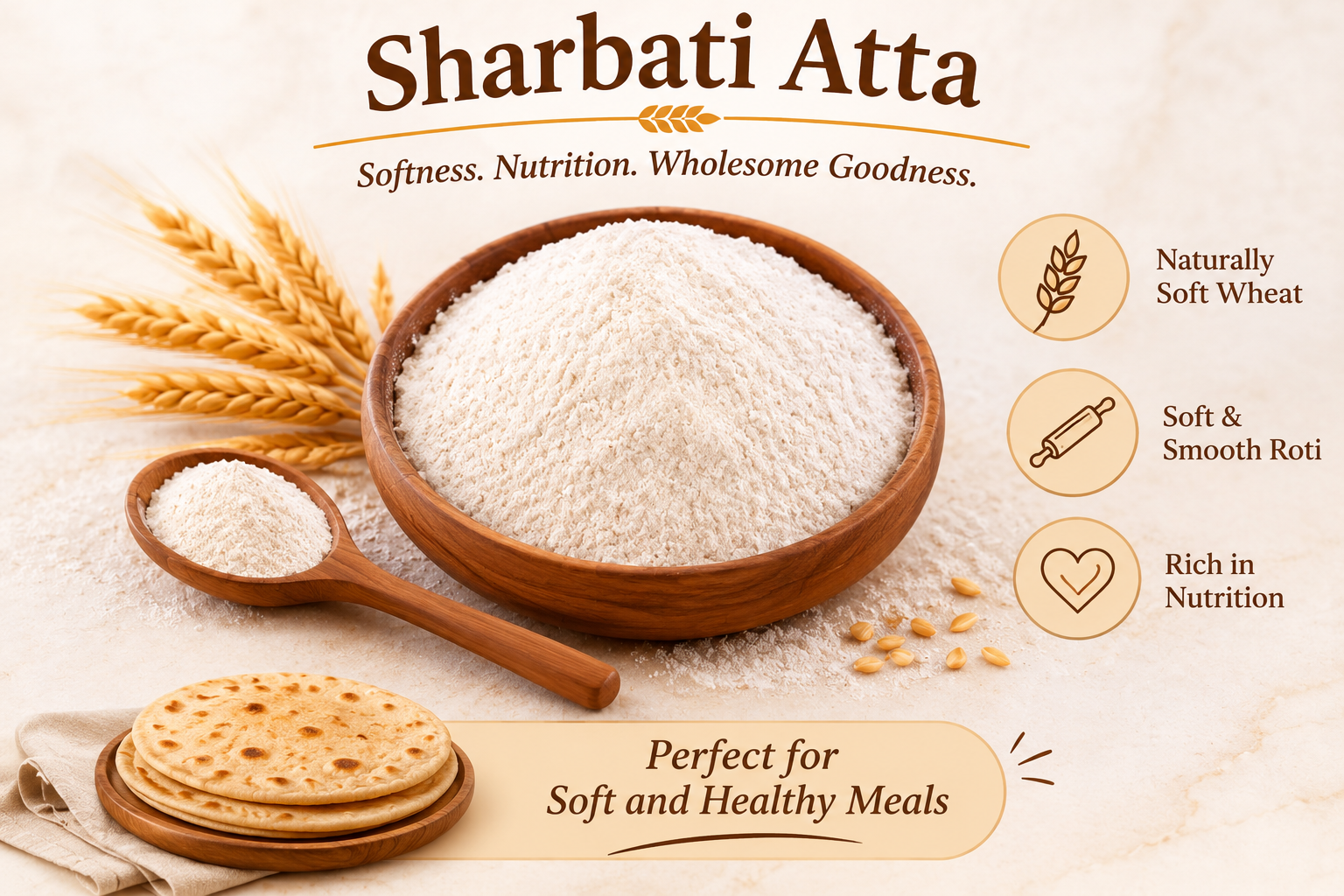
How to Identify Good Quality Sharbati Atta for Everyday Cooking

Choosing flour for a household is a decision that quietly affects several meals throughout the week. From morning rotis to evening parathas, the flour used in the kitchen influences preparation, texture and the overall cooking experience. Yet, most buyers make this choice by looking at the product name, price or packaging.
A better approach is to understand how wheat becomes flour and which factors influence its everyday performance. Sharbati atta is commonly associated with the golden-coloured Sharbati wheat variety, particularly grown in parts of Madhya Pradesh. Knowing what to examine before purchasing can help families select a product that suits their cooking preferences.
Trace the Flour Back to Its Wheat Source
Quality evaluation begins with the raw material. Wheat varieties have different physical and functional characteristics, which can influence the flour produced from them.
Sharbati wheat is known for its golden appearance and is associated with regions of Madhya Pradesh, including the Sehore and Vidisha areas. Its characteristics make it a recognised choice for traditional wheat-based preparations.
When purchasing flour, look for product information that explains:
-
The wheat variety used in production.
-
The declared origin or sourcing information, where available.
-
Whether the flour is made entirely from wheat or includes other ingredients.
-
Details about the manufacturer and production batch.
A clear product description gives buyers a better understanding of what they are purchasing. Regional association alone, however, does not establish the quality of every individual batch. Processing, storage and handling also matter.
Understand What Happens During Flour Processing
Wheat flour passes through several stages before reaching the kitchen. Understanding these stages helps explain why two flour products made from similar wheat can behave differently during cooking.
From cleaning to milling
The process generally includes:
1. Grain cleaning: Wheat is cleaned to remove dust, stones, unwanted plant material and other foreign particles.
2. Grain preparation: The wheat may undergo conditioning or tempering, where moisture is adjusted to support the milling process.
3. Milling: The prepared grain is ground using suitable milling equipment to produce flour.
4. Sieving and quality checks: Flour may be screened to achieve the desired particle size and checked for consistency and cleanliness.
5. Packaging: The finished flour is packed under suitable conditions to protect it during storage and distribution.
Each stage contributes to the final product. Good manufacturing practices and appropriate storage are important for maintaining the flour's intended characteristics.
Learn to Read Flour Beyond Its Colour
Colour is one of the first things buyers notice, but it should not be the only deciding factor.
Wheat flour naturally varies in appearance depending on the grain, extraction level and milling process. Sharbati wheat is often associated with a golden grain appearance, while the flour itself may have a light cream or wheat-like shade.
Instead of expecting one exact colour, consider the complete appearance.
Look for:
-
A reasonably uniform colour throughout the pack.
-
A consistent particle texture.
-
No visible foreign material.
-
A dry, free-flowing appearance.
-
No unusual signs of moisture exposure.
Aroma can provide another observation. Flour generally has a mild, natural wheat-like smell. Any unusual or musty odour deserves attention before the product is used.
These observations are useful first checks, but they cannot replace proper product information and manufacturing quality controls.
Put the Flour Through a Small Cooking Experiment
A practical way to understand flour performance is to prepare a small batch using your regular kitchen method.
Rather than relying on a product description alone, observe how the flour behaves during mixing, resting, rolling and cooking.
Compare the dough at different stages
|
Stage |
What to observe |
|
Mixing |
How evenly water combines with the flour |
|
Kneading |
Whether the dough becomes manageable |
|
Resting |
Whether its texture becomes easier to handle |
|
Rolling |
Whether the dough spreads comfortably |
|
Cooking |
Whether the roti cooks evenly |
|
Serving |
Whether the final texture suits your preference |
The amount of water required may vary between flour batches. Add it gradually instead of following a fixed measurement without considering the flour's behaviour.
For a fair comparison, use the same water temperature, kneading time, resting period and cooking method when testing different products.
This makes it easier to identify differences in flour performance.
Why Milling Texture Matters for Traditional Recipes
Particle size influences how flour absorbs water and behaves during dough preparation. Fine flour and relatively coarser flour may produce different handling characteristics.
The preferred texture also depends on the recipe.
For everyday rotis, many households prefer flour that forms manageable dough and rolls comfortably. Paratha preparation may involve different requirements because the dough is handled, layered or stuffed.
A good product should match its intended use rather than being judged by fineness alone.
When choosing sharbati atta, consider whether the flour's texture suits the dishes prepared most often in your kitchen. A small trial can help establish whether it matches your preferred preparation style.
Freshness Is Connected to Storage and Handling
Flour quality continues to depend on storage even after production and packaging.
Wheat flour can be affected by moisture, heat, air exposure and unsuitable storage conditions. These factors may influence its aroma, texture and overall freshness.
At the time of purchase, examine the pack carefully.
-
Check the manufacturing or packing date.
-
Review the best-before date.
-
Look for intact and properly sealed packaging.
-
Check the printed storage instructions.
-
Ensure the pack has no signs of moisture damage.
Once opened, transfer the flour into a clean, dry and airtight container if appropriate for the packaging instructions.
Keep it away from direct sunlight, damp surfaces and strong-smelling ingredients. Buying a quantity that matches your household's consumption can also make storage easier.
Use Nutritional Information to Understand the Product
Cooking performance is only one part of choosing flour. Its nutritional profile also deserves attention, especially when it is used regularly.
Read the nutrition panel for information such as:
-
Energy per serving or 100 grams.
-
Protein content.
-
Total carbohydrates.
-
Dietary fibre.
-
Total fat.
-
Declared vitamins and minerals, where applicable.
Whole wheat flour naturally provides carbohydrates, some protein and dietary fibre. The exact nutritional values depend on the wheat and processing method.
It is also useful to remember that no single flour determines the nutritional quality of an entire meal. Dal, vegetables, pulses, curd and other accompaniments contribute to a more varied eating pattern.
Make the Final Choice Based on Your Kitchen Needs
The best purchasing decision is one that combines reliable product information with practical cooking performance.
A family that prepares rotis daily may prioritise dough handling and consistent results. Someone who frequently prepares stuffed parathas may pay more attention to rolling and flexibility.
Before settling on a regular product, consider these three questions:
-
Is the wheat variety and ingredient information clearly declared?
-
Does the flour meet your expectations during regular cooking?
-
Can you maintain its freshness through suitable storage?
Also check the manufacturer's details, applicable FSSAI licence information and allergen declarations on the package.
These details provide a more complete picture than appearance or price alone.
Conclusion
Identifying suitable wheat flour involves understanding its source, processing, physical characteristics and performance in the kitchen. A product's appearance may offer an initial impression, but its ingredient information, freshness and behaviour during cooking provide a broader basis for evaluation.
Taking time to understand these factors helps households make informed choices for regular meals. A simple cooking trial, careful label reading and proper storage can make flour selection more practical and consistent.
Frequently Asked Questions
1. Where is Sharbati wheat commonly grown?
Sharbati wheat is associated with Madhya Pradesh, particularly areas such as Sehore and Vidisha. Its regional origin is an important part of its identity.
2. Does flour colour determine its quality?
No. Colour can vary according to wheat characteristics and milling methods. Buyers should also examine freshness, texture, ingredient details and product information.
3. What makes wheat flour suitable for roti preparation?
Its water absorption, dough handling, rolling behaviour and cooking performance all influence its suitability. Preparation methods also affect the final result.
4. Why should flour be stored in an airtight container?
Airtight storage helps limit exposure to moisture and surrounding odours. Keeping flour in a cool, dry place also supports suitable storage conditions.
5. What information should I read before buying wheat flour?
Check the ingredient list, nutritional panel, manufacturing details, best-before date, manufacturer information, allergen declaration and storage instructions.