


Laser Trimming Equipment and Thick Film vs. Thin Film Resistor Technologies
Introduction
In modern electronics, precision resistors play a crucial role in circuit performance. Laser Trimming Equipment enhances resistor accuracy, especially in Thick Film and Thin Film resistor technologies. Understanding their differences and applications helps in choosing the right solution for electronic devices.
What is Laser Trimming Equipment?
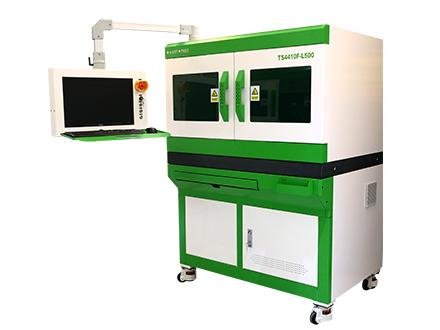
Laser Trimming Equipment is used to fine-tune the resistance of Thick Film and Thin Film resistors, ensuring they meet strict tolerance requirements. The process involves using a high-precision laser to remove small portions of the resistor material, adjusting the resistance value without damaging the circuit.
Thick Film vs. Thin Film Resistor Technology
✅ Thick Film Resistors
-
Made by screen-printing resistive paste on a ceramic substrate.
-
Cost-effective, widely used in consumer electronics and automotive applications.
-
Tolerance typically ranges from 1% to 5%.
✅ Thin Film Resistors
-
Manufactured by depositing a thin resistive layer onto an insulating substrate.
-
Offers high precision and stability, commonly used in medical and aerospace applications.
-
Tolerance as low as 0.01%, making them ideal for sensitive circuits.
Types of Thick Film Resistors
-
Standard Thick Film Resistors – General-purpose, cost-effective components.
-
High-Power Thick Film Resistors – Designed for applications requiring high heat dissipation.
-
Precision Thick Film Resistors – Used in circuits requiring better accuracy than standard thick films.
Applications of Laser Trimming in Resistor Technology
-
Medical Devices – Ensuring precise resistance values in life-saving equipment.
-
Automotive Electronics – Used in sensors and control units.
-
Aerospace & Defense – Provides high-stability resistors for critical missions.
-
Consumer Electronics – Found in smartphones, laptops, and smart appliances.
Conclusion
Laser Trimming Equipment plays a key role in refining Thick Film and Thin Film resistors, improving their accuracy and performance. Understanding the Thick Film vs. Thin Film differences helps in selecting the right resistor type for various applications.




 Arabic
 French
 Spanish
 Portuguese
 Deutsch
 Turkish
 Dutch
Dutch
 Italiano
 Russian
 Romaian
 Portuguese (Brazil)
 Greek
Greek