


What Is Polycaprolactone (PCL)?
Polycaprolactone (PCL) is a high-performance biodegradable polyester synthesized through the ring-opening polymerization of ε-caprolactone.
As a semi-crystalline polymer with excellent mechanical flexibility, chemical stability, and biocompatibility, PCL has attracted growing attention across medical, industrial, and sustainable materials applications.
1. Material Characteristics
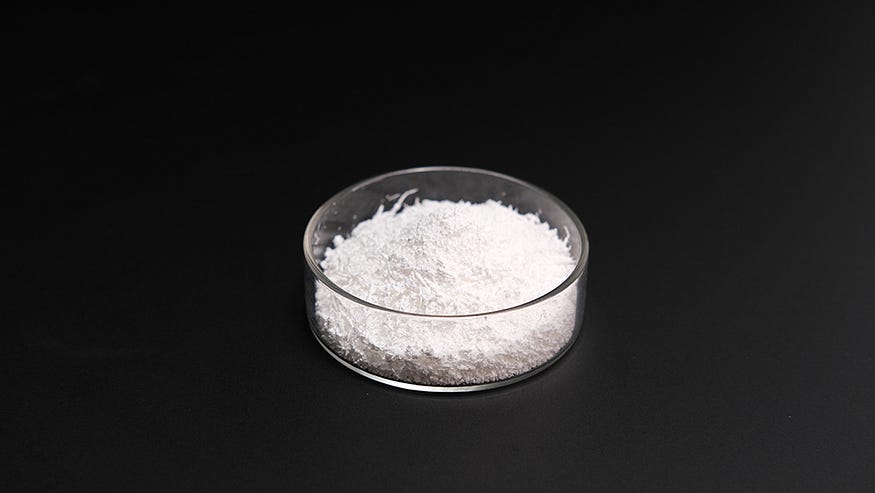
PCL appears as a white, wax-like crystalline solid with a melting point of approximately 59–64 °C and a glass transition temperature near –60 °C.
It remains soft and ductile at room temperature, and its relatively low melting point allows for easy processing by extrusion, injection molding, hot pressing, or 3D printing.
The degradation of PCL mainly proceeds through hydrolysis of its ester bonds, followed by microbial metabolism that converts the breakdown products into carbon dioxide and water.
Its degradation rate depends on molecular weight, crystallinity, temperature, humidity, and microbial activity.
Compared with polylactic acid (PLA), PCL degrades more slowly but with greater stability, making it suitable for applications that require controlled, long-term performance.
Moreover, PCL demonstrates outstanding compatibility with a wide range of polymers such as PLA, polyurethane (PU), polyvinyl alcohol (PVA), and starch, enabling formulation flexibility and property optimization.
2. Application Fields
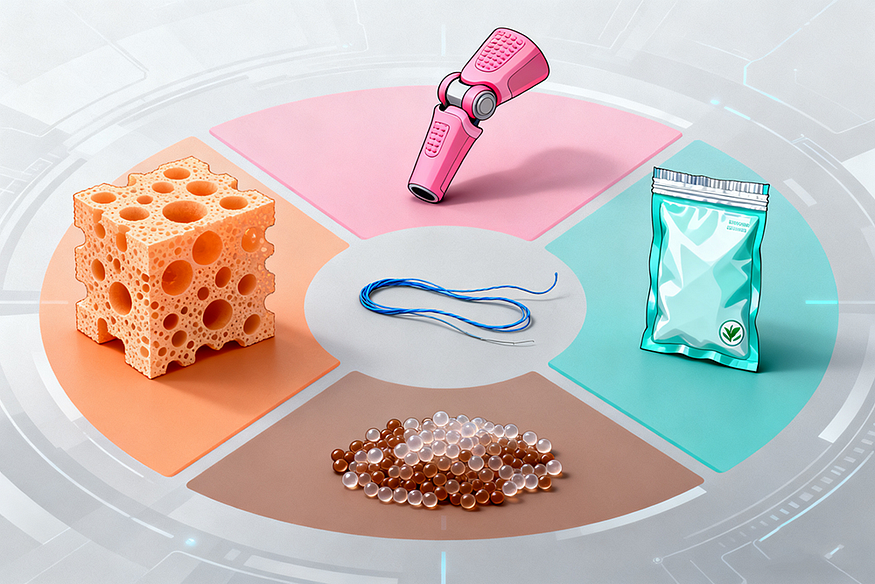
Polycaprolactone is widely used in biomedical engineering, polymer modification, environmental packaging, and high-precision manufacturing.
Among these, medical and industrial applications represent its most mature and commercially significant fields.
(1) Biomedical and Healthcare Applications
Because of its excellent biocompatibility and predictable degradation, PCL has become an important material in the biomedical field.
Tissue engineering and regenerative medicine:
PCL scaffolds provide temporary structural support for bone, cartilage, and skin regeneration while gradually degrading as new tissue forms.
Drug-delivery systems:
PCL microspheres and nanoparticles serve as carriers for sustained or targeted drug release, commonly applied in cancer therapy, diabetes treatment, and localized medication delivery.
Absorbable sutures and membranes:
The flexibility and slow degradation of PCL make it suitable for absorbable sutures and implantable membranes, eliminating the need for secondary removal surgery.
In this sector, eSUNMed supplies medical-grade PCL raw materials and microspheres with high purity, uniform particle size, and excellent dispersibility.
These microspheres are engineered for controlled drug-release performance, stable degradation profiles, and high reproducibility — meeting the demanding requirements of pharmaceutical and biomedical device applications.
(2) Industrial and Functional Materials
In polymer industries, PCL is commonly used as a modifier or precursor for polyurethane production.
Polymer modifier:
Blending PCL with polypropylene (PP), polyethylene (PE), or polystyrene (PS) significantly improves impact resistance, toughness, and flexibility.
PVC plasticizer:
PCL acts as an effective plasticizer for polyvinyl chloride (PVC), enhancing low-temperature performance and processing flowability while improving elasticity and durability.
High-performance polyurethane precursor:
PCL-based polyols are key raw materials for high-performance polyurethanes that exhibit excellent resistance to water, oil, solvents, and aging. These materials are widely used in coatings, adhesives, synthetic leather, and elastomers.
(3) 3D Printing and Educational Materials
Due to its low melting point, non-toxicity, and reusability, PCL is ideal for 3D printing and thermoplastic modeling materials.
It is extensively applied in rapid prototyping, mold making, and educational training, where its low processing temperature (around 60 °C) ensures safety and ease of use.
PCL allows designers to simulate the form and mechanical properties of final plastic products, providing a versatile option for teaching and experimental applications.
(4) Eco-friendly Packaging and Consumer Goods
As a biodegradable polyester, PCL is increasingly adopted in the production of compostable films, packaging bags, and agricultural mulch films.
When blended with PLA or starch, it achieves a balance between cost, mechanical strength, and biodegradability.
Driven by the global demand for sustainable materials, PCL is also gaining traction in food packaging, cosmetics, and electronics applications.
3. Market Outlook and Industry Trends
The market demand for biodegradable polymers continues to grow, and PCL is becoming an essential component in sustainable materials development.
In particular, the biomedical and controlled-release sectors require high-purity PCL microspheres and specialized grades, while industrial and environmental applications focus on polymer modification and eco-friendly manufacturing.
4. Conclusion
Polycaprolactone (PCL) is a biodegradable polymer that combines processability, biocompatibility, and environmental sustainability.
It serves as a vital foundation for biomedical applications and a key component of future eco-friendly materials systems.
With continuous technological innovation and expanding market adoption, PCL is poised to play an increasingly important role in medical engineering, industrial materials, and sustainable manufacturing.

Represented by eSUNMed, leading enterprises in this field are driving industrialization and high-value application of PCL through advanced polymer synthesis and microsphere engineering, bringing new momentum to the global biodegradable materials industry.



 English
 Arabic
 French
 Spanish
 Deutsch
 Turkish
 Dutch
Dutch
 Italiano
 Russian
 Romaian
 Portuguese (Brazil)
 Greek
Greek