


Security Camera Installation — Design, Privacy & Real-World Reliability
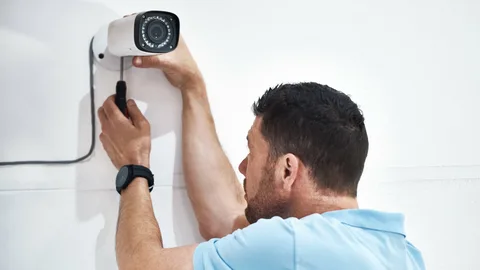
Proper security camera installation creates reliable, privacy-aware surveillance that protects property, simplifies evidence gathering, and deters threats without becoming a maintenance burden. A professional security camera installation evaluates coverage needs, camera types, lighting conditions, storage strategy, network segmentation, and legal/privacy considerations to deliver a system that works day after day.
Define protection goals before selecting cameras
A successful security camera installation starts by defining what you want to achieve: perimeter detection, license-plate capture, indoor monitoring of high-value areas, or baby/elder monitoring with privacy controls. Different goals require different sensors. Perimeter protection benefits from wide-angle, weather-rated cameras with motion analytics; license-plate capture demands narrow field-of-view, high-frame-rate cameras with IR illumination; indoor monitoring often prioritizes resolution, low-light performance, and privacy masking. Clarifying goals keeps the project practical and prevents over-coverage or wasted expense.
Camera types, optics, and sensors: match to the scene
There are many camera types and a good security camera installation matches optics to the scene. Fixed dome cameras are discreet and vandal-resistant for entrances. PTZ cameras can track movement across large areas when paired with automation rules. Bullet cameras with long focal lengths are useful for sightlines down driveways. Low-light performance, wide dynamic range (WDR), and true day/night capabilities determine whether a camera produces usable images in twilight or backlit conditions. During installation, installers check focal length and angle to ensure critical details — faces, license plates, or package drop zones — are captured at usable pixel density.
Lighting conditions and image quality
Lighting is often the limiting factor for image quality. Security camera installation includes a lighting assessment: bright backlight, reflective surfaces, or near-total darkness each require specific camera capabilities and lighting strategies. IR illumination helps in the dark but can blow out close objects; smart installers choose cameras with adjustable IR or supplement with scene-appropriate lighting. In areas with large luminance contrasts, cameras with high dynamic range or HDR capture maintain detail in shadows and highlights.
Placement, sightlines, and false-alarm reduction
Camera placement is a design decision. Cameras should be positioned to reduce obstructions and to cover approach paths and choke points while minimizing exposure to false triggers (moving trees, busy streets). A professional security camera installation uses a layered approach: wide-angle coverage for context plus tighter camera angles for identity capture at closer ranges. Installers also factor in mounting height, tamper resistance, and concealment to reduce vandalism. Proper placement reduces false alerts and improves the reliability of video analytics.
Network design, storage, and privacy
Modern cameras are networked devices and a security camera installation must include network segmentation. Cameras should live on a separate VLAN with limited outbound access to reduce attack surface. Storage strategies vary: local NVRs (network video recorders) provide privacy by keeping footage on-site, while cloud solutions offer off-site redundancy and easier remote access. Hybrid deployments combine local recording with cloud backups of critical clips. Retention policies must balance evidentiary needs, privacy, and storage cost — decide retention durations and ensure secure export capability when needed.
Motion analytics, alerts, and reducing noise
Advanced motion analytics reduce manual review. A security camera installation configures sensible alerting thresholds and rules — for example, distinguishing people from cars, or only alerting on motion in fenced zones after hours. Proper tuning minimizes nuisance notifications that cause users to ignore genuine alerts. Integrating video with other sensors (door contacts, motion detectors) also improves reliability: an alert that correlates with a door opening is more actionable than motion alone.
Integration with other systems and workflows
Effective security camera installation integrates with access control, alarm systems, and remote monitoring workflows. Cameras can trigger recording on alarm events, provide live views to security staff, or push event clips to incident response systems. For property managers, integrations that allow snapshots on delivery events or scheduled monitoring during occupancy windows improve operational value. Always design integration points with security and privacy in mind, ensuring only authorized systems can access live or recorded video.
Legal and privacy considerations
Security camera installation must respect legal boundaries. Check local laws about audio recording (which is more restricted than video in many jurisdictions), and ensure cameras don’t invade neighbors’ private spaces. Privacy masking, clear signage, and documented retention policies help maintain compliance and community goodwill. Installers should advise clients on what footage is recorded, who can access it, and how long it is retained.
Commissioning, testing, and verification
A commissioning phase validates that every camera delivers usable footage. Installers test framing at night and day, verify IR coverage, confirm NVR recording and export workflows, tune analytics, and perform simulated incident retrievals so staff know how to get clips quickly. Commissioning documents baseline performance and provides a reference should environmental changes (new landscaping, added lighting) require camera adjustments later.
Maintenance and lifecycle care
Cameras need care: cleaning lenses, verifying mounts, checking network paths, and applying firmware updates. A security camera installation should include a maintenance schedule and a process for staged firmware rollouts to avoid mass failures. For critical installations, include spare camera units and a quick-replacement plan to minimize downtime.
Choosing a provider and final checklist
Choose providers who do site surveys, produce a camera coverage map, document storage and retention, and provide commissioning reports. Ensure proposals include part numbers, mount types, and an explicit maintenance plan. Ask about data export processes and proof-of-concept installs for complicated scenes like license-plate capture.
Final thoughts
A sound security camera installation is a thoughtful mix of optics, networking, analytics, and privacy-aware policies. When designed and commissioned by experienced professionals, cameras become useful tools that deter crime, simplify investigations, and integrate into larger security workflows — without becoming a maintenance or privacy liability.




 English
 Arabic
 French
 Spanish
 Portuguese
 Deutsch
 Turkish
 Dutch
Dutch
 Italiano
 Russian
 Portuguese (Brazil)
 Greek
Greek