


SPARK Matrix™: Contract Lifecycle Management (CLM)
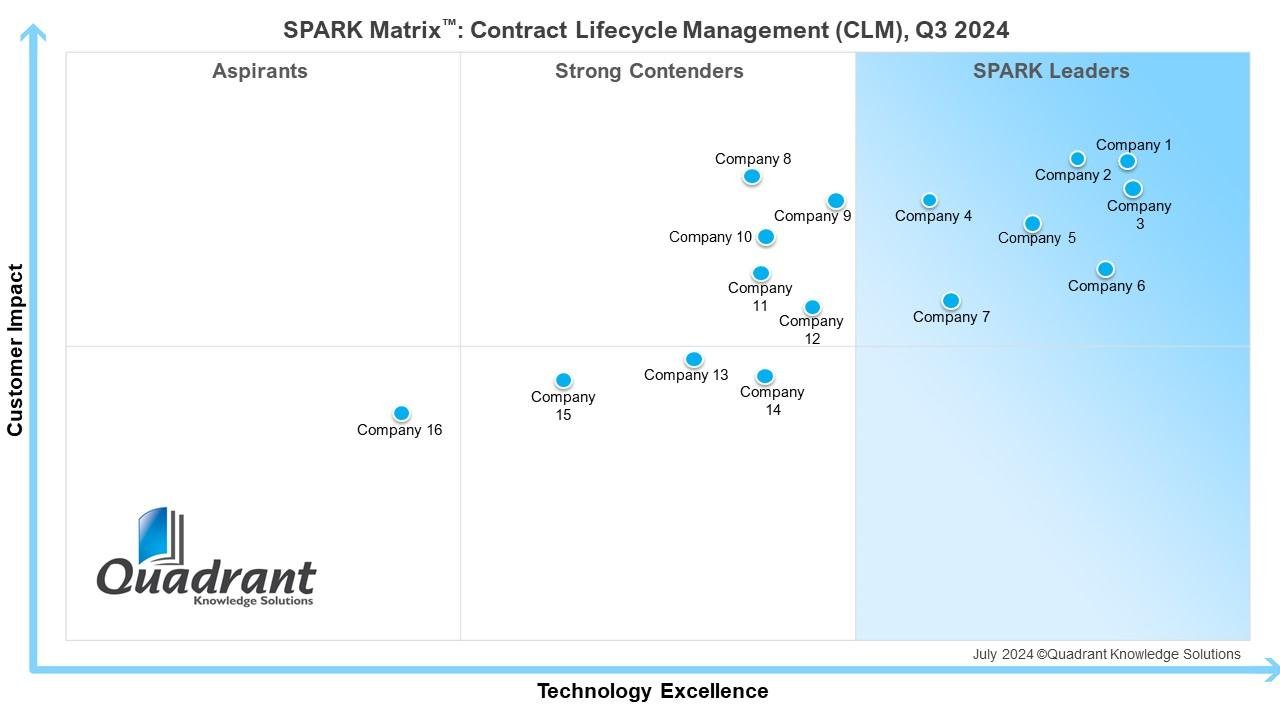
Contract Lifecycle Management (CLM) has evolved significantly to address the growing complexity and business-critical nature of modern contracting. What once served as a basic contract repository has now become a comprehensive, intelligent platform that drives operational efficiency, mitigates risk, and enhances enterprise-wide contract performance. As organizations manage increasing contract volumes across global operations, CLM has emerged as a strategic investment rather than a purely operational tool.
By incorporating automation, advanced analytics, and artificial intelligence (AI), modern Contract Lifecycle Management solutions enable organizations to digitize and optimize every stage of the contract lifecycle—from creation and negotiation to execution, compliance, and renewal.
From Contract Storage to Intelligent Automation
Early Contract Lifecycle Management systems focused primarily on centralized storage and document retrieval. While this addressed basic visibility challenges, it offered limited value in managing contract complexity. Today’s CLM platforms automate contract authoring, approval workflows, and version control, significantly reducing administrative effort and cycle times.
Automation ensures consistency in contract language, enforces approval policies, and accelerates turnaround times, enabling legal and business teams to collaborate more effectively. This shift from manual processes to intelligent automation has transformed CLM into a productivity-driven solution.
Advanced Analytics and AI-Driven Insights
Modern Contract Lifecycle Management (CLM) platforms leverage advanced analytics and AI to uncover insights hidden within contract data. AI-powered clause analysis, risk scoring, and obligation tracking help organizations identify potential exposures, compliance gaps, and performance bottlenecks.
These capabilities enable proactive risk management by flagging unfavorable terms, missed obligations, or renewal deadlines before they escalate into costly issues. By providing actionable intelligence, CLM solutions support better decision-making and stronger contract governance across the enterprise.
Enhancing Compliance, Audit, and Risk Management
As regulatory requirements intensify, Contract Lifecycle Management plays a crucial role in supporting audit, legal, and compliance functions. Modern CLM platforms maintain complete contract histories, enforce compliance policies, and provide audit-ready documentation.
By ensuring contracts align with regulatory standards and internal governance frameworks, CLM reduces legal exposure and strengthens organizational accountability. This evolution has positioned CLM as a cornerstone of enterprise risk management strategies.
Driving Enterprise-Wide Operational Efficiency
The digitalization enabled by Contract Lifecycle Management (CLM) extends beyond legal teams. Integrated with ERP, CRM, and procurement systems, CLM connects contracts to operational and financial processes, ensuring alignment across departments.
This integration improves contract visibility, reduces revenue leakage, and enhances supplier and customer relationships. By streamlining contract workflows and enabling cross-functional collaboration, CLM helps organizations achieve higher operational efficiency at scale.
Conclusion
Contract Lifecycle Management (CLM) has evolved from a simple contract repository into a strategic enterprise platform that drives efficiency, mitigates risk, and improves contract performance. Through automation, AI-driven analytics, and full digitalization of contracting processes, CLM empowers organizations to manage contracts proactively and strategically. As businesses continue to operate in complex and regulated environments, Contract Lifecycle Management will remain a critical enabler of operational excellence and sustainable growth.



 English
 Arabic
 French
 Portuguese
 Deutsch
 Turkish
 Dutch
Dutch
 Italiano
 Russian
 Romaian
 Portuguese (Brazil)
 Greek
Greek