


Why Sound Design Matters More Than Visuals in VR
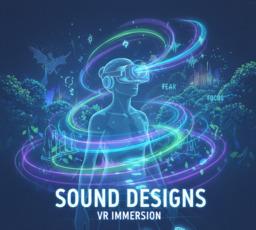
Why Sound Design Matters More Than Visuals in VR
When people think of virtual reality (VR), striking visuals usually come to mind first. Stunning landscapes, realistic textures, and lifelike characters are often credited with making VR “feel real.” But there’s another sensory element that’s equally — if not more — important: sound design. In many VR experiences, sound isn’t just an enhancement — it’s a foundation that deeply influences presence, emotion, behavior, and engagement.
Why Audio Is Central to VR Immersion
In VR, users feel “present” when their brains believe they’re inside an environment. Visuals create the space, but sound completes it. The brain processes audio differently from visuals — engaging emotional centers, reinforcing spatial awareness, and strengthening memory — which makes sound a powerful driver of immersion.
1. Audio Enhances Presence More Than Vision Alone
Visual stimuli certainly help VR feel real, but without sound, the experience feels hollow. Research has found that pairing immersive audio with VR visuals significantly increases presence — that psychological sensation of “being there.” In contrast, visuals alone often lack emotional depth and spatial context.
Sound tricks the brain into believing an environment is real in ways that visuals can’t. For example, hearing footsteps approaching from behind or the rustling of leaves to the side can trigger instinctive reactions similar to real life, even if the visuals aren’t perfect.
2. Sound Is Key to Spatial Navigation
Humans naturally use sound to understand their surroundings. In real life, we can tell where a noise comes from without seeing it. VR sound design mirrors this through spatial audio, which places sounds around the listener in three dimensions rather than just left and right.
This spatial positioning helps users:
-
Locate objects and characters without needing icons or visuals
-
React more instinctively to danger or events outside their visual field
-
Navigate complex environments using audio cues alone
Without strong audio cues, VR users may feel disoriented or cut off from the world around them — even if the visuals are detailed.
3. Sound Drives Emotional Engagement
A picture might be worth a thousand words, but a well-designed soundscape can evoke emotions instantly. The human brain links sound directly to emotional centers — the amygdala and hippocampus — which allows audio to:
-
Trigger emotional reactions before conscious thought
-
Reinforce narrative tension or relief
-
Anchor memories with emotional impact
For example, a subtle distant howl can create tension that visuals alone can’t match. Ambient environmental sounds make virtual spaces feel alive, and the right score or cue can shift mood instantly, drawing users deeper into the experience.
4. Audio Enhances Focus and Reduces Cognitive Load
In complex virtual environments, visuals compete for attention. Users can become overwhelmed if they have to visually scan every direction to understand what’s happening. Here’s where sound design becomes invaluable.
Strategic audio cues can:
-
Direct attention without breaking immersion
-
Signal important events or choices before users see them
-
Guide behavior naturally, reducing the mental effort required to interpret visuals alone
This means sound doesn’t just enrich a scene — it structures how users perceive and interact with it.
5. Sound Complements But Doesn’t Rely on Visuals
Visuals in VR are limited by hardware: resolution, frame rate, field of view, and rendering power all cap how realistically a scene can appear. Sound, on the other hand, can build the illusion of richness beyond what you can see.
For example:
-
Ambient audio can imply unseen environments
-
Echoes can suggest spacious halls
-
Directional cues can draw the user’s attention even when visuals are out of view
This makes sound a powerful partner to visuals — creating realism and emotional engagement that visuals alone struggle to match.
Conclusion: Sound Should Be a First-Class Citizen in VR Design
While visuals create the canvas for virtual worlds, sound design is the paint, texture, and brushstroke that bring it to life. In VR, sound does more than accompany visuals — it shapes presence, guides navigation, drives emotion, and deepens engagement on psychological levels.
For creators building VR experiences — whether games, stories, training simulations, or immersive worlds — investing in audio design isn’t optional… it’s essential. Great sound doesn’t just support the visuals — it completes them.



 English
 Arabic
 French
 Spanish
 Portuguese
 Turkish
 Dutch
Dutch
 Italiano
 Russian
 Romaian
 Portuguese (Brazil)
 Greek
Greek