


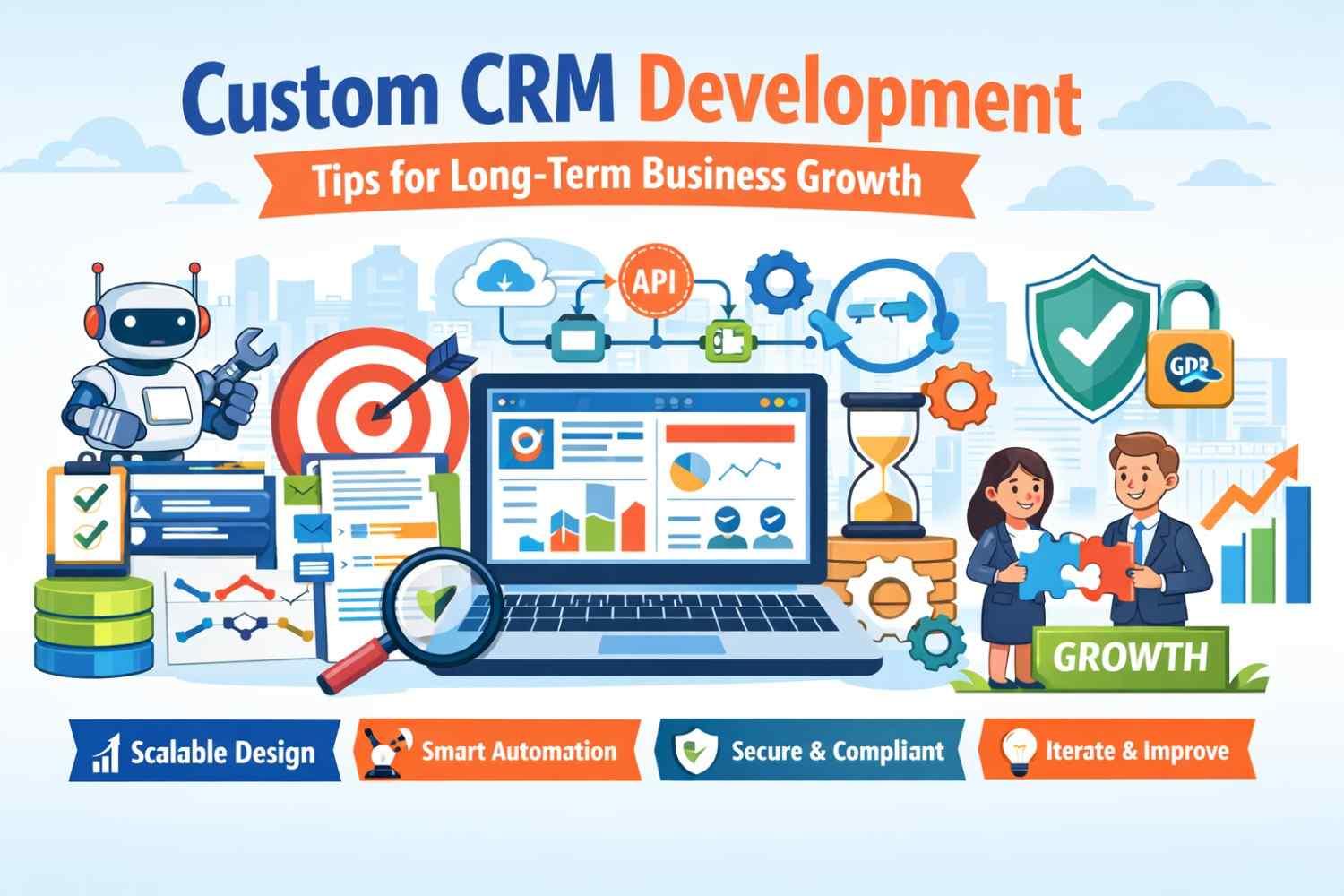
Introduction
Long-term business growth rarely comes from flashy tools or rushed decisions—it usually comes from systems that quietly do their job year after year. CRM platforms fall squarely into that category. Many companies adopt one during a growth spurt, only to realize later that it no longer fits how teams sell, support, or scale. That moment usually arrives at the worst possible time. A thoughtful CRM strategy, built with patience and foresight, can prevent that pain altogether. Customization, when done right, turns a CRM from a simple database into a dependable growth partner.
Why One-Size-Fits-All CRMs Rarely Scale
Off-the-shelf CRM tools are appealing because they promise quick wins and minimal setup. Early-stage teams often celebrate how fast everything clicks into place. Over time, though, cracks begin to show—rigid workflows, unnecessary features, and workarounds that quietly drain productivity. Growth exposes those weaknesses fast. Processes evolve, reporting needs deepen, and departments expect more than basic functionality. What once felt efficient starts feeling restrictive. Scalability isn’t about adding more users; it’s about supporting more complexity without chaos, something generic platforms struggle to deliver consistently.
Start with Business Processes, Not Features
Successful CRM systems mirror how a business actually operates, not how a software vendor thinks it should. Too many projects begin with feature lists instead of workflow maps, which explains why adoption later feels forced. Real value comes from documenting how leads move, how customers are supported, and where decisions are made. That clarity sets the foundation for custom crm development that supports growth instead of resisting it. When software adapts to people—rather than the reverse—teams move faster, training becomes easier, and long-term efficiency stops being a distant goal.
Design for Users Who Will Join a Year from Now
CRMs are often designed for today’s team, even though tomorrow’s team will rely on them just as heavily. Growth brings new roles, new responsibilities, and new expectations. A system that only works because “everyone knows how it works” will struggle the moment fresh users arrive. Scalable design focuses on clarity, consistency, and intuitive navigation. Clean interfaces and logical permissions reduce dependency on tribal knowledge. Planning for future users ensures that expansion doesn’t require constant retraining—or worse, a complete system overhaul.
Build Data Structures That Age Gracefully
Data tends to accumulate faster than discipline, which is why many CRMs become cluttered over time. Fields multiply, reports lose accuracy, and confidence in insights slowly erodes. Strong data architecture prevents that outcome. Well-defined objects, standardized inputs, and clear ownership rules keep information reliable as volume grows. Clean data structures also support better automation and analytics down the line. Long-term growth depends on decisions made from trustworthy data, not dashboards that require disclaimers every time they are presented in a meeting.
Automation That Supports Humans (Not Replaces Them)
Automation works best when it removes friction, not judgment. Over-automated CRMs often feel efficient on paper but frustrating in real use. Smart automation handles repetitive tasks—follow-ups, reminders, data syncing—while leaving room for human context. One of the most practical CRM Tips is treating automation as an assistant, not a manager. When workflows remain flexible, teams stay engaged instead of feeling monitored. The goal isn’t fewer people touching the system; the goal is people spending time where it actually matters.
Plan Integrations Like a Long-Term Relationship
CRMs rarely operate alone for long. Marketing tools, accounting platforms, support systems, and analytics dashboards eventually join the ecosystem. Poorly planned integrations create fragile connections that break during updates or scale-ups. Thoughtful integration planning prioritizes open APIs, documentation, and flexibility. That approach allows systems to evolve without constant rework. Custom crm development plays a key role here, enabling connections that fit real operational needs rather than forcing awkward compromises. Strong integrations quietly support growth without demanding constant technical attention.
Security and Compliance as Growth Enablers
Security often enters conversations too late—usually after growth has already introduced risk. A CRM built with compliance and data protection in mind supports expansion into new markets and industries with confidence. Role-based access, audit trails, and secure data handling protect both customers and reputation. These elements aren’t growth blockers; they are growth enablers. Businesses that treat security as foundational avoid painful retrofits later. Trust, once earned through reliable systems, becomes a competitive advantage that compounds over time.
Measure What Matters (and Ignore the Rest)
CRMs can track almost everything, which makes focus more important than ever. Metrics that look impressive but lack context tend to distract more than they inform. Effective reporting connects activity to outcomes—revenue, retention, and customer satisfaction. One of the most overlooked CRM Tips is knowing what not to measure. Clear dashboards aligned with business goals help teams act decisively instead of debating numbers. When insights are easy to trust and understand, the CRM becomes a decision engine rather than a reporting burden.
Iterate, Don’t Rebuild
Long-term CRM success rarely comes from massive rebuilds. Continuous improvement delivers better results with less disruption. Regular feedback, small enhancements, and periodic reviews keep the system aligned with evolving needs. Iteration allows growth without forcing teams to relearn everything every few years. Custom solutions shine here, because they are designed to evolve. A CRM that grows gradually alongside the business stays relevant longer, costs less to maintain, and avoids the burnout that comes with constant platform changes.
Conclusion
Sustainable growth depends on systems that quietly support progress instead of demanding constant attention. A well-planned CRM does exactly that—adapting as teams expand, markets change, and expectations rise. Thoughtful customization, disciplined data management, and steady iteration turn a CRM into long-term infrastructure rather than a short-term fix. Businesses that invest with patience today often avoid painful transitions tomorrow. Growth feels far less chaotic when the systems behind it are built to last.



 English
 Arabic
 French
 Spanish
 Portuguese
 Turkish
 Dutch
Dutch
 Italiano
 Russian
 Romaian
 Portuguese (Brazil)
 Greek
Greek