


How Commercial Event Cleaning Handles High-Traffic Areas Efficiently
Introduction: The Importance of Commercial Event Cleaning for Busy Venues
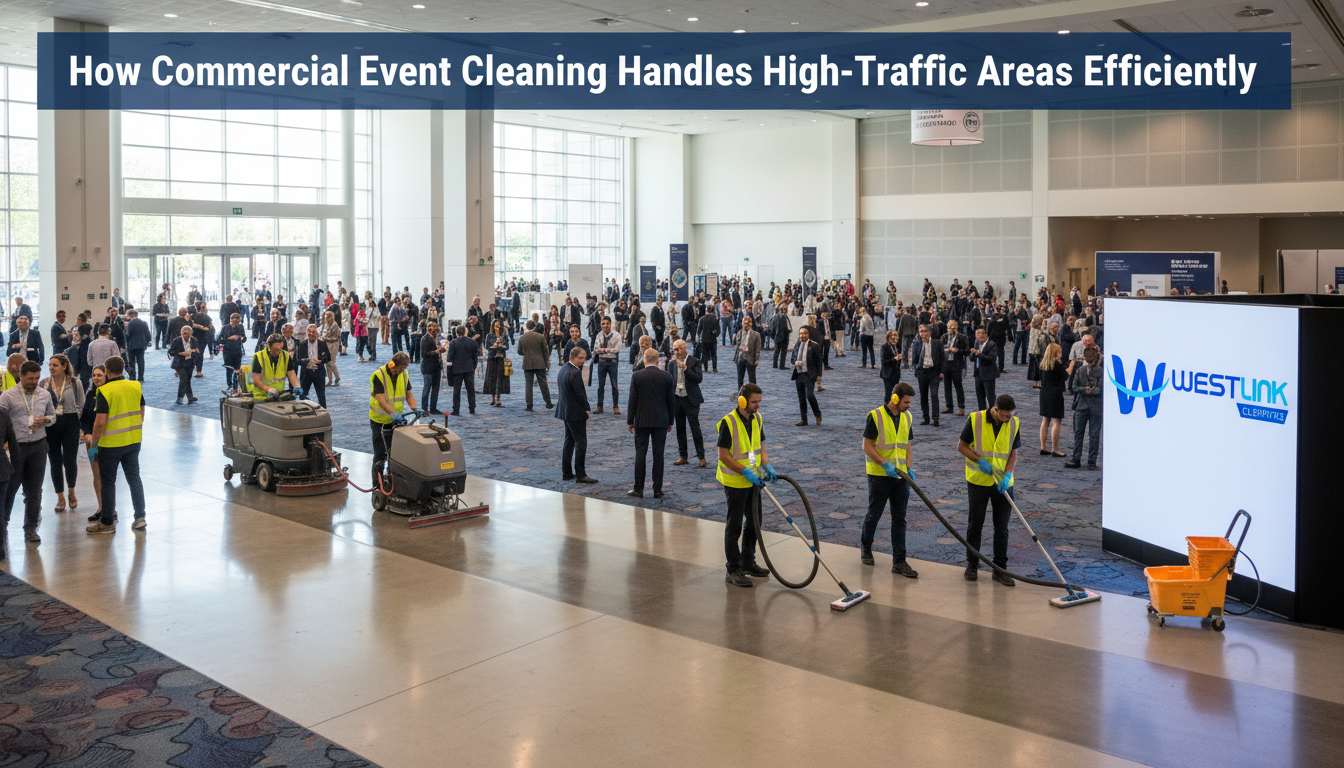
High-traffic areas in large events, such as entrances, lobbies, food courts, and restrooms, are the first places guests notice when they enter a venue. These spaces experience constant footfall and are prone to spills, debris, and general wear and tear. Managing these areas effectively is a challenge for any organizer, which is why Commercial Event Cleaning is crucial.
Efficient cleaning in busy areas is not just about appearance it is about safety, hygiene, and creating a positive guest experience. Imagine attending a conference or festival and stepping on a sticky floor near the entrance or seeing overflowing trash bins in a lobby. Even small issues like this can leave a lasting negative impression. Professional commercial event cleaning teams are trained to handle these high-traffic zones in a way that keeps the venue clean, safe, and welcoming throughout the event.
Understanding High-Traffic Areas
High-traffic areas are parts of a venue that see constant movement of people. Common examples include:
-
Entrances and exits
-
Lobbies and waiting areas
-
Hallways and corridors
-
Food courts and concession stands
-
Restrooms and washrooms
-
Stages or exhibition zones
These spaces are more susceptible to dirt, spills, and wear than other areas of the venue. Professional cleaning teams recognize that high-traffic areas require special attention and frequent monitoring.
For example, at a trade show with 2,000 attendees, the main lobby can quickly accumulate trash from promotional handouts and food wrappers. Similarly, restroom floors and sinks require constant attention to maintain hygiene. By identifying and mapping these zones in advance, cleaners can allocate resources efficiently and prevent any area from falling behind in cleanliness standards.
Pre-Event Preparation for High-Traffic Zones
Proper preparation is the first step in managing busy areas efficiently. Before the event begins, commercial cleaning teams perform thorough site inspections to identify potential problem zones.
During the inspection, they assess:
-
Expected footfall in each area
-
Potential spill-prone zones like food stalls
-
Areas where guests might congregate, such as seating or registration counters
For instance, a concert venue may have entrances and ticketing booths that will be crowded during peak hours. Cleaning teams plan their workflow around these bottlenecks to prevent dirt accumulation and ensure smooth guest movement.
Pre-event preparation also includes equipment checks. Cleaning carts, vacuum cleaners, mops, and disinfectants are positioned strategically for easy access. This ensures that when the event starts, cleaners can respond quickly to messes without wasting time moving equipment across the venue.
Continuous Monitoring and Cleaning During Events
High-traffic areas require real-time monitoring. Professional cleaning teams divide the venue into zones, each with a dedicated staff member. This approach allows quick detection of dirt, spills, or overflowing trash.
For example, in a convention center hosting a 3-day trade show, one team continuously inspects the main lobby, while another monitors food courts and corridors. Walkie-talkies or mobile apps can be used for communication between supervisors to ensure instant response when an issue arises.
Frequent cleaning ensures that problems are addressed before they escalate. Sticky floors, overflowing bins, or cluttered seating areas can be handled immediately, preventing guest complaints and maintaining a positive atmosphere throughout the event.
Efficient Waste Management in Busy Zones
Busy areas create waste very quickly. People throw food wrappers, cups, tissues, and flyers without thinking much. If cleaning is not managed properly, the place can look messy within a short time.
That is why proper waste management planning is very important. A clean space makes guests feel comfortable and keeps the environment safe and fresh.
Strategic Placement of Bins
Placing bins in the right spots makes a big difference. When bins are near entrances, seating areas, and food stalls, people can easily use them. This reduces the chance of litter on the floor.
Bins should also be clearly visible and easy to access. When guests see a bin nearby, they are more likely to throw waste properly instead of dropping it anywhere.
Regular Collection
Bins should be emptied before they become full. If bins overflow, trash spreads on the ground and creates a bad impression.
Regular checking and timely collection keep the area neat. It also helps prevent bad smells, especially in crowded and high-traffic zones.
Separate Recycling Streams
Separating waste into plastic, paper, and organic materials supports eco-friendly practices. It also makes recycling easier and more effective.
Clear labels on bins help guests understand where to throw their waste. This small step can greatly reduce mixed waste and support a cleaner environment.
Example: Corporate Expo Waste Control
At a corporate expo, bins placed at the end of every aisle encourage visitors to throw away flyers and cups properly. This helps reduce litter in walking areas.
With a proper collection schedule, the event space stays clean throughout the day. It also prevents odors from developing, even when the crowd is large.
Spill Response and Floor Safety
Spills are inevitable in areas with heavy foot traffic, especially near food or beverage stations. A spilled drink or food item can become a slip hazard if not addressed immediately.
Professional cleaning teams are trained for rapid spill response. They carry spill kits with absorbent materials, mops, and caution signs to alert guests. For instance, if a coffee cup falls near a registration desk, the team quickly secures the area, cleans the spill, and dries the floor before reopening it.
This proactive approach prevents accidents, reduces liability for the organizer, and maintains guest confidence in venue safety.
Regular Disinfection of High-Touch Surfaces
High-traffic areas are also high-touch zones. Door handles, elevator buttons, handrails, and counters can accumulate germs quickly.
Professional cleaners implement frequent disinfection schedules, especially during long events or in health-sensitive situations. For example, at a medical conference, registration counters, restroom handles, and exhibit booths are disinfected multiple times per day to prevent cross-contamination.
This routine ensures that hygiene is maintained without disrupting guest movement and contributes to an overall safer environment.
Efficient Staffing and Role Assignment
Proper staffing is critical for handling high-traffic areas efficiently. Cleaning teams are divided into specific roles, ensuring coverage for all busy zones.
For example:
-
One team handles restrooms and sanitation supplies.
-
Another focuses on lobby and entrance areas.
-
A third monitors food courts and spill-prone zones.
Supervisors coordinate these teams and adjust priorities based on crowd density and activity. During peak hours, additional staff can be assigned temporarily to maintain cleanliness. This strategic allocation ensures that no high-traffic zone is neglected.
Scheduling Cleaning Tasks Around Guest Flow
Timing is essential in busy areas. Cleaning should not disrupt guests but must remain consistent.
Professional cleaners schedule tasks around expected peak periods. For instance, floors in entrance lobbies are cleaned during quiet intervals, while restroom restocking occurs more frequently during breaks or lunch hours.
This flexible scheduling keeps the venue looking pristine without interfering with the event experience. Guests can enjoy the event without noticing the cleaning process, which reflects professionalism and attention to detail.
Post-Event Deep Cleaning
After the event ends, high-traffic areas require thorough cleaning. Debris, stains, and accumulated dirt must be removed to restore the venue for future use.
Professional cleaners conduct:
-
Waste removal and proper disposal
-
Deep floor cleaning and polishing
-
Carpet and upholstery vacuuming
-
Surface disinfection for tables, counters, and railings
For example, after a multi-day exhibition, the lobby, hallways, and food courts are returned to a pristine condition, ready for the next booking. Post-event cleaning ensures the venue’s longevity and maintains a professional image.
Using Technology for High-Traffic Cleaning Efficiency
Modern commercial cleaning teams often use technology to improve efficiency. Apps for tracking cleaning schedules, digital checklists, and real-time communication tools help coordinate tasks.
For example, a cleaning supervisor can assign a spill in the lobby to a staff member via a mobile app. The task is completed and logged, ensuring accountability and transparency. Technology streamlines operations and ensures that no high-traffic zone is overlooked.
Training and Quality Control
Staff training is critical to handling high-traffic areas efficiently. Professional cleaners are taught to identify problem zones, use equipment correctly, and respond quickly to spills or hygiene issues.
Quality control measures, such as supervisor inspections and checklists, ensure that standards are consistently met. For example, supervisors may walk through the venue every hour to inspect lobby floors, restroom cleanliness, and bin levels. This ensures accountability and maintains high hygiene standards throughout the event.
Conclusion
High-traffic areas in large events pose unique challenges for cleanliness, hygiene, and safety. From entrances and lobbies to food courts and restrooms, these zones require constant attention and strategic management. Professional Commercial Event Cleaning teams handle these challenges efficiently through careful planning, proper staffing, quick spill response, waste management, and technology-assisted monitoring.
By implementing these practices, event organizers can maintain a safe, hygienic, and visually appealing environment for guests. Clean high-traffic zones not only enhance guest experience but also protect the event’s reputation and ensure compliance with health and safety standards.
Investing in professional commercial event cleaning guarantees that every busy area is managed efficiently, leaving a positive impression on attendees and ensuring the overall success of any large-scale event.
FAQs
1. What are high-traffic areas in events?
High-traffic areas are parts of a venue with constant guest movement, including entrances, lobbies, corridors, food courts, and restrooms.
2. How do cleaners prevent spills from causing accidents?
They use spill kits, absorbent materials, and caution signs to respond immediately, ensuring safety in busy areas.
3. How often should high-touch surfaces be disinfected?
Surfaces like handles, counters, and railings should be disinfected several times a day, especially in health-sensitive environments.
4. Can technology improve cleaning efficiency in busy zones?
Yes, digital checklists, real-time communication apps, and task tracking help staff respond quickly and maintain standards.
5. Why is professional cleaning important for high-traffic areas?
Professional cleaning ensures safety, hygiene, and a positive guest experience, even in zones with heavy footfall.


 English
 Arabic
 Français
 Español
 Português
 Deutsch
 Türkçe
 Italiano
 Russian
 Romaian
 Portuguese (Brazil)
 Greek
Greek