


Complete Guide to Safety Relief Valve: Design Principles, Working Mechanism, and Industry Standards
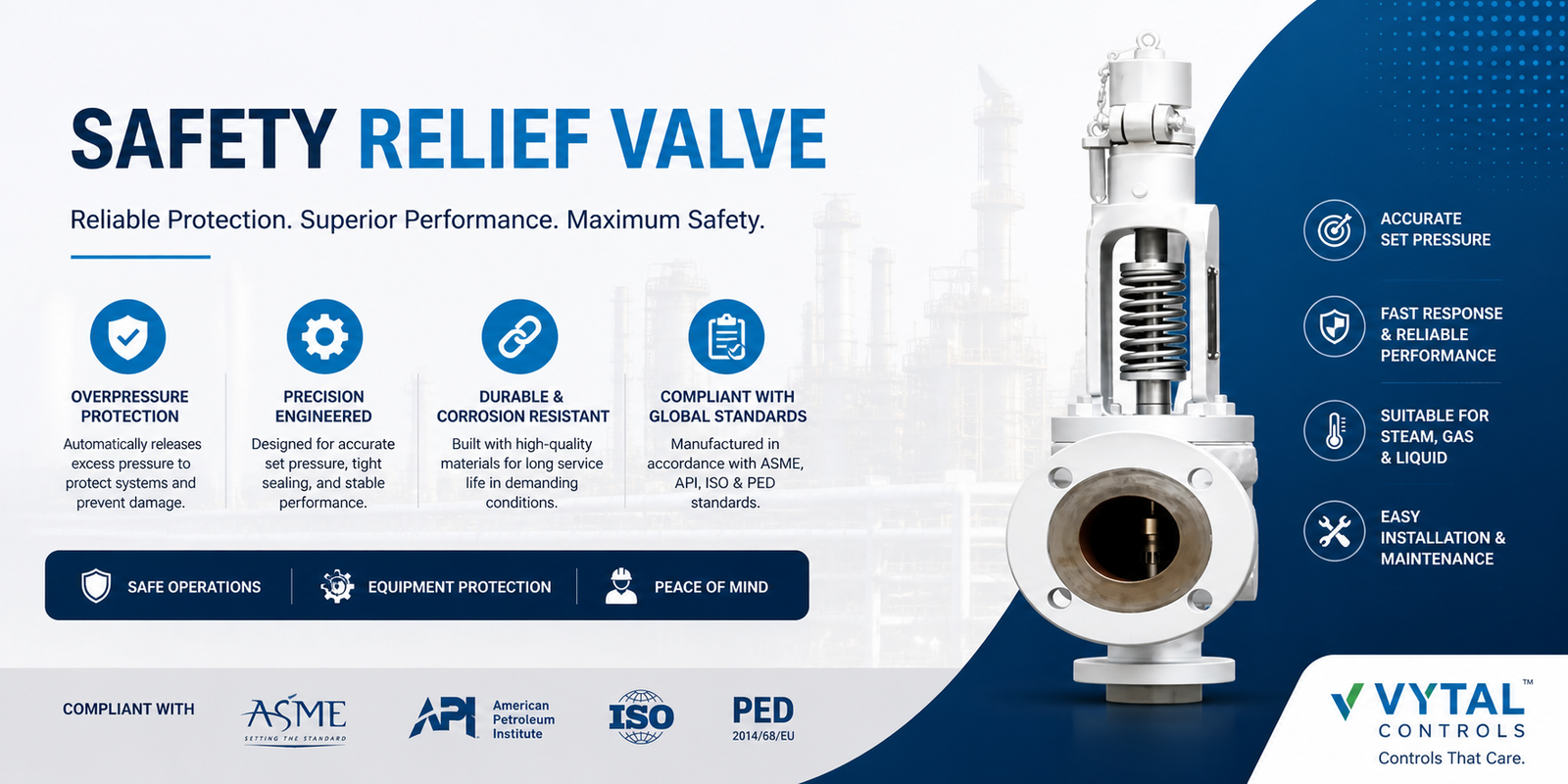
Complete Guide to Safety Relief Valve: Design Principles, Working Mechanism, and Industry Standards
Safety relief valves are one of the most critical safety components used in pressurized systems across industries. From chemical plants to power generation facilities, these valves act as the last line of defense against excessive pressure buildup. A properly designed and maintained safety relief valve ensures operational stability, protects equipment, and most importantly, prevents life-threatening accidents.
This in-depth guide explains everything you need to know about safety relief valves, including their design principles, working mechanism, types, applications, and global industry standards.
What is a Safety Relief Valve?
A safety relief valve is a mechanical device designed to automatically release pressure when it exceeds a predetermined safe limit. It protects systems such as boilers, pipelines, compressors, and pressure vessels from overpressure conditions that could otherwise lead to system failure or explosion.
Unlike standard control valves, safety relief valves operate automatically without external intervention, making them highly reliable in emergency situations.
Importance of Safety Relief Valves in Industrial Systems
In any pressurized system, maintaining pressure within safe limits is essential. Even a slight deviation can result in serious consequences. A well-functioning safety relief valve helps in:
- Preventing equipment damage and downtime
- Reducing the risk of explosions and hazardous leaks
- Ensuring compliance with safety regulations
- Protecting workers and surrounding environments
- Maintaining process efficiency and continuity
Because of these benefits, safety relief valve are considered mandatory in most industrial operations.
Design Principles of Safety Relief Valves
The design of a safety relief valve is based on precise engineering to ensure quick response and reliable operation under critical conditions. Several important factors are considered during its design:
1. Set Pressure and Blowdown
The set pressure is the pressure level at which the valve begins to open. It is carefully calibrated based on system design limits.
Blowdown refers to the difference between the opening pressure and the reseating pressure, ensuring stable valve operation.
2. Material Selection
Materials used in manufacturing must withstand extreme temperatures, high pressure, and corrosive environments. Common materials include:
- Stainless steel for corrosion resistance
- Carbon steel for strength and durability
- Alloy materials for high-temperature applications
Material selection directly impacts the lifespan and performance of the safety relief valve.
3. Spring Mechanism Design
Most safety relief valves use a spring-loaded mechanism. The spring force holds the valve closed under normal conditions and opens when system pressure exceeds the set limit.
4. Flow Capacity and Sizing
Proper sizing ensures the valve can discharge excess pressure quickly. Engineers calculate flow capacity based on:
- Maximum allowable pressure
- Fluid type (gas, steam, or liquid)
- Temperature and system volume
Incorrect sizing can compromise safety and system efficiency.
5. Seat and Seal Design
A tight sealing mechanism is essential to prevent leakage during normal operation. High-quality seat design ensures durability and consistent performance.
Working Mechanism of Safety Relief Valve
The working principle of a safety relief valve is simple yet highly effective. It operates based on the balance between system pressure and spring force.
Step-by-Step Operation
1. Normal Operating Condition
During standard operation, the system pressure remains below the set pressure. The valve stays closed, with the spring force holding the disc tightly against the seat.
2. Pressure Increase
When pressure inside the system rises and reaches the set point, the force exerted by the fluid overcomes the spring tension.
3. Valve Opening
The valve opens rapidly, allowing excess pressure to escape. This sudden release prevents pressure from exceeding safe limits.
4. Pressure Stabilization
As pressure decreases, the force acting on the valve reduces, allowing the spring to push the disc back toward the seat.
5. Reseating
Once the pressure drops below the reseating value, the valve closes completely, restoring normal system operation.
Types of Safety Relief Valves
Different industrial applications require specific types of safety relief valves. The most commonly used types include:
1. Spring-Loaded Safety Relief Valve
This is the most widely used type. It is simple, reliable, and suitable for a wide range of applications.
2. Pilot-Operated Safety Relief Valve
These valves use a pilot system for more precise pressure control and are ideal for high-pressure systems.
3. Balanced Bellows Safety Valve
Used in systems where back pressure can affect valve performance. The bellows design helps maintain consistent operation.
4. Thermal Relief Valve
Designed to handle pressure increases caused by thermal expansion in closed systems.
Applications of Safety Relief Valves
Safety relief valves are used across multiple industries, including:
- Oil and gas processing plants
- Chemical and petrochemical industries
- Power generation facilities
- Pharmaceutical manufacturing
- Water treatment systems
- HVAC and refrigeration systems
Their versatility makes them indispensable in both small-scale and large-scale operations.
Industry Standards and Regulations
To ensure safety and reliability, safety relief valves must comply with internationally recognized standards. These standards define design, testing, and performance requirements.
1. ASME (American Society of Mechanical Engineers)
ASME standards are widely used for boilers and pressure vessels. They ensure proper design, certification, and testing of safety relief valves.
2. API (American Petroleum Institute)
API standards are essential in oil and gas industries, focusing on valve sizing, installation, and performance.
3. ISO (International Organization for Standardization)
ISO standards ensure global quality consistency in manufacturing and performance.
4. PED (Pressure Equipment Directive)
This European directive ensures that pressure equipment meets strict safety requirements before being used in operations.
Compliance with these standards is crucial for legal approval and operational safety.
Installation Guidelines for Safety Relief Valves
Proper installation is as important as design and selection. Key guidelines include:
- Install the valve in a vertical position
- Avoid unnecessary piping restrictions
- Ensure proper venting of discharged fluid
- Use correct inlet and outlet connections
- Follow manufacturer recommendations
Improper installation can lead to malfunction or delayed response during critical situations.
Maintenance and Testing of Safety Relief Valves
Regular maintenance ensures that a safety relief valve functions correctly when needed. Recommended practices include:
- Routine inspection for wear and corrosion
- Periodic pressure testing and calibration
- Cleaning of internal components
- Replacement of damaged parts
- Documentation of maintenance records
Preventive maintenance helps avoid unexpected failures and extends the valve’s service life.
Common Challenges and Solutions
1. Leakage Issues
Often caused by worn-out seals or debris. Regular cleaning and seal replacement can resolve this.
2. Improper Set Pressure
Calibration errors can lead to incorrect operation. Periodic testing ensures accuracy.
3. Corrosion and Material Degradation
Selecting the right material and using protective coatings can prevent damage.
4. Valve Chattering
Occurs due to improper sizing or unstable pressure conditions. Correct sizing and system design can eliminate this issue.
Future Trends in Safety Relief Valve Technology
With advancements in industrial automation, safety relief valves are evolving to become more efficient and intelligent. Key trends include:
- Smart valves with real-time monitoring
- Integration with IoT-based systems
- Improved materials for extreme conditions
- Enhanced precision and faster response times
These innovations are helping industries improve safety and operational efficiency.
Conclusion
A safety relief valve is an essential safety component that ensures the protection of industrial systems from dangerous overpressure conditions. Understanding its design principles, working mechanism, and compliance with industry standards is crucial for safe and efficient operations.
Selecting the right valve, ensuring proper installation, and maintaining it regularly can significantly reduce risks and improve system reliability. Trusted manufacturers like Vytal Controls play a vital role in delivering high-quality safety relief valves that meet modern industrial requirements.



 English
 Arabic
 Français
 Português
 Deutsch
 Türkçe
 Dutch
Dutch
 Italiano
 Russian
 Romaian
 Portuguese (Brazil)
 Greek
Greek