


Could Ketamine Infusion Therapy Be the Mental Health Solution You Need?
Depression can become exhausting when standard treatments do not bring enough relief. Many people try antidepressants, therapy, lifestyle changes, medication adjustments, and still feel trapped in the same emotional weight. That kind of depression does not just affect mood. It can disrupt sleep, work, focus, relationships, motivation, and the ability to feel present in daily life.
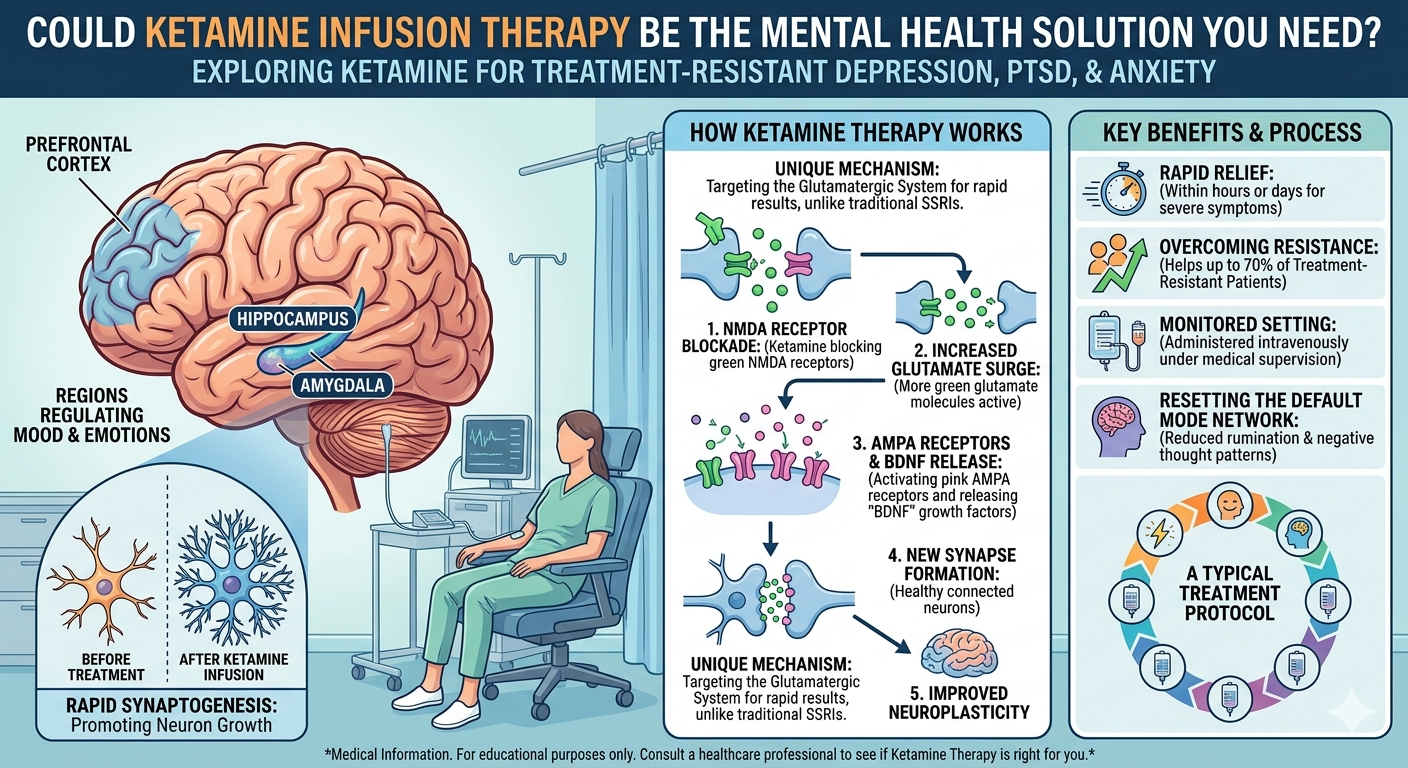
That is why Ketamine Infusion Therapy has become such a serious conversation in mental health care. It offers a different treatment path for selected patients, especially those dealing with treatment-resistant depression. The National Institute of Mental Health describes ketamine as a rapid-acting treatment discovery for severe depression, noting that it can reduce symptoms within hours in some people whose symptoms did not improve with other treatments.
Still, ketamine infusion should never be treated like a casual wellness trend. Ketamine is FDA-approved as an anesthetic, but the FDA states that ketamine is not approved for the treatment of any psychiatric disorder. Its use for depression is generally off label and requires careful screening, clinical supervision, and ongoing follow-up.
Why Ketamine Infusion Therapy Is Getting Attention
Ketamine Infusion Therapy is gaining attention because many patients need more than the traditional trial-and-error model. Standard antidepressants can help, but they often take weeks or months to show full results. For people with severe depression, that waiting period can feel painfully long.
Ketamine works differently. Many traditional antidepressants affect serotonin, norepinephrine, or dopamine pathways. Ketamine affects the glutamate system, especially NMDA receptor activity, which plays a role in brain communication, mood regulation, learning, and neural flexibility. Research has connected ketamine’s antidepressant effects with glutamate signaling and synaptic plasticity.
That different pathway gives providers another route when older treatment options have not worked well enough. It does not guarantee results, but it does open a serious clinical conversation for patients who feel stuck.
Who May Consider Ketamine Infusion Therapy?
Ketamine Infusion Therapy is most often discussed for adults with treatment-resistant depression. These are patients who have tried standard treatments and still have symptoms that interfere with daily life.
A provider may consider ketamine infusion when depression remains severe despite antidepressants, therapy, medication changes, or other structured mental health care. Some patients may also discuss ketamine after experiencing limited response or difficult side effects from traditional medications.
A qualified provider should always review the full picture before treatment. That includes depression history, previous medication response, current prescriptions, blood pressure, heart health, substance use history, psychiatric history, pregnancy status, and current safety risk.
What Makes It Different From Traditional Depression Treatment?
Ketamine infusion is different because it does not follow the usual antidepressant timeline or mechanism. Instead of waiting weeks to evaluate a response, some patients may notice symptom changes much sooner.
This speed matters because severe depression can feel urgent. Faster symptom movement may help some patients re-engage with therapy, rebuild routines, and regain enough emotional space to keep working on recovery.
But speed should not be confused with certainty. Some patients respond quickly. Some improve gradually. Some do not respond enough to continue. Good care measures real outcomes, including mood, sleep, motivation, daily function, safety, and side effects.
What Happens During Ketamine Infusion Therapy?
Ketamine infusion usually takes place in a monitored clinical setting. The patient receives ketamine through an IV while the care team observes vital signs, comfort level, sedation, and emotional response.
During treatment, some patients feel calm, dreamlike, reflective, detached, or temporarily disconnected from their surroundings. Others may feel dizzy, nauseated, tired, anxious, or disoriented. These effects are one reason clinical monitoring matters.
The treatment does not end when the IV stops. Patients usually need time to recover before leaving. They should not drive themselves home after treatment because ketamine can affect alertness, judgment, coordination, and perception.
Signs Ketamine Infusion Therapy May Be Worth Discussing
Ketamine Infusion Therapy may be worth a serious conversation when depression continues to interfere with life despite consistent care. A provider should make the final decision, but these signs may suggest that a patient should ask about advanced treatment options.
-
Standard antidepressants have not helped enough.
If multiple medications have failed to deliver meaningful relief, ketamine infusion may offer another clinical path. -
Depression keeps disrupting daily life.
Ongoing problems with sleep, work, focus, relationships, motivation, and emotional stability may show that current treatment is not doing enough. -
The patient needs faster clinical feedback.
Some patients may benefit from a treatment model that can show symptom changes sooner than traditional medication timelines. -
The patient can commit to supervised care.
Ketamine infusion requires clinical monitoring, transportation planning, and follow-up visits. -
The patient wants structured treatment, not guesswork.
A strong program tracks symptoms, side effects, safety, and functional improvement over time. -
Therapy and follow-up remain part of the plan.
Ketamine may help create movement, but recovery still needs support, structure, and continued mental health care. -
Safety risks can be reviewed honestly.
Patients should share medical conditions, substance use history, medications, psychiatric history, and any crisis symptoms before treatment.
Safety Must Stay at the Center
Ketamine can cause real side effects. The FDA has warned that ketamine products used without onsite monitoring can create serious risks, including sedation, dissociation, changes in vital signs, respiratory depression, abuse, misuse, psychiatric events, and urinary or bladder symptoms.
This is why a responsible clinic does not rush treatment. The care team should screen the patient carefully, explain risks clearly, monitor vital signs, manage side effects, and provide aftercare instructions.
The American Psychiatric Association consensus statement on ketamine for mood disorders also emphasized careful patient selection, safety review, monitoring, and clinical judgment because psychiatric use of ketamine expanded without FDA approval for those indications.
Ketamine Infusion Therapy Is Not the Same as Spravato
Ketamine Infusion Therapy and Spravato are related, but they are not the same treatment. Ketamine infusion usually refers to IV ketamine given in a clinical setting. For depression, this use is generally off label.
Spravato is esketamine nasal spray, a ketamine-derived medication. Spravato is FDA-approved for treatment-resistant depression, including as a standalone treatment or with an oral antidepressant. It is also approved with an oral antidepressant for depressive symptoms in adults with major depressive disorder with acute suicidal ideation or behavior.
This difference matters for access, insurance coverage, dosing, safety rules, monitoring requirements, and treatment planning. Patients should understand exactly which treatment they are receiving and why the provider recommends it.
When Ketamine Infusion Therapy May Not Be the Right Fit
Ketamine infusion is not right for everyone. Some patients may need another treatment approach because of medical risk, unstable psychiatric symptoms, active substance misuse, uncontrolled blood pressure, certain heart concerns, pregnancy considerations, or a need for emergency-level care.
It may also not be the best fit for someone expecting a one-session cure. Ketamine may help some patients, but long-term recovery usually requires therapy, follow-up care, symptom tracking, medication review, sleep support, and lifestyle structure.
Strong providers know when to recommend ketamine and when to choose another path. That judgment protects patients.
The Clinic Process Can Make or Break the Treatment
A good ketamine infusion program should feel organized from the beginning. The provider should complete a detailed intake, explain the off-label status, review medical and psychiatric risks, monitor the session, and track outcomes after treatment.
The clinic should also provide clear aftercare. Patients should know how to plan transportation, what side effects may happen, when to contact the provider, and how progress will be measured.
This structure separates responsible treatment from risky marketing. Ketamine should not be sold as a miracle. It should be delivered as serious clinical care for selected patients.
Could It Be the Solution You Need?
Ketamine Infusion Therapy could be part of the solution for some people with treatment-resistant depression, especially when standard treatments have not brought enough relief. It may offer a different brain pathway, faster symptom movement for some patients, and a more structured treatment experience.
But the answer depends on the patient. Diagnosis, treatment history, medical risk, psychiatric stability, current medications, and follow-up needs all matter.
The best way to think about ketamine infusion is simple: it is not a shortcut. It is a serious treatment option that may help selected patients when delivered with proper screening, supervision, and clinical discipline.
Final Thoughts
Ketamine Infusion Therapy has changed the mental health conversation because it gives some patients another path when traditional depression treatments have not worked well enough. Its rapid-acting potential and different mechanism make it one of the most important treatment discussions in modern depression care.
Still, the treatment requires caution. Ketamine is not FDA-approved for psychiatric disorders, and infusion therapy for depression is generally used off label. Patients need careful screening, monitored treatment, honest expectations, and strong follow-up care.
For someone living with long-term depression, Ketamine Infusion Therapy may be worth discussing with a qualified mental health provider. The goal is not chasing the newest treatment. The goal is finding the safest, most clinically grounded path toward real recovery.


 English
 Arabic
 Français
 Español
 Português
 Deutsch
 Dutch
Dutch
 Italiano
 Russian
 Romaian
 Portuguese (Brazil)
 Greek
Greek