


Labelling Machine Guide for Faster, More Reliable Manufacturing Lines
For most manufacturers, labelling is an afterthought — the last step before the product ships. That's a mistake. A label carries compliance data, batch numbers, barcodes, ingredients, safety warnings, and the brand itself. Get it wrong and a good product looks unreliable. Get it slow and it backs up the whole line.
That's why picking the right labelling machine matters more than it looks. Whether you're running food, beverages, detergents, cosmetics, perfumes, or consumer goods, the machine has to match your container shape, production speed, film type, and where the operation is headed.
For manufacturers across the Middle East, Asia, the USA, and England, the right labelling system cuts manual dependency, tightens packaging consistency, and keeps the line moving as volumes grow.
Why Labelling Accuracy Matters in Modern Manufacturing
Packaging is often the first thing a buyer judges — before the product is opened, before it's used. Labels carry branding, regulatory information, barcodes, batch codes, and usage instructions. When any of that is misaligned, wrinkled, or missing, the problems compound fast:
• Product rejection during quality checks
• Higher material wastage
• Barcode scanning failures
• Rework and unplanned downtime
• Compliance risk in regulated markets
• Brand damage that's hard to quantify
A reliable labelling machine controls these issues by applying labels at a consistent position and speed, every cycle. At high volumes, that consistency is what keeps both efficiency and profitability intact.
What Is a Labelling Machine?
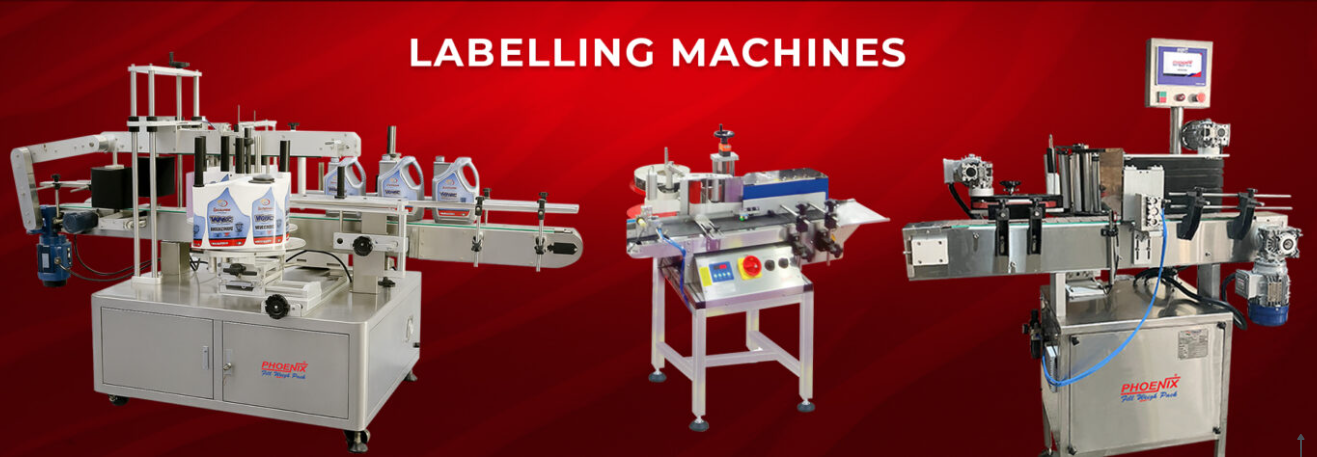
A labelling machine is industrial equipment that applies labels to bottles, jars, cans, pouches, cartons, or other packaging formats. Depending on the product, it may label one side, two sides, the top, or wrap a label around a round container.
In a modern packaging line, the labeller works alongside filling machines, capping machines, conveyors, coding systems, and inspection equipment. A detergent line might include a detergent liquid soap filling packing machine, capper, round bottle labeller, and carton packer. A food line might combine a food processing machine, filler, food packaging machine, and automatic labeller.
The goal is simple: product moves from production to final pack with as little manual handling as possible.
Common Types of Labelling Machines for Industrial Use
Different containers need different labelling technology. What works for a round bottle won't work for a flat pouch or a square jar. The right choice comes down to container geometry, label material, line speed, and layout.
Front and Back Labelling Machines
These apply labels to two opposite sides of a container — common for detergents, sauces, oils, beverages, and cosmetics. They keep label placement uniform, which matters for retail presentation and barcode readability.
Round Bottle Labelling Machines
For cylindrical containers, these machines apply wrap-around or single labels depending on what the product needs. They're standard in beverage, perfume, cosmetic, pharmaceutical, and chemical lines. A fully automatic perfume packing machine, for example, typically needs accurate round bottle labelling after filling and capping.
4-Side Labelling Machines
Useful when a product needs labels on multiple faces — square bottles, cartons, or premium packs where branding, compliance, and product information all need visible space. For exporters, multi-side labelling helps fit multilingual content and regional regulatory requirements onto one pack.
Pouch and Top Labelling Machines
For flat packs, premade pouches, trays, and flexible packaging — frequently used in food, snacks, powders, and consumer goods. When integrated with a fully automatic food packaging machine, top labelling removes a manual step that often becomes a bottleneck.
How Labelling Machines Improve Production Efficiency
Manual labelling works at low volumes. As order sizes grow, small human variations — angle, position, speed — start to create waste and quality problems that are hard to trace. A properly specified labelling machine eliminates that variability:
• Less manual labour dependency
• Faster throughput
• Consistent label placement, cycle after cycle
• Lower rework rates
• Continuous production with fewer interruptions
• Less label material wasted
• More professional finished product
For operations running multiple SKUs, automation also makes changeovers more predictable. Adjustable guides, sensors, and PLC controls let operators switch between container sizes without starting from scratch.
Integration with Filling, Packing, and Processing Lines
A labelling machine shouldn't be bought in isolation. It has to fit what's already on the line.
In a typical setup, product moves through a filler, capper, labeller, coder, check weigher, and packing stage. In chemical or detergent production, mixing tanks, liquid filling, cap tightening, labelling, and carton packing all run in sequence. The same logic applies across perfume lines (where a crimping machine may come before labelling) and food lines (where a food packaging machine synchronises with weighing and sealing).
A labeller that's too slow holds back the whole line. One that's too fast but poorly synced creates jams and misapplied labels. Before buying, map out line speed, conveyor direction, floor space, product stability through the labelling zone, and where the line might need to scale.
Key Buying Considerations for Manufacturers
Product Type and Container Shape
Start here. Is it a bottle, pouch, jar, tin, carton, or tray? Is the surface flat, curved, square, oval, or flexible? Does the product need front, back, top, wrap-around, or multi-side labelling? The answers determine the machine configuration before anything else.
Speed, Accuracy, and Output Requirements
Work out current and future production needs before shortlisting equipment. A machine sized for 1,000 units per shift creates a problem if demand doubles in two years. Practical questions to ask:
• How many units per hour?
• How many SKUs will run on this machine?
• How often will changeovers happen?
• What label placement accuracy is required?
• Will the line run one shift or multiple shifts?
The right answer isn't always the fastest machine. It's the one that delivers stable output without disruption.
Automation Level and Future Scalability
Semi-automatic suits smaller runs or tighter budgets. Fully automatic is the right call for continuous production, export operations, or anywhere manual handling needs to come down. If expansion is on the roadmap, check whether the machine can integrate with conveyors, filling lines, coders, and inspection units before committing.
Maintenance, Training, and Support
Maintenance is the most commonly skipped buying criteria. A machine might look good on price and spec, but long-term value depends on how easy it is to keep running. Before purchasing, ask:
• What does preventive maintenance involve?
• Are spare parts stocked locally or imported on demand?
• What operator training is included?
• What does after-sales support look like?
• How are calibration and adjustments handled?
On a high-volume line, an hour of downtime is expensive. Support is part of the investment, not an add-on.
ROI, Cost Control, and Long-Term Value
The purchase price is the smallest number in the total cost of ownership. Installation, training, maintenance, spare parts, changeover time, electricity, operator hours, and downtime reduction all factor in.
A well-matched machine improves ROI by cutting label waste, increasing throughput, reducing headcount dependency, and holding packaging consistency at scale. For exporters, tighter packaging quality can also reduce rejection risk in international markets — which is a cost that rarely appears in the original buying calculation.
Common Mistakes to Avoid
Most buying mistakes come down to evaluating the machine in isolation rather than in context. Common ones:
• Buying without testing actual container samples on the machine
• Ignoring future production growth when sizing
• Not checking label material compatibility
• Underestimating changeover time and complexity
• Skipping due diligence on service and spare parts
• Treating labelling as separate from the filling and packing line
• Buying a machine that can't integrate with existing conveyors or fillers
The better approach is to map the complete packaging workflow first, then evaluate where the labeller fits into it.
Key Takeaways
• A labelling machine improves accuracy, speed, consistency, and product presentation.
• The right machine depends on container shape, label type, production speed, and automation goals.
• Labelling equipment needs to integrate with filling, capping, coding, conveyors, and packing.
• Total cost of ownership matters more than purchase price.
• Future scalability, maintenance, training, and after-sales support are buying criteria, not afterthoughts.
• For growing factories, automated labelling reduces waste, labour dependency, and unplanned downtime.
FAQs
What is a labelling machine used for?
It applies labels accurately onto bottles, jars, pouches, cartons, cans, and containers. It improves consistency, speed, branding quality, and compliance.
Which type of labelling machine is best for bottles?
Round bottles typically need a round bottle or wrap-around labelling machine. Flat or oval bottles are better suited to front and back labelling machines.
Can a labelling machine integrate with a filling line?
Yes. Labelling machines integrate with fillers, cappers, conveyors, coders, check weighers, and packing equipment to run as a single continuous line.
Is a fully automatic labelling machine worth the investment?
For manufacturers with high output, multiple shifts, export demand, or strict quality requirements — yes. It reduces manual handling and pays back through consistency and throughput over time.
What should manufacturers check before buying a labelling machine?
Container shape, label size, production speed, automation level, changeover needs, machine compatibility, floor space, maintenance support, and scalability.
Can one labelling machine handle different product sizes?
Many machines can, but this depends on the design. Confirm changeover time, adjustment range, and compatibility with all planned formats before buying.
How does labelling affect product quality?
It affects presentation, barcode readability, compliance information, batch tracking, and customer confidence. Poor labelling leads to rejection, rework, and brand damage.
Need Help Choosing the Right Labelling Machine?
The right labelling machine is easier to find when your product, container, label design, output target, and production layout are reviewed together. Phoenix Pack works with manufacturers to evaluate labelling, filling, capping, packing, and line integration options based on actual factory requirements — not a catalog match.
Contact Phoenix pack to discuss your product samples, production capacity, budget, and customisation needs. The team can recommend a practical solution for where the operation is now and where it's headed.


 English
 Français
 Español
 Português
 Deutsch
 Türkçe
 Dutch
Dutch
 Italiano
 Russian
 Romaian
 Portuguese (Brazil)
 Greek
Greek