


How eSign Solutions Are Transforming Business Workflows
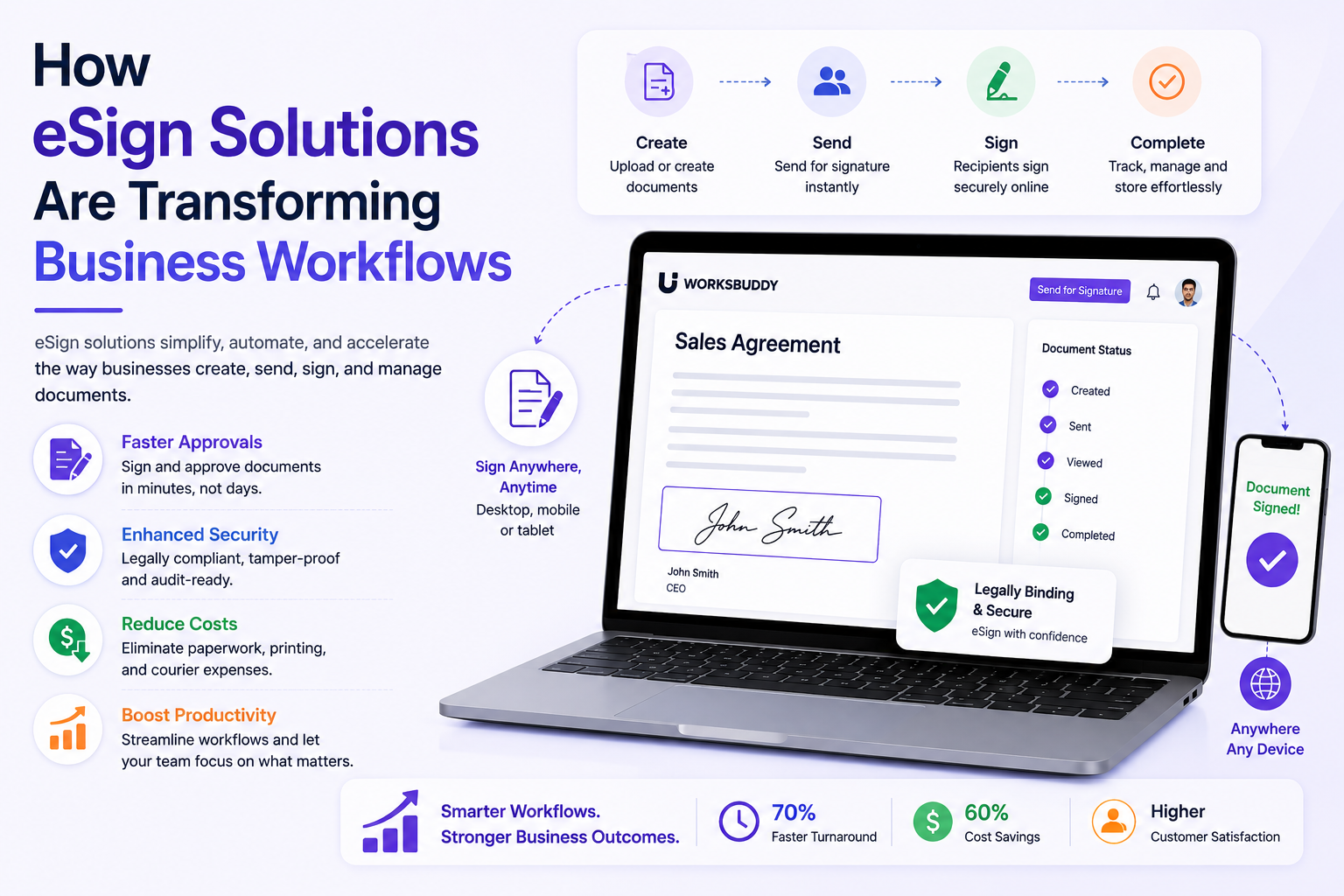
The days of printing a document, signing it by hand, scanning it, and emailing it back are fading fast — and for good reason. Businesses that still rely on paper-based approval processes are losing time, introducing errors, and creating unnecessary friction at every stage of their operations. The shift toward eSign solutions is not simply a technology trend. It is a fundamental change in how organizations manage agreements, onboard clients, close deals, and maintain compliance.
Understanding what eSign actually means — and how it differs from related concepts like digital signatures — is the starting point for making smarter decisions about document workflows. Once that foundation is clear, the business case for adoption becomes straightforward.
What Is eSign and Why Does It Matter
eSign, short for electronic signature, refers to any electronic method by which a person indicates their agreement to the contents of a document. This can be as simple as typing a name into a signature field, clicking an "I agree" button, or drawing a signature on a touchscreen. The defining characteristic is that the intent to sign is captured and recorded electronically rather than on paper.
What makes eSign solutions particularly valuable for businesses is not just the elimination of printing and scanning — it is the entire workflow transformation that comes with it. Documents can be sent, signed, tracked, and stored within a single platform. Reminders go out automatically when a signature is pending. Audit trails are created in real time. The entire lifecycle of an agreement becomes visible and manageable in ways that paper processes simply cannot match.
From client contracts and vendor agreements to HR onboarding forms and compliance documents, virtually any document that previously required a wet ink signature can now be handled electronically — with equal or greater legal standing in most jurisdictions worldwide.
E Signature vs Digital Signature: Understanding the Difference
These two terms are frequently used interchangeably, but they refer to distinct concepts — and confusing them can lead to compliance gaps or choosing the wrong solution for a given use case.
An e signature is the broader category. It encompasses any electronic indication of agreement, regardless of the underlying technology. It is defined primarily by intent and legal recognition rather than by a specific cryptographic method.
A digital signature, by contrast, is a specific type of electronic signature that uses public key infrastructure (PKI) cryptography to verify the signer's identity and ensure the document has not been altered after signing. Every digital signature is an e signature, but not every e signature is a digital signature.
When to Use Each
For the majority of everyday business documents — sales contracts, service agreements, NDAs, and internal approvals — a standard e signature provides sufficient legal validity and is far easier to implement and use. Most eSign platforms support this level of signing out of the box.
Digital signatures become more relevant in highly regulated industries such as healthcare, financial services, government contracting, and pharmaceutical compliance, where stricter identity verification and tamper-evidence requirements apply. In these contexts, the cryptographic assurance a digital signature provides is not optional — it is a regulatory requirement.
Understanding this distinction helps businesses avoid over-engineering simple workflows with unnecessary complexity while ensuring that high-stakes documents receive the appropriate level of technical verification.
How eSign Solutions Transform Day-to-Day Business Workflows
The operational impact of eSign adoption extends well beyond individual documents. When integrated into existing business systems, eSign solutions reshape entire workflow categories.
Sales teams close deals faster because contracts no longer wait for a prospect to print, sign, and return paperwork. The entire process happens in minutes via email or a mobile device, removing one of the last friction points in the buying journey.
HR departments onboard new employees without requiring in-person meetings or mailed forms. Offer letters, tax documents, policy acknowledgments, and benefits enrollment forms all move through a structured digital workflow that is faster, trackable, and far less prone to missing signatures or lost paperwork.
Operations and procurement teams manage vendor agreements with greater visibility. Rather than chasing down signatures via email threads, workflow platforms send automated reminders and surface pending approvals in a centralized dashboard. Tools like WorksBuddy, for example, illustrate how embedding eSign functionality within a broader workflow automation environment allows teams to connect document signing with task management, approvals, and notifications — eliminating the manual handoffs that slow processes down.
The Compliance and Security Advantage
A concern that often arises around eSign adoption is whether electronically signed documents hold up legally. In most countries, they do. Legislation such as the ESIGN Act in the United States, eIDAS in the European Union, and equivalent frameworks in countries across Asia-Pacific and the Middle East establishes clear legal recognition for electronic signatures on most commercial documents.
Beyond legal validity, eSign platforms typically offer security features that paper processes cannot replicate — including signer authentication, IP address logging, timestamp recording, and tamper-evident document sealing. The audit trail generated by a properly implemented eSign solution is often more defensible in a dispute than a paper signature with no verification chain.
FAQ Section
Q1. What is eSign and is it legally binding?
eSign refers to an electronic signature used to indicate agreement on a document. In most countries, electronic signatures are legally binding for commercial agreements under legislation such as the ESIGN Act (US) and eIDAS (EU), provided the intent to sign is clear and the process is properly documented.
Q2. What is the difference between e signature vs digital signature?
An e signature is any electronic indication of agreement, while a digital signature is a specific cryptographically secured type of e signature that uses PKI technology to verify identity and document integrity. Digital signatures offer a higher level of technical assurance and are typically required in regulated industries.
Q3. How secure are eSign solutions compared to paper signatures?
eSign solutions are generally more secure than paper signatures because they generate a comprehensive audit trail including signer identity verification, timestamps, IP address logging, and tamper-evident document sealing. This creates a verifiable record that paper processes cannot replicate.
Q4. Which industries benefit most from eSign adoption?
While eSign is valuable across virtually every sector, industries with high document volume see the greatest operational gains — including real estate, legal services, financial services, healthcare, HR and staffing, and SaaS sales. Any business that regularly sends contracts, agreements, or compliance documents is a strong candidate.
Q5. Can eSign solutions integrate with existing business tools?
Yes. Most modern eSign platforms offer native integrations with CRMs, HR systems, project management tools, and cloud storage platforms. API access is also commonly available for custom integrations, allowing eSign to fit within existing workflows rather than requiring a separate process.
Conclusion
The shift from paper-based signing to eSign solutions is one of the most straightforward operational improvements a business can make — with immediate, measurable impact on speed, compliance, and team productivity. Understanding the distinction between e signature vs digital signature ensures that the right tool is applied to the right context, avoiding both under-protection on sensitive documents and unnecessary complexity on routine agreements.
As workflows become increasingly digital, businesses that embed eSign into their core processes are not just saving time on individual documents. They are building a more responsive, scalable, and auditable operation from the ground up.
Key Takeaways:
eSign refers to any electronic method of capturing agreement on a document. E signature vs digital signature is an important distinction — the latter uses cryptographic verification for higher-assurance use cases. eSign solutions transform entire workflow categories, not just individual document steps. Legal recognition for electronic signatures is well established in most major jurisdictions. Integration with existing business systems amplifies the operational value of eSign adoption.


 English
 Arabic
 Français
 Español
 Português
 Deutsch
 Türkçe
 Dutch
Dutch
 Italiano
 Russian
 Portuguese (Brazil)
 Greek
Greek