


Portfolio Monitoring: Meaning, Process, Benefits, and Best Practices
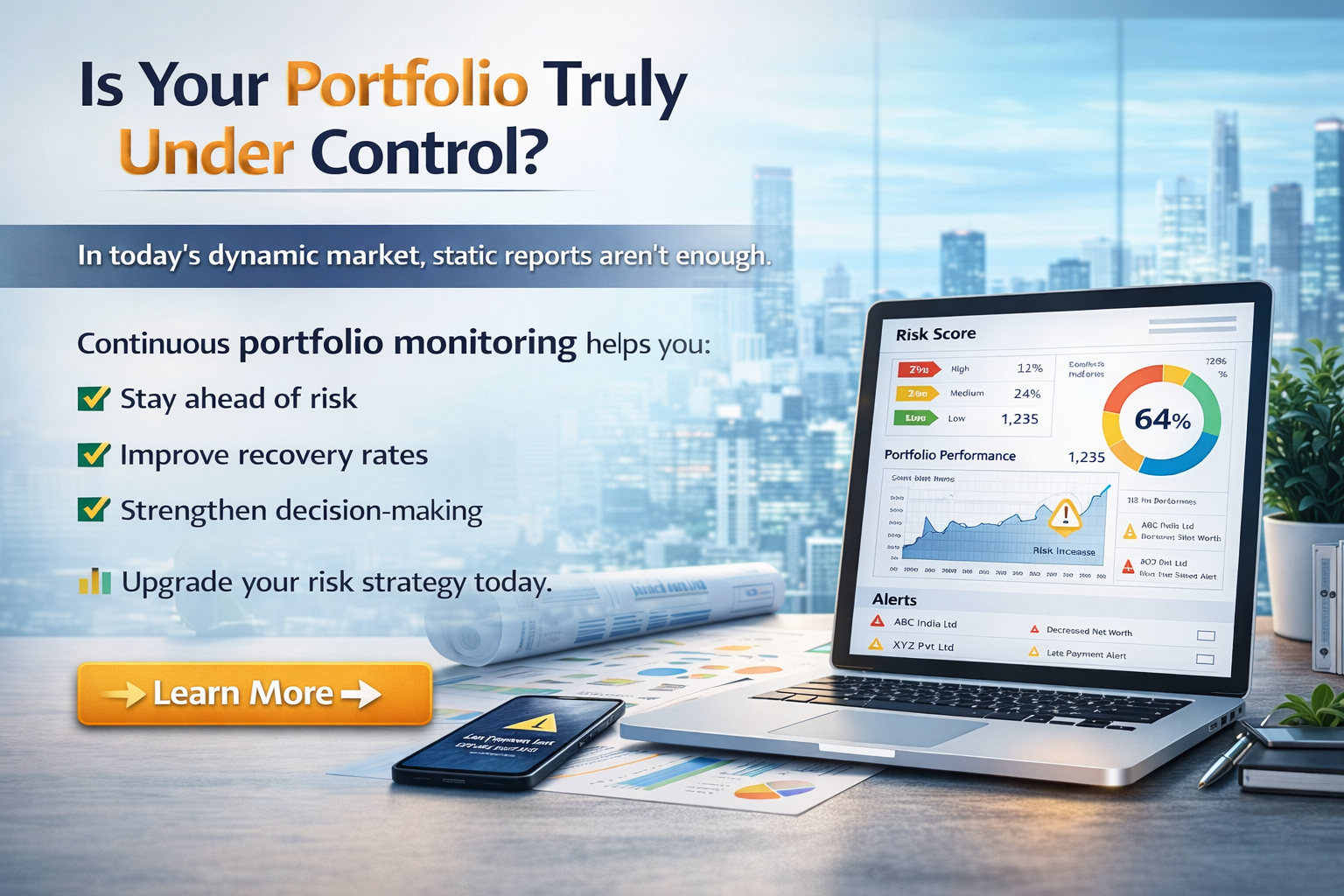
In today's dynamic financial and business environment, organizations must continuously evaluate the performance and risk of their investments, loan portfolios, customers, and suppliers. This ongoing evaluation is known as Portfolio Monitoring. It enables businesses to identify risks early, measure portfolio performance, and make informed decisions that support long-term growth.
Whether you are a bank managing loan portfolios, a financial institution tracking credit exposure, or an enterprise overseeing customer and supplier relationships, Portfolio Monitoring provides valuable insights into portfolio health. Modern portfolio monitoring solutions combine real-time data, automation, artificial intelligence (AI), and predictive analytics to help businesses improve operational efficiency and reduce financial risk.
By implementing an effective portfolio monitoring strategy, organizations can respond quickly to changing market conditions, strengthen risk management, and maximize portfolio performance.
What is Portfolio Monitoring?
Portfolio Monitoring is the continuous process of tracking, analyzing, and evaluating the performance, quality, and risk of a portfolio over time. A portfolio may consist of financial assets, loans, investments, customers, vendors, or insurance policies.
The primary objective of portfolio monitoring is to ensure that assets continue to perform according to expectations while identifying potential issues before they become significant risks.
Continuous monitoring provides organizations with real-time visibility into portfolio performance and supports data-driven decision-making.
Why is Portfolio Monitoring Important?
Effective Portfolio Monitoring is essential for organizations that want to maintain financial stability and reduce risk.
Improves Risk Management
Monitoring helps identify warning signs such as missed payments, declining financial performance, or increased credit exposure.
Supports Better Decision-Making
Real-time insights enable management to make informed strategic and operational decisions.
Enhances Portfolio Performance
Regular performance reviews help optimize asset allocation and improve returns.
Ensures Regulatory Compliance
Financial institutions can meet governance and reporting requirements more efficiently.
How Portfolio Monitoring Works
A successful portfolio monitoring process involves several important stages.
Data Collection
Information is collected from multiple sources, including:
- Financial statements
- Credit reports
- Payment histories
- Market data
- Customer information
- Business intelligence platforms
Reliable and updated data is the foundation of effective portfolio monitoring.
Performance Analysis
Organizations analyze key performance indicators (KPIs) to measure portfolio health.
Common Metrics
- Portfolio growth
- Return on Investment (ROI)
- Loan repayment rates
- Asset quality
- Customer retention
- Default rates
These metrics help organizations evaluate whether portfolio objectives are being achieved.
Risk Assessment
Businesses continuously assess risks that may affect portfolio performance.
Types of Risks
- Credit Risk
- Market Risk
- Counterparty Risk
- Operational Risk
- Compliance Risk
Regular risk assessment enables businesses to take corrective action before losses occur.
Key Features of Portfolio Monitoring
Real-Time Monitoring
Modern platforms provide continuous updates on portfolio performance and risk exposure.
Automated Alerts
Organizations receive notifications when predefined thresholds are exceeded.
Interactive Dashboards
Visual reports make it easier to understand trends and identify problem areas.
Predictive Analytics
AI and machine learning forecast future risks using historical and real-time data.
Comprehensive Reporting
Detailed reports support management reviews, audits, and strategic planning.
Benefits of Portfolio Monitoring
Early Risk Detection
Businesses can identify emerging issues before they affect portfolio performance.
Increased Operational Efficiency
Automation reduces manual work and improves reporting accuracy.
Better Financial Performance
Continuous monitoring helps optimize portfolio quality and profitability.
Improved Customer Management
Organizations can proactively manage customer relationships based on risk profiles.
Stronger Business Resilience
Ongoing monitoring enables businesses to adapt quickly to changing market conditions.
Technology in Portfolio Monitoring
Technology has transformed Portfolio Monitoring by making it more intelligent and efficient.
Artificial Intelligence (AI)
AI identifies hidden patterns and predicts potential portfolio risks.
Machine Learning
Machine learning continuously improves forecasting accuracy based on historical data.
Risk Intelligence Platforms
These platforms combine financial, operational, and market information to provide a complete view of portfolio health.
Cloud-Based Solutions
Cloud technology enables secure, real-time access to portfolio information from any location.
Automation
Automated workflows simplify monitoring, reporting, and alert management.
Best Practices for Effective Portfolio Monitoring
Define Clear Objectives
Establish measurable goals and performance benchmarks.
Use Reliable Data Sources
Accurate data leads to better analysis and decision-making.
Monitor Continuously
Real-time monitoring provides greater visibility than periodic reviews.
Implement Early Warning Systems
Automated alerts help identify risks before they escalate.
Review Portfolio Strategies Regularly
Update monitoring processes to reflect changing business conditions and market trends.
Conclusion
Portfolio Monitoring is a critical business process that helps organizations manage risk, improve performance, and make informed decisions. By continuously tracking portfolio health, evaluating key performance indicators, and leveraging advanced technologies such as AI and predictive analytics, businesses can reduce uncertainty and optimize long-term outcomes.
As financial markets and business environments become increasingly complex, effective Portfolio Monitoring is no longer optional—it is essential. Organizations that adopt modern portfolio monitoring practices gain greater visibility, improve operational efficiency, strengthen risk management, and position themselves for sustainable growth and long-term success.


 English
 Arabic
 Français
 Português
 Deutsch
 Türkçe
 Dutch
Dutch
 Italiano
 Russian
 Romaian
 Portuguese (Brazil)
 Greek
Greek