


ZFCERA PRECISION CERAMICS for Advanced Manufacturing
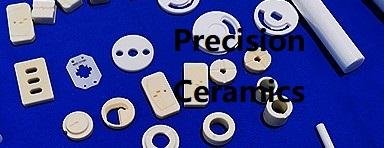
As modern industries demand components that can maintain stable performance under challenging conditions, engineers are increasingly considering specialized ceramic materials for demanding applications. Precision Ceramics can provide useful properties for industries requiring dimensional stability, wear resistance, and controlled material performance, while carefully developed Precision Ceramics components can be adapted to different engineering requirements. ZFCERA focuses on ceramic product development and manufacturing, supporting businesses seeking practical material solutions for specialized industrial systems.
Material Characteristics for Demanding Applications
Ceramic materials are widely considered for applications where conventional materials may not provide the required combination of performance and stability.
Depending on the ceramic composition and manufacturing process, precision components can offer useful characteristics such as hardness, wear resistance, electrical insulation, and resistance to certain environmental conditions.
These properties make ceramic components suitable for a variety of engineering applications. They may be used in mechanical assemblies, electrical systems, laboratory equipment, semiconductor-related machinery, and other specialized products.
However, material selection should always be based on the actual working environment. Engineers need to consider temperature, mechanical stress, chemical exposure, electrical requirements, and dimensional tolerances.
A carefully selected ceramic material can help manufacturers develop components that meet specific performance targets without unnecessarily increasing the complexity of the final product.
ZFCERA Ceramic Manufacturing and Processing
The manufacturing process plays an important role in the final performance of ceramic components. Unlike many metal materials, ceramics require specialized processing methods to achieve the desired shape and dimensional accuracy.
The process may include powder preparation, forming, sintering, grinding, polishing, and additional precision machining.
Each stage can influence the final properties of the component. Careful control of temperature and processing conditions during sintering is particularly important because it can affect density, strength, and dimensional stability.
For complex parts, manufacturers may need to develop customized tooling or specialized machining methods. The design should take manufacturing limitations into account from the beginning.
Close cooperation between engineers and manufacturers can help ensure that the final product meets both functional and dimensional requirements.
Applications Across Different Industries
Precision ceramic components can be used in many industries because their material characteristics support a wide range of technical requirements.
In industrial machinery, ceramic parts may be considered for applications involving repeated movement or contact. Their wear resistance can be useful where components experience continuous operation.
In electrical and electronic equipment, ceramic materials may be selected for their insulation properties and ability to maintain performance under certain conditions.
The semiconductor industry also requires specialized components with strict requirements for cleanliness, dimensional accuracy, and material stability.
Medical and laboratory equipment can involve similarly demanding conditions. Components may need to maintain precise dimensions while resisting exposure to specific chemicals or operating environments.
Each application requires its own material and manufacturing considerations. A component designed for one industry may not automatically be suitable for another.
Precision and Quality Control
Dimensional accuracy is a major consideration when producing specialized ceramic components. Small variations can influence how a part fits into a larger assembly.
Quality control can therefore include dimensional inspection, surface evaluation, density testing, and other performance checks.
Manufacturers may use precision measurement equipment to verify critical dimensions. Depending on the product, inspections may focus on flatness, roundness, surface roughness, or other technical requirements.
Material consistency is also important. Variations in raw materials or processing conditions can influence the final performance of ceramic products.
For large production orders, manufacturers should maintain clear technical specifications and inspection procedures.
Prototype testing can provide additional information before full-scale production begins. By evaluating samples under realistic conditions, engineers can identify potential issues and make adjustments when necessary.
Future Development of Ceramic Components
As industrial equipment becomes more precise and compact, the demand for specialized materials is likely to continue evolving.
Manufacturers are exploring new ceramic compositions, improved processing technologies, and more efficient production methods. These developments may allow ceramic components to meet increasingly specific technical requirements.
The combination of advanced manufacturing and digital design tools can also improve the development of complex ceramic parts.
For businesses, early communication with material suppliers and manufacturers can help determine whether ceramic components are suitable for a particular project.
A successful development process should consider material selection, component geometry, production methods, testing, and quality control as a complete system.
Companies developing specialized industrial equipment can benefit from evaluating ceramic solutions at the early design stage. This approach can help engineers understand potential advantages and limitations before finalizing the product structure.
For manufacturers and engineering teams seeking ceramic components for demanding applications, exploring suitable materials and customized manufacturing capabilities can support more efficient product development. Businesses interested in learning more about ceramic solutions, precision components, and customized manufacturing can visit https://www.zfcera.com/ for additional information and product options.


 Arabic
 Français
 Español
 Português
 Deutsch
 Türkçe
 Dutch
Dutch
 Italiano
 Russian
 Romaian
 Portuguese (Brazil)
 Greek
Greek