Network Attached Storage Market: Trends and Forecast 2035
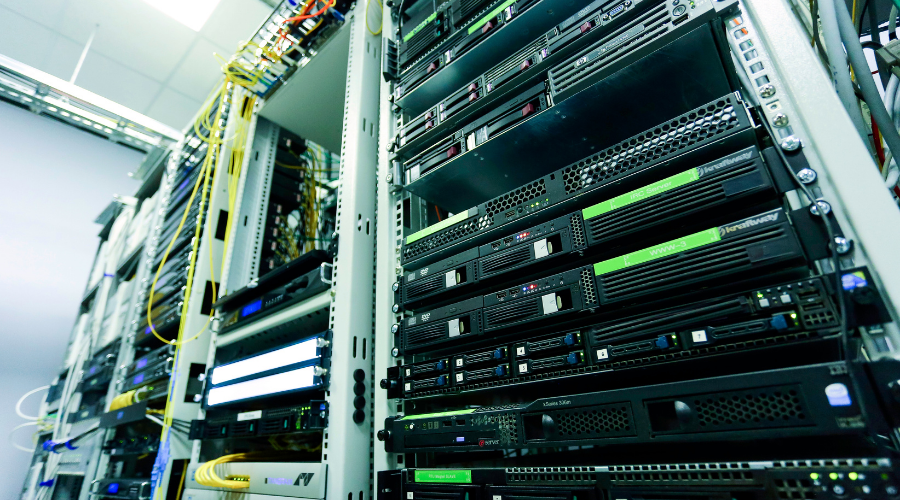
Data has become a critical operational asset for organizations of every size, but storing that data securely and making it accessible to authorized users is increasingly difficult. Network attached storage, commonly known as NAS, provides a practical solution by connecting dedicated storage resources to a network so that users, applications and devices can access files and data from a centralized location.
Unlike conventional storage attached directly to an individual computer, NAS is designed to serve multiple users and systems. Modern NAS platforms can go far beyond basic file storage, supporting backup, synchronization, virtualization, surveillance, collaboration, media management and increasingly sophisticated data-management workloads.
According to the market figures supplied for this analysis, the global network-attached storage market was valued at approximately USD 35.13 billion in 2025 and is projected to reach USD 183.86 billion by 2035, expanding at an 18.00% CAGR between 2026 and 2035. The forecast reflects a structural increase in data generation, cloud-connected work, digital transformation and the need for organizations to retain greater control over important information.
The need is particularly clear as businesses generate data from cloud applications, connected devices, video systems, enterprise applications and artificial intelligence workloads. At the same time, concerns about data sovereignty, cybersecurity, backup resilience and cloud costs are encouraging some organizations to adopt hybrid storage architectures rather than relying entirely on public cloud services.
NAS is therefore evolving from a relatively simple file server into a flexible data infrastructure platform positioned between local storage, traditional enterprise storage and cloud computing.
What is driving the rapid growth of the network attached storage market?
The NAS market is growing because organizations and consumers need scalable, centralized and accessible storage for rapidly expanding volumes of files and digital data. Demand is being reinforced by backup requirements, remote collaboration, video content, surveillance, cloud integration and growing concerns about data control.
The most fundamental driver is data growth. Businesses increasingly generate documents, images, videos, databases, application files, customer records and machine-generated information. Simply adding storage to individual computers creates fragmented data that is difficult to manage and protect.
NAS addresses this problem by creating a centralized storage pool accessible over a network. A small business, for example, can use a NAS appliance to store shared documents and automatically back up employee computers. A media company can use high-capacity NAS systems to manage large video libraries. A healthcare organization can use network storage for specific workloads where appropriate security, access control and regulatory requirements can be maintained.
The growth of remote and distributed work has strengthened this use case. Employees need to access files from multiple locations and devices, while IT teams need centralized control over permissions and backup policies.
The increasing importance of ransomware resilience is another driver. A NAS system can form part of a broader backup architecture in which critical files are replicated to separate storage, cloud services or offline locations. However, NAS should not be treated as automatically secure simply because it is centralized; administrators must implement authentication, patching, access controls, encryption and protected backups.
The market's strong projected growth also reflects the changing economics of data infrastructure. Organizations increasingly need storage that can expand as data volumes rise without forcing them into a complete hardware replacement cycle.
How do scale-up and scale-out NAS solutions differ?
Scale-up NAS expands capacity and performance within an existing storage system, while scale-out NAS adds additional nodes to create a larger distributed storage environment. Scale-up is often practical for smaller deployments, whereas scale-out becomes increasingly valuable when organizations need massive capacity and sustained performance.
Why is scale-up NAS still important?
Scale-up systems increase capacity by adding or replacing drives, expanding disk shelves or upgrading components within an existing NAS architecture. This approach is relatively straightforward and can be cost-effective for small and medium-sized businesses.
A company might begin with a NAS appliance containing several drives and later add larger drives or expansion units as its storage requirements increase. This makes scale-up systems attractive for file sharing, backups, surveillance recordings and departmental workloads.
Scale-up architecture also simplifies management. IT administrators can operate a single logical storage environment rather than managing numerous independent storage nodes.
For many businesses, simplicity is more important than extreme scalability. A professional services company with several terabytes or tens of terabytes of data may not need a highly distributed storage architecture. It needs reliable storage, straightforward administration, strong backup capabilities and predictable costs.
Why is scale-out becoming more important?
Scale-out NAS adds storage nodes to increase capacity and, depending on the architecture, performance. Instead of depending on one increasingly large appliance, organizations can distribute data across multiple systems.
This is particularly useful for media production, research, scientific computing, large enterprise file repositories and other environments where storage requirements can grow rapidly.
Scale-out systems can also improve resilience because workloads and data may be distributed across multiple nodes. If designed properly, the architecture can continue operating even when individual components fail.
The shift toward scale-out storage is closely related to the broader transition toward software-defined infrastructure. Rather than treating storage as a fixed appliance, organizations increasingly expect infrastructure to scale dynamically according to workload requirements.
How are on-premises, cloud and hybrid NAS deployments evolving?
On-premises NAS provides direct organizational control over physical storage, cloud-based models extend storage capabilities through remote infrastructure, and hybrid deployments combine local and cloud resources. The hybrid approach is increasingly attractive because it balances performance, control, scalability and geographic resilience.
Why do organizations still choose on-premises NAS?
On-premises NAS remains attractive when organizations need predictable access to data, local performance and greater control over where information physically resides.
This can be important in healthcare, financial services, government, research and other environments where data governance and regulatory requirements influence infrastructure decisions.
On-premises storage can also be economically attractive for data that is accessed frequently and retained for long periods. Instead of paying recurring cloud storage and data-transfer charges, an organization can invest in physical capacity and manage it internally.
However, ownership comes with responsibilities. Businesses must budget for hardware, electricity, cooling, replacement drives, maintenance, cybersecurity and backup infrastructure.
Why is cloud-based NAS gaining attention?
Cloud-based storage provides organizations with flexible capacity without requiring them to purchase and maintain all physical infrastructure themselves. It is particularly useful for distributed organizations and applications that already operate in cloud environments.
Cloud integration can also simplify geographic redundancy. Data can be replicated between locations without an organization building a second physical data center.
However, cloud storage is not automatically less expensive. Long-term retention, high access frequency and data transfer can create significant recurring costs. This is one reason organizations are increasingly evaluating workloads individually rather than moving all data indiscriminately to the cloud.
Why is hybrid NAS a practical middle ground?
Hybrid storage allows organizations to retain frequently accessed or sensitive data locally while using cloud infrastructure for backup, disaster recovery, archival storage or collaboration.
This model is especially relevant to organizations with uneven data-access patterns. Recent project files may require high local performance, while older files can be moved to lower-cost cloud or archival storage.
The result is a more flexible architecture in which NAS becomes an interface between local data and broader cloud ecosystems rather than a completely isolated storage device.
How is NAS being used across major industries?
NAS has applications across almost every data-intensive industry because centralized storage is useful wherever teams need to share, protect, synchronize or analyze large collections of digital information. Its role ranges from basic office file sharing to media production, healthcare records, research data and enterprise backup.
In banking, financial services and insurance, NAS can support document repositories, backups, analytics-related files and internal collaboration. Financial institutions typically operate within strict security and compliance environments, making access controls, encryption, auditing and resilience essential considerations.
Consumer goods and retail organizations use network storage for product imagery, marketing assets, point-of-sale data, business documents and analytics workloads. Retailers increasingly generate large volumes of digital content, particularly as e-commerce and omnichannel marketing expand.
In telecommunications and IT, storage demand is particularly strong because operators and technology providers manage network data, logs, application data, backups and increasingly large datasets associated with connected devices.
Healthcare creates another important use case. Medical imaging, administrative documents, research datasets and operational records can generate substantial storage requirements. NAS can provide centralized infrastructure, but healthcare deployments must be designed around applicable privacy, security and regulatory requirements.
The energy industry increasingly relies on digital monitoring, industrial sensors, geospatial information and operational data. Storage systems can support engineering files, surveillance footage and data generated by distributed assets.
In education and research, NAS can provide shared repositories for faculty, students and research teams. Universities may use network storage for laboratory datasets, multimedia files, research documentation and backup.
The media and entertainment sector is particularly storage-intensive. High-resolution video, visual effects, animation and post-production workflows can require enormous file capacity and high throughput. NAS systems designed for multimedia workloads can allow multiple creators to work with centralized content without maintaining separate copies on local devices.
These applications demonstrate why NAS is not merely a storage category. Its value comes from integrating storage with the workflows that create, use and protect data.
Why are cybersecurity and data protection becoming central to NAS adoption?
Security has become a fundamental NAS requirement because centralized storage can become a high-value target for ransomware, unauthorized access and data theft. Organizations increasingly expect NAS systems to provide strong authentication, encryption, access management, monitoring and integration with backup strategies.
A single NAS device may contain years of business information, making it attractive to attackers. If an attacker gains administrative access, simply having redundant disks does not protect the organization from ransomware because encrypted or deleted files can affect the entire storage pool.
Modern NAS deployments therefore need layered protection. Role-based access, multi-factor authentication where supported, network segmentation, regular patching and immutable or isolated backups can reduce exposure.
The importance of backup is especially clear in ransomware scenarios. A NAS should generally be considered one component of a broader 3-2-1-style data protection strategy, rather than the only copy of critical information.
NAS manufacturers are increasingly integrating snapshot technologies, ransomware detection, immutable backup capabilities and cloud replication into their platforms. These capabilities can help organizations recover quickly after an incident, but configuration remains critical.
Cybersecurity also matters for remote access. Employees increasingly want to access company files from outside the office, which means poorly configured internet-facing NAS devices can become security risks.
For buyers, the most important question is therefore not simply how much storage a system provides. It is whether the platform can protect data throughout its lifecycle while allowing legitimate users to access it efficiently.
Which regions are leading the network attached storage market?
North America remains a major NAS market because of its large enterprise technology base and advanced data infrastructure, while Asia Pacific offers substantial growth through digitalization, manufacturing and expanding cloud adoption. Europe emphasizes data governance and enterprise resilience, while emerging regions offer longer-term opportunities as businesses modernize their IT infrastructure.
Why is North America important?
North America has a mature enterprise storage ecosystem and a large population of small and medium-sized businesses that can benefit from centralized storage.
The region is also home to many technology-intensive sectors, including financial services, healthcare, media, technology and research. These industries generate significant volumes of data and often require storage that can integrate with existing enterprise systems.
The presence of major cloud providers also encourages hybrid architectures. Businesses can use local NAS for active data and backup while connecting it to cloud infrastructure for disaster recovery and long-term storage.
Why is Asia Pacific expected to expand rapidly?
Asia Pacific combines large technology markets with rapid digitalization. Manufacturing, telecommunications, e-commerce, financial services and media are generating increasing volumes of digital information.
China, Japan, South Korea and India are important markets, while Southeast Asian economies are expanding their cloud and digital infrastructure.
Small and medium-sized businesses can also represent an important opportunity because NAS provides enterprise-style centralized storage without requiring a large data center.
What is the outlook for Europe and emerging markets?
European organizations are increasingly attentive to data governance, privacy and operational resilience. These priorities can support demand for storage systems that give organizations greater control over data location and access.
Latin America, the Middle East and Africa offer additional opportunities as enterprises adopt cloud services, digitize operations and modernize IT infrastructure. However, budget constraints, connectivity and local technical expertise can influence purchasing decisions.
The regional opportunity is therefore closely connected to broader digital transformation.
Who are the leading companies in the network attached storage market?
Competition in NAS spans specialist storage vendors, hard-drive manufacturers, networking companies and enterprise infrastructure providers. The leading companies differentiate through hardware reliability, operating systems, storage management, data protection, cloud integration and workload-specific capabilities.
Synology has established a strong position in NAS through its DiskStation and RackStation product families and its DiskStation Manager software ecosystem. Its offerings span home users, small businesses and larger organizations.
QNAP competes across consumer, SMB and enterprise storage, emphasizing network storage, virtualization, multimedia and surveillance capabilities. Its broad product portfolio allows it to target multiple workload requirements.
NETGEAR participates in network-attached storage alongside its broader networking portfolio, while Buffalo Americas provides NAS products for consumer and business environments.
Hewlett Packard Enterprise approaches storage from a broader enterprise infrastructure perspective, integrating storage into data-center architectures rather than focusing solely on standalone NAS appliances.
Seagate Technology and Western Digital contribute critical hard-drive and storage technologies that underpin many NAS systems, making them important parts of the broader storage ecosystem even when they are not the primary NAS software provider.
Competitive differentiation is increasingly shifting toward software. Hardware capacity can be replicated across vendors, but management interfaces, backup integration, cloud connectivity, security features, virtualization support and application ecosystems can create longer-term customer loyalty.
What challenges could limit NAS market growth?
The NAS market faces competition from public cloud storage, software-defined storage, direct-attached storage and increasingly sophisticated enterprise platforms. Organizations must also manage cybersecurity, hardware failures, energy consumption and the operational complexity of increasingly large data environments.
Cloud storage is the most obvious alternative. Businesses may prefer cloud platforms because they can scale capacity without purchasing physical hardware and can access data from distributed locations.
Yet cloud costs can rise with long-term storage volumes, frequent retrieval and data movement. NAS remains attractive where predictable local access and ownership economics outweigh the convenience of cloud-only infrastructure.
Another challenge is technological change. AI workloads can require significantly higher throughput and different storage architectures than traditional file sharing. As enterprises deploy AI systems, NAS vendors must integrate faster networking, higher-performance storage media and data-management tools capable of supporting large datasets.
Energy consumption is also increasingly relevant. Large storage environments require electricity for drives, networking, cooling and associated infrastructure. As organizations focus on sustainability, storage efficiency and drive density can become important purchasing criteria.
Finally, NAS products must remain secure throughout their lifecycle. Vendors face increasing expectations around vulnerability management, software updates and responsible disclosure, while customers must maintain disciplined administration practices.
What is the outlook for the network attached storage market through 2035?
The NAS market is positioned for strong growth as organizations generate more data, strengthen backup requirements and seek flexible alternatives to cloud-only storage. The most valuable systems will increasingly combine high-capacity storage with security, automation, cloud integration and support for data-intensive workloads.
Under the forecast supplied for this analysis, the global NAS market is expected to rise from USD 35.13 billion in 2025 to USD 183.86 billion by 2035, representing an 18.00% CAGR from 2026 to 2035.
The future of NAS will not be defined simply by the number of terabytes a device can hold. Storage is becoming an intelligent infrastructure layer that must understand users, applications, security policies, backup requirements and cloud environments.
AI will reinforce this trend. Organizations developing AI applications need large datasets, and those datasets must be stored, protected and made accessible to computing systems. NAS platforms capable of supporting high-performance workloads could therefore benefit indirectly from AI adoption.
At the same time, hybrid architecture is likely to remain important. The question for many businesses will not be whether to choose NAS or cloud, but how to determine which data belongs where.
For smaller organizations, NAS can provide a practical way to achieve centralized storage, automated backups and private cloud-like functionality without building a large infrastructure environment. For larger enterprises, scale-out systems and hybrid integration can support more demanding data requirements.
The strongest vendors will therefore compete on more than capacity and price. They will need to provide secure data management, scalable performance, simple administration, cloud interoperability and reliable recovery.
As data becomes increasingly central to every industry, the value of network attached storage will come from making that data available when needed while keeping it protected when it matters most.

 English
 Arabic
 Français
 Español
 Português
 Deutsch
 Türkçe
 Dutch
Dutch
 Italiano
 Russian
 Portuguese (Brazil)
 Greek
Greek