


What Is The Cost Of An Average Solar Panel?
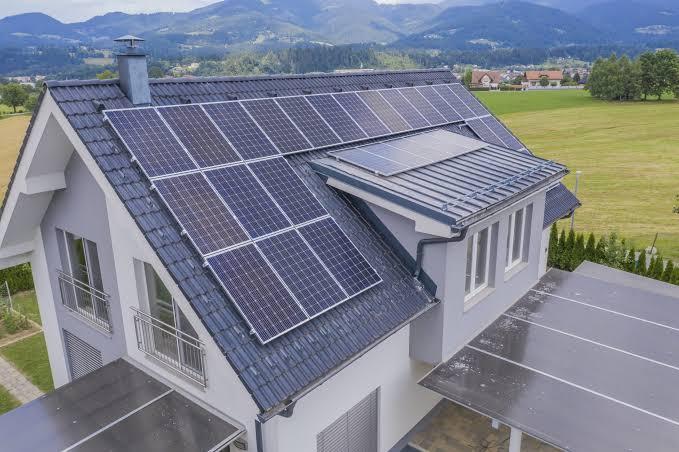
If you are researching solar panels for your home, the word “average” can be misleading. A solar panel has its own purchase price, but the figure that matters when budgeting for solar is usually the cost of the complete system, including the panels, inverter, mounting equipment and installation.
In the UK, the Energy Saving Trust currently puts the average domestic solar PV system at around 4.5kWp, costing approximately £7,600 to install. This is a typical figure rather than a fixed market price, and the amount you pay can vary considerably depending on the property and system design.
How Much Does An Average Solar Panel Cost?
The price of an individual panel depends on its power rating, technology, manufacturer and warranty. Modern domestic panels commonly produce several hundred watts each, so comparing panels solely by their individual price does not tell you much about the final cost of going solar.
For a homeowner, system size is usually the more useful starting point.
A typical 4.5kWp installation might use roughly 9–12 panels, depending on the wattage of the panels selected. A higher-output panel can produce the same total system capacity with fewer panels, which can be useful where roof space is limited.
The panel itself is only one part of the installation. The quotation may also include the inverter, roof mounting system, electrical work, scaffolding, labour, testing and commissioning.
This is why a quote for “solar panels” should be assessed as a complete system rather than by looking at the price of one module.
What Does A Typical Solar PV System Cost?
For a typical UK home, around £7,600 for a 4.5kWp system is a useful current benchmark. Energy Saving Trust updates its cost figures using recent installation data from sources including installers, retailers and industry organisations, while adjusting for factors such as inflation, location and date.
The final quotation can move above or below that figure.
For instance, a straightforward roof with good access may be relatively simple for an installer to work on. A property with difficult roof access, several roof sections, shading issues or structural work can require additional equipment and labour.
The same applies when comparing standard rooftop panels with solar roof tiles or building-integrated systems. These alternatives can involve different installation methods and materials, so their prices should not be compared directly with a conventional panel system.
What Makes Solar Panel Installation More Expensive?
System size is only the starting point. Several property-specific details can change the price.
Roof access is one consideration. If scaffolding or specialist access equipment is required, installation can become more expensive.
Roof condition also matters. Installing a new PV system on a roof that needs significant repairs can create an awkward situation. Removing panels later to carry out major roof work may add unnecessary expense, so roof condition is worth checking before installation.
Roof design can affect labour and mounting requirements. A simple pitched roof is generally more straightforward than a complicated roof with multiple orientations, dormers or limited working space.
System design matters too. A larger system costs more, but it may produce more electricity and make better use of available roof space. The objective is not simply to install the maximum number of panels. The system should match electricity consumption, usable roof area and expected generation.
Does A Battery Increase The Cost?
Yes. A battery is normally an additional purchase rather than part of the basic solar panel installation.
Energy Saving Trust currently estimates that domestic battery storage typically costs around £5,000 to £8,000.
A battery can store surplus solar electricity generated during the day for use later, reducing the amount of electricity you need to buy from the grid. Whether the extra cost makes sense depends on factors such as household consumption, when electricity is used, the battery size and available electricity tariffs.
Someone who is regularly at home during daylight hours may use a larger share of their solar generation directly. Another household may have greater evening electricity demand and therefore have more reason to consider storage.
Does A More Expensive Panel Mean A Better Solar System?
Not necessarily.
A higher-priced panel may offer greater power output, a different cell technology, improved temperature performance or a longer product warranty. Those features can be useful, particularly when roof space is restricted.
But paying more for the panel does not automatically produce better financial results.
For instance, a homeowner with plenty of suitable roof space may have little reason to pay a substantial premium simply to obtain a slightly higher-output module. Someone with a small roof may value higher power density much more.
The installer’s design, shading assessment, inverter selection, mounting system and workmanship also affect the finished installation.
How To Compare Solar Quotes Properly
When comparing quotes, avoid looking only at the headline price.
Ask each installer to specify the proposed system size in kWp, the number and model of panels, inverter, mounting equipment and any optional battery. The expected annual generation is also useful because two systems with similar prices can have different designs and predicted output.
Check what is included in the installation. Scaffolding, electrical work, certification and commissioning should be clear rather than left as assumptions.
It is also worth getting several quotations. Energy Saving Trust recommends obtaining quotes from at least three MCS-certified installers.
This gives you a better basis for spotting unusually high or low prices and understanding why the quotations differ.
Is £7,600 A Realistic Budget For Solar Panels?
For a typical UK domestic system, it is a useful current benchmark, but it should not be treated as a guaranteed price. Energy Saving Trust describes its figures as typical costs, and its methodology notes that actual prices can vary with property characteristics, location and local installer availability.
The most useful next step is therefore to work backwards from the home rather than from an advertised panel price.
Start with annual electricity use, available roof space and the times when electricity is consumed. Then look at the system size required and obtain quotations for the complete installation.
If you are comparing Solar PV Panel Installation, assess the whole system rather than the cost of an individual panel. The panels are only one component of what you are paying for.
What Should You Budget For?
As a current UK reference point, a typical 4.5kWp domestic solar installation costs around £7,600, while battery storage can add roughly £5,000–£8,000.
Your own quotation may differ because of roof access, system size, equipment selection, roof condition and installation complexity.
The government also publishes official solar PV cost data based on the MCS Installation Database, including monthly installed-cost data by kilowatt. This provides a useful source for tracking how installation prices change rather than relying on an old “average panel price”.
For anyone researching the cost of installing solar panels, the key figure is therefore the price of the complete system that has been designed for the property—not simply the price printed on one solar panel.


 English
 Arabic
 Français
 Español
 Português
 Deutsch
 Dutch
Dutch
 Italiano
 Russian
 Romaian
 Portuguese (Brazil)
 Greek
Greek