


How Kitchen Island Pendant Lights Help Reduce Shadows During Food Preparation And Everyday Kitchen Tasks
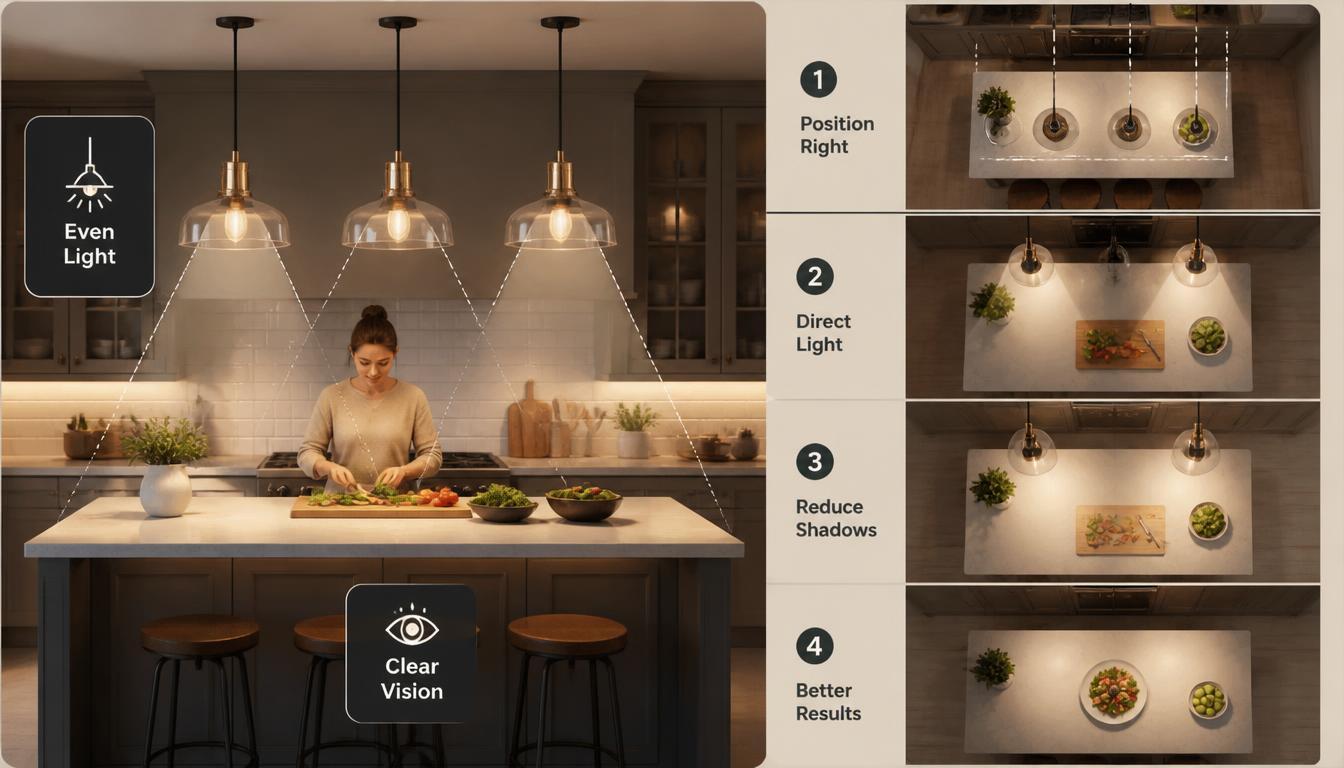
Kitchen island pendant lights can place light closer to the work surface, helping reduce shadows during chopping and serving. Placement matters because light direction affects shadows from the user’s body and nearby cabinets.
How Can Kitchen Island Pendant Lights Reduce Shadows?
Placement is key. IES defines task lighting as illumination directed toward a specific surface or area for visual tasks.
A pendant can focus light where people cut, mix, plate, or read recipes. ENERGY STAR advises positioning pendant fixtures above standing eye level and avoiding locations too close to cabinets or behind a person.
These choices can limit glare and body-cast shadows. Placement matters more than simply adding brightness.
What Causes Shadows on a Kitchen Island?
Shadow reduction begins with the relationship between the fixture, work surface, and person using it. If a pendant sits behind the user, their body can block light from reaching the cutting area.
The same principle affects food preparation lighting. The fixture should illuminate the active surface without sitting behind the user.
Use these checks when planning pendant placement:
-
Keep fixtures positioned over the active work zone
-
Avoid placing the main light source behind the user
-
Check cabinet edges that may block downward light
-
Control glare by keeping fixtures above standing eye level
-
Consider the island’s full length before choosing fixture positions
What Does Placement Look Like in Practice?
Small changes can produce different shadow patterns. The table shows how placement choices affect the work surface.
|
Placement choice |
Likely effect on the work surface |
|
Pendant centered over the work zone |
Direct light reaches the main preparation area |
|
Pendant behind the user |
The user can cast a stronger shadow forward |
|
Pendant too close to cabinets |
Cabinet edges can interrupt downward light |
|
Multiple fixtures across a long island |
Light can cover more of the working surface |
|
Pendant above standing eye level |
Helps limit direct glare while maintaining downward illumination |
ENERGY STAR’s residential lighting criteria specify a minimum initial output of 125 lumens per linear foot for qualifying under-cabinet kitchen lighting. This provides context when considering supplemental task lighting.
How Does Light Placement Support Everyday Tasks?
Kitchen island pendant lights can support different activities when the light reaches the actual task surface. Food preparation lighting works best when the illuminated area matches where hands, tools, and ingredients are used.
A centered fixture can illuminate chopping, mixing, serving, and cleanup. The arrangement depends on island size, fixture distribution, cabinets, and ceiling height.
The island also supports eating, reading, and conversation. Focused kitchen task lighting can serve these activities without relying on one distant ceiling fixture.
When Should Other Lighting Work With Pendants?
Pendants should not carry the entire lighting load. Layered lighting addresses different visual needs across the kitchen island.
The Illuminating Engineering Society defines task lighting as illumination directed toward a specific surface or area. DOE guidance describes kitchen designs using both task and ambient lighting, with pendants serving a task-lighting role where overhead cabinetry is absent.
For better coverage, consider:
-
Pendants for focused light over the island
-
Under-cabinet fixtures for nearby counter areas
-
Ambient fixtures for general room visibility
-
Dimming controls when activities need different light levels
Layered lighting prevents one fixture type from doing every job. CIRC Lighting can help assess fixture placement and distribution before selecting a pendant arrangement.
What Should Homeowners Check Before Installation?
Start with the island’s actual use. Observe where shadows appear during normal activities.
Simulate chopping, mixing, reading, and serving. Watch where your body interrupts light reaching the surface.
Kitchen island pendant lights should then be positioned around those working patterns rather than appearance alone.
Check ceiling height, island length, cabinet locations, fixture dimensions, and viewing angles. A decorative pendant can perform poorly when its distribution does not suit the work surface.
Conclusion
Kitchen island pendant lights minimize shadows when placed strategically, styled for proper beam spread, and paired with supporting ambient fixtures. By directing clear, functional light right onto your prep zone, they keep body-cast shadows and glare from interfering with everyday tasks.

 English
 Arabic
 Français
 Español
 Português
 Deutsch
 Türkçe
 Dutch
Dutch
 Russian
 Romaian
 Portuguese (Brazil)
 Greek
Greek