


9 Questions to Ask Before Booking a Corporate Event Venue
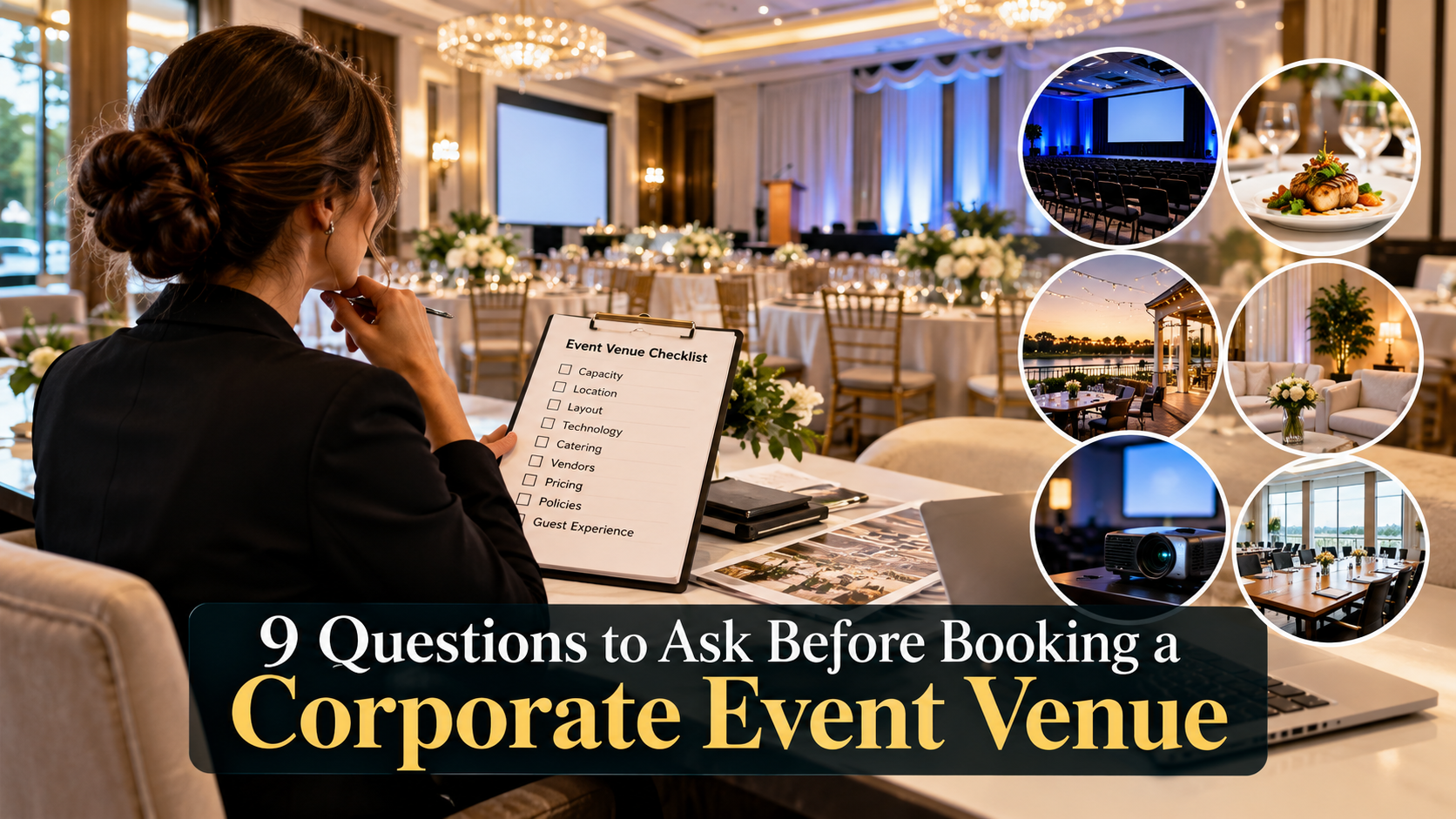
Choosing the right corporate event venue can affect almost every part of your event. The venue influences attendance, comfort, presentation quality, networking, catering, branding, and the overall experience guests take away.
A venue may look impressive in photos, but that does not mean it will work well for your event. Before signing a contract, it helps to ask the right questions about capacity, layout, location, technology, vendors, pricing, and logistics.
Here are nine questions to ask before booking a corporate event venue.
1. What Is the Comfortable Guest Capacity?
Start with the number of people you expect to attend.
Do not rely only on the venue's maximum capacity. A room may technically hold 150 people, but that does not mean 150 guests will feel comfortable once you add tables, chairs, a stage, buffet stations, a bar, and presentation equipment.
Ask about capacity for different setups, including:
- Theater seating
- Banquet seating
- Classroom setup
- Cocktail reception
- Networking layout
- Presentation space
The right corporate event venue should fit your guest count without feeling crowded or too empty.
2. Is the Location Convenient for Guests?
Location plays a major role in attendance.
Consider where most guests are coming from and how easy the venue is to reach.
Useful questions include:
- Is there enough parking?
- Is the venue close to major roads?
- Are hotels nearby?
- Is ride-share access easy?
- Is the venue accessible for guests with mobility needs?
- Is the entrance easy to find?
If your guests are traveling from outside the area, proximity to hotels and airports may matter more. For local events, parking and travel time may be the bigger concern.
3. Does the Layout Support the Event Schedule?
A good venue should support the full flow of the event.
Think about what happens from the moment guests arrive until they leave.
You may need separate areas for:
- Registration
- Networking
- Presentations
- Dining
- Awards
- Entertainment
- Product displays
- Photography
- Breakout sessions
A flexible layout can make a corporate event feel more organized.
For example, guests might arrive in a reception area, move into a presentation space, then transition to dinner and networking without unnecessary delays.
4. What Technology and AV Equipment Are Available?
Most corporate events require some level of technology.
Even a small business dinner may include speeches, slides, music, videos, or microphones.
Ask whether the venue provides:
- Wi-Fi
- Screens
- Projectors
- Microphones
- Speakers
- Lighting
- Power outlets
- Presentation connections
- Video conferencing
- Livestream support
Also ask whether outside AV vendors are allowed.
Do not wait until the event day to test equipment. Technology problems can interrupt presentations and create unnecessary stress.
5. What Are the Catering Options?
Food is often one of the most important parts of a corporate event.
Some venues provide in-house catering. Others allow outside caterers.
Ask:
- Is catering included?
- Can we bring our own caterer?
- Are there minimum food and beverage requirements?
- Are dietary options available?
- Is there a kitchen or food preparation area?
- Are service staff included?
- Are outside beverage vendors allowed?
The right option depends on your event.
In-house catering can simplify planning, while outside vendor flexibility may give you more control over menu and budget.
6. Are Outside Vendors Allowed?
Vendor policies can affect both cost and flexibility.
If your company already works with a preferred planner, photographer, DJ, production team, decorator, or caterer, confirm that the venue allows outside vendors.
Ask about:
- Preferred vendor lists
- Vendor restrictions
- Additional vendor fees
- Insurance requirements
- Setup access
- Load-in and load-out times
- Security requirements
Some venues make planning easier by providing everything in-house. Others offer more flexibility.
Neither approach is automatically better. The important thing is knowing the rules before you book.
7. What Is Included in the Rental Price?
The base rental fee does not always include everything.
Ask for a detailed list of what comes with the venue.
Common inclusions may be:
- Tables
- Chairs
- Linens
- Setup time
- Cleanup
- Parking
- Security
- Staff
- Lighting
- AV equipment
- Wi-Fi
- Outdoor space
- Breakout areas
Two venues may have similar rental prices but very different total costs.
A venue that includes more services may offer better overall value even if the starting price is higher.
8. Are There Any Additional Fees?
Always ask about extra charges before signing the contract.
Possible costs include:
- Service fees
- Cleaning fees
- Security
- Overtime
- Parking
- AV equipment
- Furniture rental
- Catering minimums
- Taxes
- Damage deposits
- Insurance
- Vendor fees
A clear itemized estimate makes comparison easier.
Corporate Event Venue Cost Comparison
| Cost Area | Venue A | Venue B | Venue C |
|---|---|---|---|
| Base Rental | Included | Included | Included |
| Tables and Chairs | Included | Extra | Included |
| AV Equipment | Extra | Included | Extra |
| Parking | Included | Paid | Included |
| Outside Vendors | Allowed | Restricted | Allowed |
| Cleanup | Included | Extra | Extra |
| Overtime | Extra | Extra | Extra |
Looking at the full cost prevents surprises later.
9. What Happens If Plans Change?
Corporate events do not always go exactly as expected.
Guest counts can change. Weather may affect outdoor plans. Schedules may shift. An event may need to run longer than expected.
Ask about:
- Cancellation policy
- Rescheduling
- Refunds
- Guest count deadlines
- Weather backup
- Overtime charges
- Date changes
- Setup changes
If the venue includes outdoor space, confirm that there is a realistic indoor backup plan.
A clear policy gives you more confidence if something changes close to the event date.
What Type of Corporate Event Venue Works Best?
Different venue types suit different business events.
| Venue Type | Best For | Main Advantage |
|---|---|---|
| Hotel Ballroom | Conferences, meetings | Accommodation and hospitality |
| Event Center | Networking, launches, galas | Flexible layouts |
| Private Estate | Executive dinners, celebrations | Privacy and atmosphere |
| Conference Center | Training, seminars | Business infrastructure |
| Restaurant Buyout | Small company events | Food and convenience |
| Outdoor Venue | Casual business events | Open atmosphere |
The best choice depends on the event purpose, guest count, budget, and level of customization you need.
Frequently Asked Questions
What should a corporate event venue include?
A strong venue should offer enough space, comfortable seating, parking, restrooms, vendor access, and the technology needed for your event.
How far in advance should you book a corporate event venue?
Popular venues can book months in advance, especially during busy seasons. Larger events should usually start the search early.
What is the best venue for a networking event?
A flexible space with open areas, comfortable seating, food service, and easy guest movement usually works well for networking.
Should a corporate event venue provide catering?
It depends on your needs. In-house catering offers convenience, while outside vendor flexibility gives you more control.
How much space do you need for a corporate event?
The amount of space depends on the guest count and event format. A seated dinner needs a different layout from a presentation or networking reception.
Final Thoughts
Booking a corporate event venue should involve more than choosing a space that looks good.
The best venue supports the purpose of the event, fits the guest count, provides the right technology, allows the vendors you need, and stays within budget.


 English
 Arabic
 Français
 Español
 Português
 Deutsch
 Dutch
Dutch
 Italiano
 Russian
 Romaian
 Portuguese (Brazil)
 Greek
Greek