

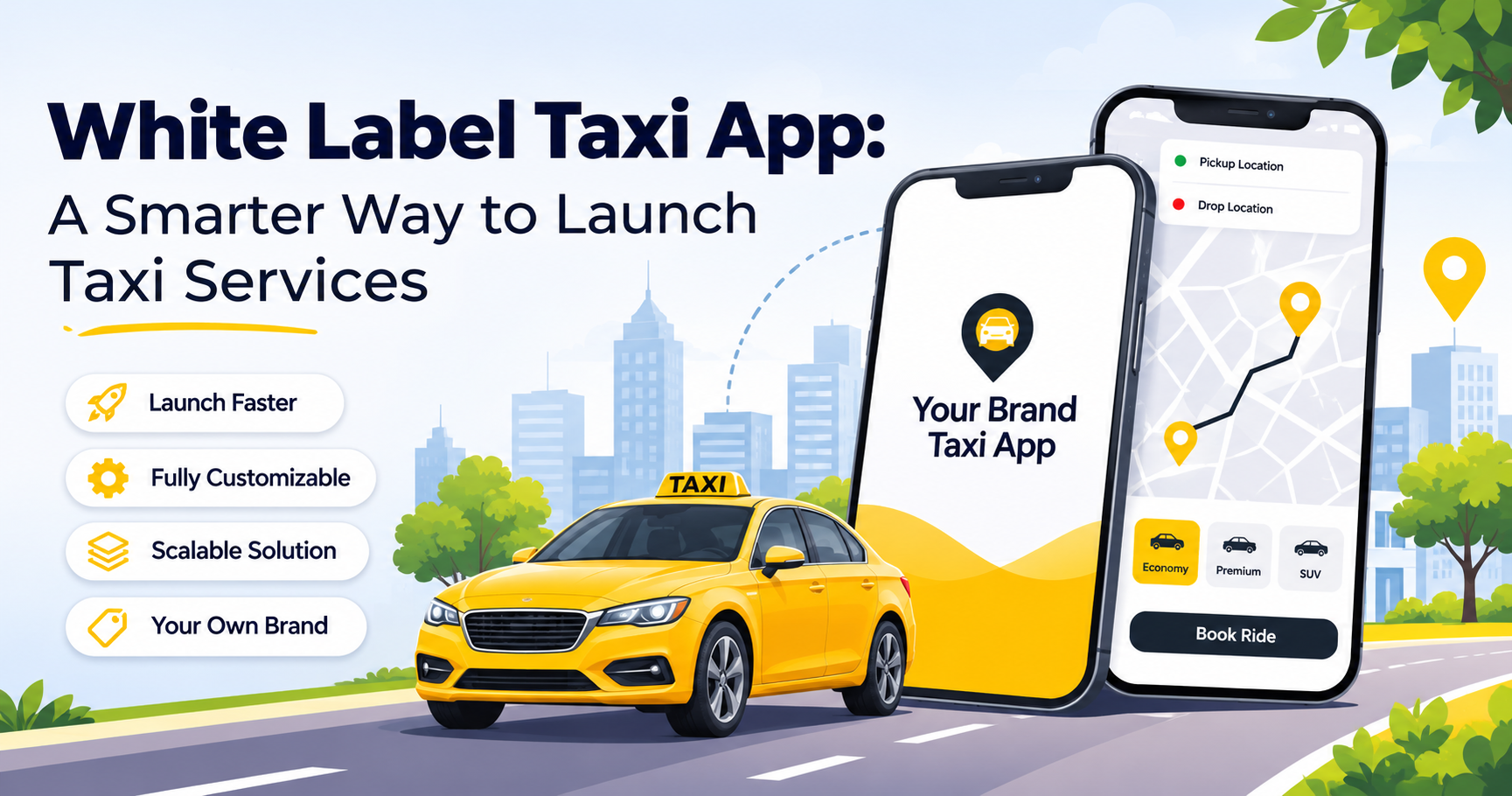
White Label Taxi App: A Smarter Way to Launch Taxi Services

The taxi industry has changed significantly as customers increasingly prefer booking rides through mobile apps instead of calling a local taxi operator. For businesses, this shift creates an opportunity to offer convenient digital booking while building a recognizable transportation brand.
A White Label Taxi App gives startups, taxi operators, entrepreneurs, and established businesses a practical way to enter or expand in the ride-hailing market. Instead of starting a taxi platform entirely from scratch, businesses can use an existing solution, customize it with their branding and business requirements, and launch their own service.
The approach is also useful for businesses exploring models similar to Uber. With the right taxi booking solution, companies can manage customers, drivers, bookings, payments, promotions, and daily operations through a centralized platform.
What Is a White Label Taxi App?
A White Label Taxi App is a ready-to-brand taxi booking platform that businesses can customize and launch under their own brand name. It typically includes applications for passengers and drivers along with an administrative dashboard for managing the overall service.
The concept is similar to using an Uber clone app, but businesses can adapt the platform to their own market, service model, branding, and operational requirements.
For example, a local taxi company can transform its traditional booking operation into a digital taxi booking business. An entrepreneur can launch a new ride-hailing service in a specific city. An agency can also use the solution to create branded transportation platforms for its clients.
The goal is straightforward: provide the essential capabilities required to operate a modern taxi service without requiring a business to build every component from the ground up.
How Does a White Label Taxi App Work?
A typical platform connects passengers, drivers, and administrators through separate interfaces.
Customers can register, enter their pickup and destination locations, view available ride options, request a vehicle, track the driver, and complete payments through the app.
Drivers receive ride requests based on their availability and service area. They can accept or reject requests, navigate to pickup locations, update ride status, and monitor their earnings.
The admin manages the complete operation. This can include driver onboarding, customer management, ride monitoring, service areas, commissions, promotions, reports, and other business activities.
This model allows a company to operate an on demand taxi app while keeping the customer experience under its own brand.
Key Features Businesses Should Look For
A successful taxi platform needs more than a simple booking screen. Businesses should evaluate whether the solution supports the complete ride-booking journey.
Customer Registration and Profile Management
Customers should be able to create accounts, manage personal information, save locations, and review their booking history without unnecessary steps.
Easy Ride Booking
A simple booking flow allows users to enter pickup and drop-off locations, select a suitable vehicle type, confirm the ride, and receive booking details quickly.
Real-Time Ride Tracking
Customers expect visibility after requesting a ride. Real-time tracking helps them monitor the driver's location and estimated arrival.
Multiple Payment Options
A flexible taxi booking app can support different payment methods based on the target market. Options may include cards, digital wallets, cash, or other locally preferred methods.
Driver Management
Drivers should have tools to manage ride requests, availability, trip information, earnings, and ride history.
Ratings and Reviews
Two-way ratings help businesses monitor service quality while giving customers and drivers a way to provide feedback.
Notifications
Push notifications can keep users informed about booking confirmations, driver assignments, ride updates, cancellations, and promotional offers.
Promotions and Referral Programs
Discount codes, promotional campaigns, and referral programs can help businesses attract new customers and encourage repeat bookings.
Admin Management
The administrative side should provide centralized control over customers, drivers, rides, payments, promotions, service areas, and business reports.
Business Opportunities With a White Label Taxi App
The demand for app-based transportation creates opportunities across several business models.
Local Taxi Companies
Traditional taxi operators can move their booking process online and provide customers with a more convenient alternative to phone-based reservations.
A Taxi Booking App Development can help these businesses maintain their existing identity while introducing digital ride booking and real-time tracking.
New Ride-Hailing Startups
Entrepreneurs entering the mobility market can build a branded service around a specific city, region, customer segment, or transportation category.
An Uber like app can be adapted to serve a particular market rather than trying to replicate a global ride-hailing company in every aspect.
Fleet Operators
Companies operating multiple vehicles can use taxi booking software to organize drivers, manage bookings, monitor operations, and improve fleet utilization.
Corporate Transportation Services
Businesses providing employee transportation or corporate mobility services can use an app-based platform to organize scheduled rides and manage transportation requests more efficiently.
Specialized Transportation
The same concept can be adapted for airport transfers, premium rides, women-focused transportation services, business travel, scheduled transportation, or other niche mobility services.
This flexibility makes a taxi platform useful beyond the traditional taxi booking business.
Why Businesses Choose a White Label Solution
Building a digital transportation platform from the beginning can require considerable planning, testing, and operational preparation. A white-label approach provides an alternative for businesses that want to focus more on launching and growing their service.
Faster Market Entry
Businesses can begin with an established product foundation instead of planning every basic capability independently.
This can be particularly useful for startups that need to validate their business model and enter a competitive market without unnecessary delays.
Brand Ownership
The platform can be presented under the company's own name, logo, colors, and business identity. Customers interact with the business's brand rather than a third-party taxi provider.
Business Flexibility
A good solution should allow businesses to adapt features and workflows according to their target market. Different regions may have different customer expectations, payment preferences, vehicle categories, and operational rules.
Scalable Business Model
As demand increases, businesses may expand into additional locations, introduce new vehicle categories, onboard more drivers, or add services.
A flexible platform makes it easier to support these changes as the business develops.
Suitable for Different Business Sizes
A White Label Taxi App is not limited to startups. Taxi operators, fleet owners, agencies, transportation companies, and established enterprises can all use the model depending on their objectives.
White Label Taxi App vs. Building a Taxi Platform From Scratch
The decision between a white-label platform and a completely new solution depends on the company's goals.
A custom-built platform may make sense for businesses with highly specialized requirements or an unusual operational model. However, it also requires businesses to plan and manage the entire product development process.
A white-label solution provides a ready foundation with commonly required taxi booking capabilities. Businesses can then focus their efforts on branding, market positioning, customer acquisition, driver onboarding, and service quality.
For many businesses, this approach provides a practical balance between customization and faster market readiness.
How It Can Support Long-Term Taxi Business Growth
Launching an app is only one part of building a successful transportation business. The platform should support the operational and marketing activities that follow.
Businesses can use customer data and booking insights to understand demand patterns, identify popular service areas, and improve their offerings.
They can also use promotions and referral campaigns to encourage customer acquisition. Driver performance information can help operators identify operational issues and maintain service standards.
As the customer base grows, the company can expand its service area or introduce additional transportation options. A well-planned Uber clone app development strategy can therefore support both initial launch requirements and future business expansion.
Choosing the Right Taxi App Solution
Businesses should evaluate more than the appearance of an app before selecting a solution.
Look at the complete booking journey from customer registration to ride completion. Check whether driver management, payments, notifications, ratings, promotions, and administration are properly covered.
Customization is another important consideration. The platform should allow the business to maintain a distinct brand and adapt the experience to its target audience.
Businesses should also consider ongoing support, platform updates, security practices, app store submission assistance, and the provider's experience with on-demand marketplace applications.
A reliable uber clone script can provide the foundation for a ride-hailing business, but the real value comes from how effectively the platform fits the company's market and operating model.
Conclusion
The taxi industry continues to move toward convenient, app-based transportation, creating opportunities for both established operators and new mobility businesses. A White Label Taxi App gives companies a practical way to introduce digital ride booking under their own brand while supporting customers, drivers, and administrators through one connected platform.
From local taxi companies and fleet operators to startups and specialized transportation providers, the model can be adapted to different business requirements. Features such as real-time tracking, online payments, driver management, booking tools, promotions, and administrative controls provide the foundation needed to operate a modern taxi service.
Businesses considering an Uber taxi clone or their own on demand taxi booking app should focus on usability, customization, scalability, and operational requirements rather than simply copying an existing platform.
Working with an experienced clone app development company can also help businesses select and customize the right solution for their target market and launch a more focused transportation service.
FAQs
1. What is a White Label Taxi App?
A White Label Taxi App is a ready-made taxi booking platform that businesses can customize with their own branding, features, and business requirements before launching it as their own transportation service.
2. Can a business customize a White Label Taxi App?
Yes. Businesses can generally customize elements such as branding, service categories, booking workflows, vehicle options, payment methods, promotions, and other features according to their business model.
3. Is a White Label Taxi App suitable for startups?
Yes. Startups can use a white-label solution to establish a branded taxi booking service without starting the entire product development process from scratch.
4. Can the platform work like an Uber clone?
Yes. A suitable platform can provide core ride-hailing capabilities commonly associated with an Uber app, including ride booking, driver management, real-time tracking, payments, ratings, notifications, and administrative controls.
5. Who can use a taxi booking platform?
Taxi operators, startups, entrepreneurs, fleet owners, transportation companies, agencies, and enterprises can use a taxi booking platform to launch or modernize their transportation services.


