

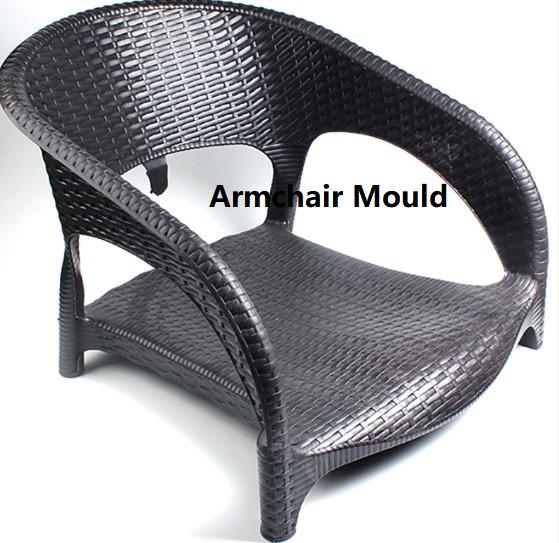

In the plastic furniture industry, product quality depends not only on the selected raw materials but also on the precision of the moulding process. When manufacturers develop durable seating products, a well-designed Stool Mould plays an important role in determining the final shape, surface finish, and structural performance. Selecting a suitable Stool Mould also helps manufacturers improve production consistency, manage material usage, and create plastic stools that meet different market requirements. Understanding mould structure, design considerations, and manufacturing processes can help buyers make more informed decisions.
Understanding the Structure of Plastic Stool Moulds
Plastic stools may appear simple, but their mould structures require careful engineering. A typical mould needs to accommodate the product's overall dimensions, supporting legs, seating surface, reinforcing ribs, and connecting sections.
The mould cavity determines the external appearance of the stool, while the core helps form its internal structure. Their coordination affects wall thickness, dimensional accuracy, and product consistency. Designers must also consider the stool's intended load-bearing requirements when developing the mould structure.
For example, a stool designed for household use may require a different structural arrangement from one intended for commercial environments. Proper mould planning allows manufacturers to create products with suitable strength while maintaining an attractive appearance.
Material Selection and Product Design Considerations
Material selection is closely connected to mould design. Common plastic materials used in stool production include polypropylene and certain engineering plastics. Each material has different flow characteristics, shrinkage behavior, impact resistance, and processing requirements.
Manufacturers should consider the intended application before confirming the material and mould specifications. A lightweight household stool may prioritize convenient handling and practical storage, while stools used in public or commercial spaces may require additional structural reinforcement.
The seat surface, leg geometry, and connection areas should also be considered during product development. Rounded corners, appropriate rib arrangements, and balanced wall thickness can contribute to a practical product design.
By evaluating these details during the early design stage, manufacturers can reduce unnecessary mould modifications and improve the coordination between product design and injection moulding.
How Shine Mold Supports Stool Mould Development
Professional mould development involves several stages, including product analysis, three-dimensional modelling, mould structure planning, machining, assembly, and testing. Each stage contributes to the final mould's accuracy and production performance.
Shine Mold focuses on plastic injection mould manufacturing and related product development. For stool projects, mould designers need to evaluate the product geometry, injection location, cooling arrangement, and ejection method.
The injection system must distribute molten plastic throughout the cavity effectively. An appropriate cooling system helps manage temperature changes during production, while a properly designed ejection system supports smooth product removal.
These considerations are particularly important for stools with multiple supporting legs or complex reinforcing structures. Careful coordination between design and manufacturing can help reduce common moulding problems, such as uneven filling, visible sink marks, and product deformation.
Injection Moulding Processes and Production Efficiency
After mould manufacturing and assembly, trial moulding is an important step before regular production. During this process, technicians evaluate filling conditions, cooling performance, dimensional accuracy, and surface appearance.
If the finished stool shows uneven wall thickness or deformation, adjustments may be necessary. These could involve modifying processing parameters, improving cooling efficiency, or reviewing specific mould structures.
Production efficiency also depends on the relationship between mould design and the injection moulding machine. Machine capacity, clamping force, injection volume, and mould dimensions should be compatible with the selected project.
An appropriately designed mould can support repeatable production and help manufacturers maintain consistent product quality across different manufacturing batches.
Maintenance and Long-Term Mould Performance
Regular mould maintenance is essential for supporting stable production. After manufacturing cycles, technicians should inspect cavity surfaces, guide components, cooling channels, and ejection mechanisms.
Plastic residue and other contaminants should be removed using suitable cleaning methods. Moving components may require appropriate lubrication, while cooling channels should be checked for blockages or deposits that could affect temperature control.
Manufacturers should also maintain records of mould inspections, repairs, and production performance. These records help identify recurring problems and support maintenance planning.
For buyers evaluating mould suppliers, it is useful to consider manufacturing experience, technical communication, customization capabilities, and after-sales support. A suitable mould partner can help coordinate product requirements with practical manufacturing solutions.
Developing a reliable plastic stool requires cooperation between product designers, mould engineers, and production teams. From structural planning and material selection to trial moulding and maintenance, every stage contributes to the final result. Manufacturers looking for customized plastic injection mould solutions can visit https://www.shinemold.com/ to explore available mould manufacturing services and discuss their project requirements.


