

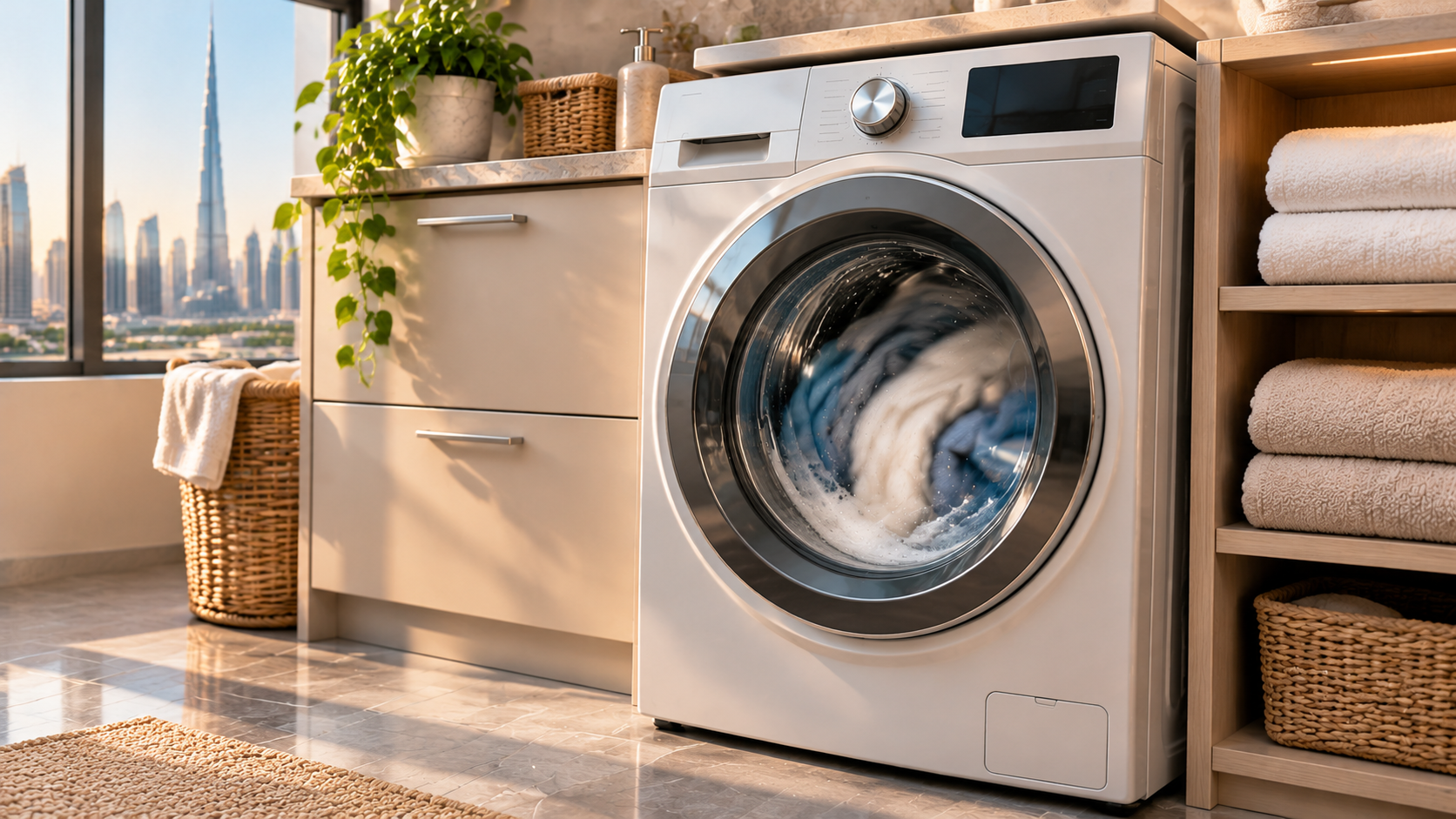

Your washing machine has always made some sound, but today it seems much louder. Perhaps it bangs against the wall during the spin cycle, rattles while washing, or makes a grinding sound as the drum turns. An unfamiliar noise can make you wonder whether it is safe to finish the load. It can also be difficult to tell whether the cause is a simple loading issue or a part that needs attention.
The timing and character of the sound provide useful clues. A heavy duvet can make the drum thump as it spins, while a small object may rattle as it moves around inside. A noise that continues with an empty drum deserves a closer look. This guide explains common causes, safe checks you can make at home, and when to seek professional help. If you are comparing repair options, you can also read about choosing a washing machine repair service in Dubai.
First, Identify When the Noise Happens
A washing machine makes different sounds as it fills, washes, drains, and spins. A brief click when the door locks or a steady hum during operation may be normal for your model. A new, unusually loud sound is more useful to investigate when you know exactly when it starts. Listen from a safe distance and note whether it occurs throughout the cycle or only at one stage.
A thumping sound during the final spin often points toward movement or an uneven load. Rattling during washing may come from an object in a pocket or something touching the outside of the machine. A sound that appears only while water is draining could involve the filter or pump. These are clues rather than firm diagnoses, since different faults can sound alike.
Write down the stage of the cycle and describe the sound in simple words. Banging, scraping, buzzing, squealing, and grinding each give a technician a better starting point than saying the machine is noisy. If you can record a short video without getting close to moving parts or water, it may help show the problem. Stop the machine if the sound becomes severe or the appliance begins moving across the floor.
An Uneven Laundry Load Can Cause Loud Banging
During a spin cycle, the drum turns quickly to remove water from clothes. If most of the weight collects on one side, the drum may move unevenly and cause repeated thumping. This can happen when washing a single heavy item, such as a bathmat, or when a duvet gathers into a tight bundle. The washer may also slow down, pause, or attempt to balance the load.
Pause the cycle using the controls and wait for the drum to stop completely. Once the door unlocks, redistribute the laundry evenly. If you are washing one heavy item, check your manual for advice on suitable load sizes and programmes. Do not force the door open while the machine is running or full of water.
If the noise disappears after you balance the clothes, an uneven load was likely contributing to it. If the same banging happens with several ordinary loads, do not keep assuming the laundry is responsible. The machine’s position or internal support parts may need checking. Noting whether the noise occurs with every load helps distinguish an occasional imbalance from a recurring fault.
Check Whether the Machine Is Stable
A washer can become much louder if it rocks against the floor during the spin cycle. It may also strike a cabinet, wall, or nearby shelf when it vibrates. This is particularly noticeable in a compact laundry area where there is little space around the appliance. A machine that has recently been moved may no longer sit as firmly as it did before.
With the washer switched off, gently check whether it rocks when you press on opposite top corners. Look for an obvious gap beneath a foot and see whether nearby items are touching the cabinet. Follow your model’s instructions if its feet need adjusting. The machine should sit securely on an appropriate surface, with enough clearance to avoid hitting its surroundings.
Do not try to hold a moving washing machine in place during a spin cycle. A machine that travels across the floor or strikes the wall needs attention before another load. If it was newly installed, ask the installer to check its position and any required installation steps. If it has been stable for years and has suddenly become noisy, another cause may be involved.
Small Objects Can Create Rattling or Scraping Sounds
Coins, keys, hair clips, and other objects left in clothing can make a surprising amount of noise. Some remain in the drum and rattle as it turns. Others can become caught near a seal or enter an accessible filter. A sharp scraping sound may occur if something touches a moving part.
Once the cycle has stopped and the machine is safe to open, inspect the drum and clothing pockets. Look carefully around the visible door seal if your model has one. Remove only objects you can see and reach easily. Do not insert tools into narrow spaces or attempt to remove panels to reach an object deeper inside the machine.
If a noise continues after you remove visible objects, do not assume the drum is clear. A small item may be trapped where you cannot safely reach it. Continuing to run the washer could cause further damage if the object rubs against a moving component. A technician can inspect the relevant area and remove it without forcing parts apart.
A Drainage Problem May Sound Like a Pump Problem
Some washing machines make a steady sound when pumping water out, and that alone is not necessarily a fault. A new grinding, buzzing, or unusually loud sound during draining deserves attention, especially if water remains in the drum afterward. Debris in an accessible pump filter may restrict water flow and affect how the machine sounds. The filter and pump should be considered together rather than assuming either one has failed.
Check your model’s manual before opening a filter cover. If the filter is owner accessible, switch off and safely disconnect power first. Prepare a shallow tray and towels because water can remain in the lower part of the washer. Let hot water cool, then follow the manufacturer’s instructions to release it and clean the filter.
If the filter is clear but the machine still makes a loud sound while draining, stop testing it repeatedly. A technician may need to check for an obstruction or a pump fault. Explain whether the noise begins only when the machine empties and whether the water drains fully. Those observations help focus the inspection without making an unsupported guess about which part needs replacement.
Persistent Grinding or Roaring Needs Closer Inspection
A loud mechanical sound that continues through normal loads can point to wear or damage inside the washer. Grinding, roaring, or a rough rumble during spinning may be associated with moving drum components. The exact cause depends on the model and requires inspection. Sound alone cannot tell you whether a bearing, support part, or another component is responsible.
Pay attention to whether the noise has gradually become louder. A problem that begins as a faint rumble and increases over several weeks is different from a sudden rattle after washing clothes with items left in a pocket. Also note whether the drum seems to move unusually or the machine vibrates more than before. Do not attempt to diagnose internal parts by removing panels.
If the noise is severe, pause the cycle and arrange professional help. Running several more loads to see whether it improves can make an existing mechanical problem worse. When discussing noisy washing machine repair service in Dubai, describe when the sound occurs and whether it has changed over time. Ask for an inspection and an explanation of the confirmed fault before agreeing to replacement parts.
A New Installation Can Explain Unusual Vibration
If a new washing machine has been loud since its first wash, consider the installation before assuming a component has worn out. The machine may not be level, may lack sufficient clearance, or may still have packaging or transport parts that should have been removed. Installation requirements vary between models. The manual and installation paperwork are the right places to check what applies to yours.
Do not remove parts simply because they look unfamiliar. Confirm their purpose in the instructions or ask the installer to inspect the appliance. A machine fitted into cabinetry may also touch surrounding panels when it spins, creating a sound that seems to come from inside the drum. Look for visible contact points while the washer is switched off.
Tell the installer if the appliance moves noticeably or makes a repeated knocking sound from the first cycle. A prompt correction can prevent continued vibration and protect the surrounding area. If the noise began much later, installation may still be worth checking, but load balance and developing faults should also be considered. The history of the sound helps narrow the possibilities.
Safe Checks You Can Make at Home
Begin by identifying the stage of the cycle when the noise occurs. Pause the machine if it is banging heavily or moving, then wait until it stops before opening the door. Check whether the laundry is bunched on one side and redistribute it if needed. Look for loose objects in the drum and items touching the outside of the cabinet.
With the machine switched off, check whether it rocks on the floor. Inspect only the visible areas around it and make sure nothing has fallen behind or beside it. If the noise occurs while draining, consult the manual before checking an accessible filter. Do not reach inside the machine, remove electrical panels, or touch a plug when the surrounding area is wet.
You may try another appropriate load after correcting a clear loading issue, but stay nearby. If the loud noise returns, stop the cycle and note what happened. A short description of the sound, the cycle stage, and the type of laundry is valuable information for a technician. Basic checks should help you decide what to do next, not encourage you to keep running a machine that may be damaged.
When Should You Book a Repair?
Arrange an inspection when the noise is new, persistent, or becoming louder. Grinding, scraping, and heavy banging that continues with balanced loads should not be ignored. The same applies if the machine moves across the floor, leaves water inside, or shows an error. These signs suggest the issue needs more than a simple adjustment to the laundry.
Before booking, note the brand and model number and when the sound occurs. Explain whether the washer was recently installed or moved, and mention any leaking or drainage trouble. Ask what the inspection includes and whether you will receive an estimate before work begins. Clear information helps the technician investigate the right area.
A professional washing machine repair service in Dubai should explain the diagnosis before recommending parts. If the proposed repair is costly, ask how it compares with replacement based on the machine’s overall condition. You can then make a decision using the likely repair cost, the appliance’s age, and any warranty offered. There is no need to approve work you do not understand.
How to Keep Your Washing Machine Quieter
A few regular habits can reduce avoidable noise. Check pockets before washing and choose a load size that suits the machine. Avoid washing one very heavy item on its own unless the manual provides a suitable programme. Spread bulky items out rather than pushing them into a tight bundle.
Keep the area around the machine clear so it cannot strike stored items during a spin. After moving it for cleaning, check that it sits firmly and does not touch a cabinet or wall. Follow the manufacturer’s maintenance guidance for any accessible filter. These steps support normal operation and make new sounds easier to notice.
Listen for changes rather than expecting complete silence. Every washer produces some noise when filling, washing, draining, and spinning. What matters is a sound that is louder, harsher, or different from its usual pattern. Addressing that change early can prevent an inconvenient breakdown during a busy week.
Common Mistakes to Avoid
One mistake is treating every loud spin as proof that an expensive part has failed. An uneven load or an unstable machine can also produce heavy banging. Another is continuing a cycle while the washer is striking a wall or moving across the floor. Pause it and inspect the obvious causes once it has stopped.
Do not put a hand near moving parts to locate a sound. Avoid opening panels, reaching behind a running machine, or forcing a filter cover that will not turn. If water is present around the plug or socket, keep clear and arrange qualified help. Safety comes before identifying the exact source of a noise.
Finally, do not purchase a replacement part based only on a recording or online description. Several faults can sound similar from outside the appliance. An inspection should confirm what is wrong before a repair is proposed. That approach helps avoid unnecessary spending and gives the repair a better chance of solving the noise.
FAQs
1. Is it normal for a washing machine to make noise during spinning?
Some sound and vibration are normal, especially at high spin speeds. A new, unusually loud banging, scraping, or grinding sound needs checking. Compare it with how the machine usually operates.
2. Why does my washer bang only when washing a duvet?
A bulky item can gather on one side of the drum and create an uneven load. Pause the machine, wait for it to stop, and redistribute the item. Check the manual for a suitable programme.
3. Can a blocked filter make a washing machine noisy?
It can contribute to unusual sounds during draining on some machines. Check the manual before cleaning an accessible filter and prepare for retained water. A persistent noise needs further inspection.
4. Why is my new washing machine vibrating so much?
Its position, clearance, or installation may need checking. Confirm the model’s installation instructions or ask the installer to inspect it. Do not remove unfamiliar parts without checking what they are.
5. When should I stop using a noisy washing machine?
Stop if it moves across the floor, makes severe grinding or scraping sounds, leaks, or produces smoke or a burning smell. Do not run another load until the cause has been assessed.
Final Thoughts
A loud washing machine is easier to assess when you notice exactly when the sound begins. A balanced load, stable position, and clear drum are sensible first checks. If the noise persists, becomes harsher, or comes with leaking or poor drainage, the machine deserves a professional inspection.
Describe the sound and its timing when you book a visit. Ask the technician to confirm the cause and explain the repair before work begins. With a careful diagnosis, you can address the problem confidently and return to a quieter laundry routine.


