

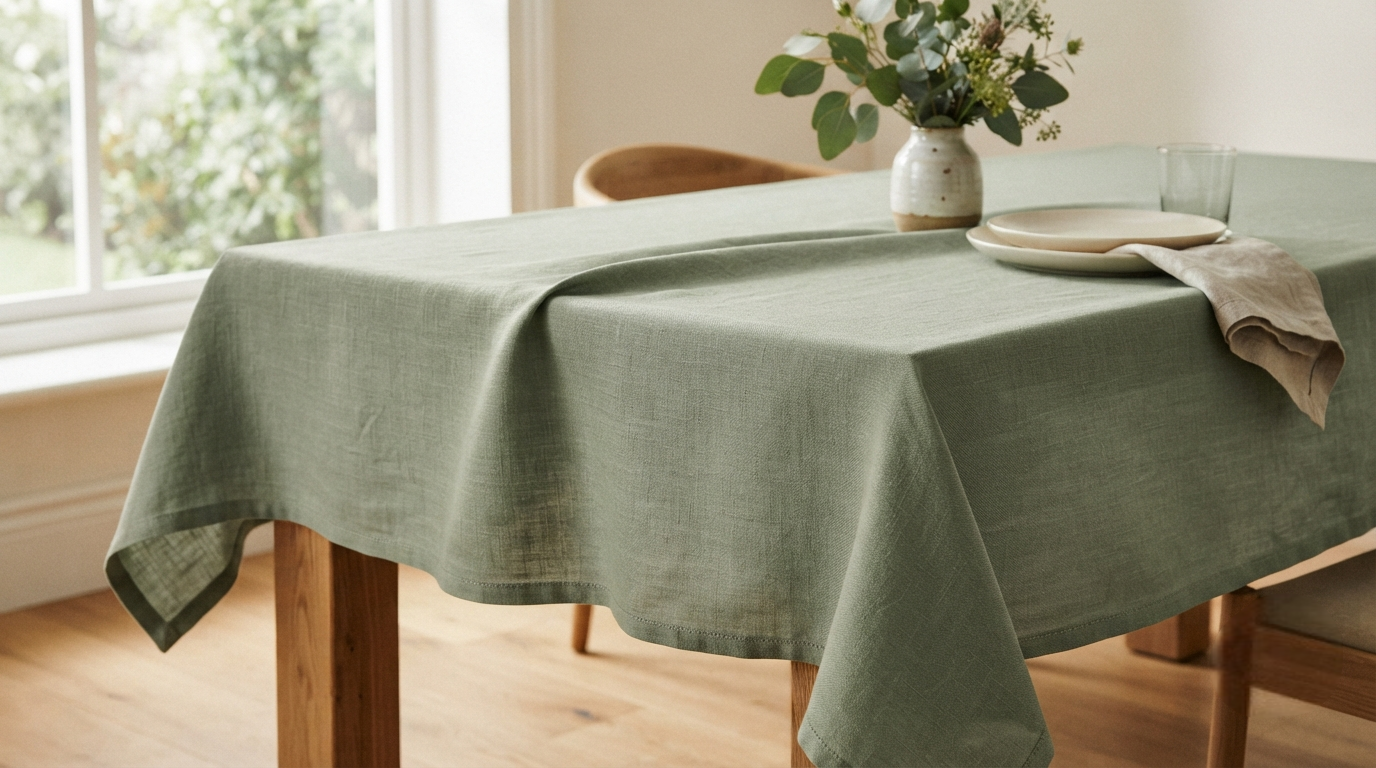
How to Style a Tablecloth for a Garden-Inspired Dining Experience

A garden-inspired dining table brings the freshness of the outdoors into everyday meals. Whether you are enjoying a relaxed lunch, hosting a weekend gathering, or simply refreshing your dining room, natural colors and botanical details can create a welcoming atmosphere.
The tablecloth is an ideal starting point for this look. Its texture and color can introduce the softness of natural surroundings while providing a coordinated foundation for dinnerware, flowers, and serving accessories. You do not need an elaborate arrangement to achieve the effect. A few carefully chosen elements can make the dining table feel fresh, balanced, and connected to nature.
1. Begin With a Natural-Looking Tablecloth
A garden-inspired table setting works well with fabrics that have an understated appearance. Natural textures and gentle colors can create a relaxed foundation without competing with floral arrangements or decorative accessories.
A simple Table cloth in ivory, oatmeal, sage, or soft beige can complement the look. These shades work with both fresh flowers and greenery, making it easier to change the centerpiece throughout the seasons.
Choose a fabric with a neat finish and a natural drape. A balanced drop allows the tablecloth to frame the dining table without making the arrangement feel too formal.
2. Select Fabric That Adds Softness
Texture plays an important role in a nature-inspired dining space. Pairing woven fabric with wood, ceramic, and glass creates a layered appearance that feels comfortable and inviting.
A cotton table cloth can be a practical choice for this style. Its woven texture complements natural materials and works for both everyday dining and casual gatherings.
If the dining room already has patterned wallpaper, decorative furniture, or a detailed centerpiece, choose a solid fabric to maintain balance. For a simpler interior, a subtle botanical or check pattern can add interest.
3. Choose a Tablecloth Shape That Fits Your Table
The shape of the tablecloth should follow the tabletop so the fabric falls evenly and creates a coordinated appearance.
For a long dining table, a rectangle table cloth provides consistent coverage and works well when arranging flowers or serving dishes along the center.
A round table can be styled with round table cloths to create a soft outline that complements curved vases and rounded ceramic accessories.
For a smaller square dining table, square table cloths can provide a balanced finish. Measure the tabletop before choosing a size, and consider the amount of fabric needed for an even drop on every side.
4. Bring Botanical Colors Into the Setting
A garden-inspired palette does not have to rely on bright floral prints. Muted colors can create a more timeless appearance while still suggesting the freshness of nature.
Sage green, dusty blue, warm beige, cream, and soft terracotta are useful choices. These shades pair naturally with wooden serving boards, white dinnerware, and clear glassware.
For a more dramatic botanical arrangement, a black table cloth can provide contrast against fresh green leaves and colorful flowers. Keep the remaining accessories light so the table retains a welcoming feel.
Repeat one or two colors in napkins, flowers, or nearby decor to connect the table setting with the rest of the room.
5. Use Fresh Flowers and Greenery as Accents
Flowers and greenery can make a garden-inspired dining table feel complete. However, the centerpiece should complement the tablecloth rather than cover it.
A small arrangement of seasonal flowers in a ceramic vase can add color without taking up too much space. For a simpler look, use a few leafy branches in a clear glass vase.
On a long table, several small arrangements can create a balanced effect. On a round table, one compact centerpiece is often enough.
Choose flowers that work with the tablecloth's color rather than introducing too many contrasting shades. Keep the arrangement low enough for guests to see one another comfortably.
6. Layer Natural Materials for a Finished Look
Natural materials can add dimension without making the table feel crowded. Wooden serving boards, ceramic plates, woven placemats, and clear glass accessories all work well with botanical styling.
Start with the tablecloth, then add dinnerware and a few carefully selected accents. A folded cloth napkin can introduce another layer of texture, while simple cutlery keeps the arrangement looking refined.
Avoid using too many patterns at once. If the tablecloth has a noticeable print, choose plain dinnerware and understated accessories. If the fabric is solid, you have more freedom to introduce patterned plates or textured serving pieces.
7. Keep the Setting Practical for Everyday Meals
A garden-inspired table should remain comfortable to use, not just attractive to look at. Make sure the tablecloth does not hang so low that it catches on chairs or interferes with movement.
Leave enough space for serving dishes, glasses, and individual place settings. If you are using fresh flowers, check that water cannot spill onto the fabric when moving the vase.
For regular meals, choose accessories that are easy to remove and clean. Follow the tablecloth's care instructions and store it only when completely dry.
Conclusion
A garden-inspired dining table can bring a fresh and relaxed feeling into your home. Start with a tablecloth that complements natural colors, add a few botanical details, and layer simple materials for a balanced finish. With thoughtful styling, the dining table can feel connected to nature while remaining practical for everyday use. All Cotton and Linen offers tablecloth styles that can help create a warm and welcoming dining space.


