

How Does Rhinoplasty in Dubai Address Thick Nasal Skin Concerns?
Thick nasal skin is one of the factors that can influence the planning and outcomes of nose reshaping procedures. Unlike thin nasal skin, which may reveal small structural changes more clearly, thicker skin can conceal underlying cartilage definition and make achieving a refined nasal appearance more challenging. Patients considering Rhinoplasty in Dubai often want to understand how their skin thickness affects surgical planning, nasal proportions, and long-term results.
Thick nasal skin does not necessarily prevent someone from achieving a balanced nasal appearance. However, it requires careful assessment of the underlying nasal framework, skin characteristics, and individual aesthetic goals. At Perfect Doctors Clinic, Dr Perfect Celebrity considers these factors when discussing suitable Rhinoplasty treatment options and developing an individualized surgical approach.
Understanding Thick Nasal Skin in Rhinoplasty in Dubai
Thick nasal skin generally contains more sebaceous glands, connective tissue, and soft tissue than thinner nasal skin. It is particularly noticeable around the nasal tip, where additional tissue can create a rounded or less defined appearance.
During Rhinoplasty in Dubai, the underlying cartilage and bone may be reshaped to improve nasal proportions. However, the thickness and elasticity of the skin influence how clearly these structural modifications become visible.
Patients with thicker nasal skin may experience:
- A rounded or bulbous nasal tip.
- Reduced visibility of cartilage definition.
- A wider-looking nasal appearance.
- Additional soft tissue around the nasal tip.
- Slower resolution of postoperative swelling.
Understanding these characteristics helps establish realistic expectations before considering Rhinoplasty procedures in Dubai.
How Does Rhinoplasty Dubai Address Thick Nasal Skin?
Rhinoplasty Dubai addresses thick nasal skin concerns through detailed structural assessment and carefully planned modifications to the underlying nasal framework. Since removing or excessively thinning the skin is generally not an appropriate solution, surgical planning focuses on creating sufficient structural definition to support the desired appearance.
Several considerations influence the approach.
Evaluating Nasal Skin Thickness and Elasticity
The first step involves examining the thickness, elasticity, and distribution of the nasal skin. Skin characteristics can vary across different areas of the nose, particularly between the bridge, tip, and nostrils.
A detailed assessment helps determine how the skin may adapt to changes in the underlying structure. Patients with thicker skin may require a different surgical strategy compared with those who have thinner skin.
Improving Nasal Tip Definition
Thick skin can make the nasal tip appear rounded or poorly defined. One of the main considerations during rhinoplasty is creating an appropriate supporting structure beneath this area.
Cartilage refinement and structural support techniques may help improve the underlying tip shape. However, the final definition depends on individual anatomy, skin thickness, and healing characteristics.
The objective is to create balanced proportions rather than pursue excessive narrowing or an artificially sharp appearance.
Strengthening the Underlying Nasal Framework
A strong and appropriately shaped nasal framework is important when addressing thick skin concerns. The underlying cartilage may need sufficient structural support to maintain the intended shape beneath heavier soft tissue.
Careful structural planning can help improve tip support and overall nasal proportions while maintaining natural facial harmony.
Best Plastic Surgeon in Dubai: Why Experience Matters for Thick Skin Rhinoplasty
Choosing the Best Plastic Surgeon in Dubai is an important consideration for patients with thick nasal skin because this characteristic requires careful surgical judgment.
Thicker skin can make small structural changes less visible, particularly around the nasal tip. Therefore, surgical planning should consider both the desired shape and the limitations created by individual tissue characteristics.
Best rhinoplasty surgeon in Dubai focuses on evaluating nasal anatomy, facial proportions, and patient expectations when discussing rhinoplasty approaches at Perfect Doctors Clinic.
Important considerations include:
- Assessing the thickness and elasticity of nasal skin.
- Evaluating cartilage strength and nasal tip structure.
- Understanding the patient's aesthetic expectations.
- Maintaining appropriate nasal support.
- Considering potential swelling and healing differences.
The goal is to achieve a natural-looking result that complements the patient's facial features.
Rhinoplasty Clinic in Dubai: What Happens During Treatment Planning?
Selecting a suitable Rhinoplasty clinic in Dubai involves understanding how the consultation and treatment planning process addresses individual concerns.
For patients with thick nasal skin, the planning process generally includes several important stages.
Initial Nasal Assessment
The nasal bridge, tip, nostrils, and overall facial proportions are examined. The assessment also considers skin thickness, existing structural irregularities, and breathing concerns.
Discussing Suitable Rhinoplasty Treatment Options
Different surgical approaches may be considered depending on the patient's nasal anatomy. These may involve cartilage refinement, tip support, bridge reshaping, or other structural modifications.
Not every patient requires the same techniques. The appropriate approach depends on the specific concerns identified during the examination.
Establishing Realistic Expectations
Thick nasal skin can limit the visibility of fine structural details. Therefore, patients should understand that the objective is to improve overall shape and proportion rather than guarantee an extremely sharp or narrow nasal tip.
Discussing these limitations before surgery helps establish achievable treatment goals.
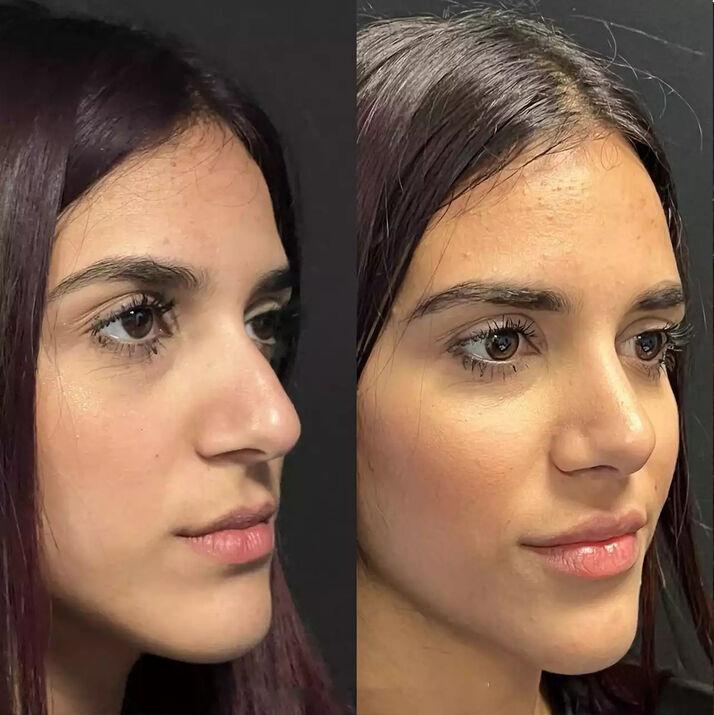
Rhinoplasty Before and After: What Results Can Patients Expect?
Rhinoplasty before and after comparisons can help patients understand the potential changes associated with nose reshaping. However, individuals with thick nasal skin may notice differences in how their results develop compared with patients who have thinner skin.
Potential improvements may include:
- Better overall nasal proportions.
- Improved nasal tip support.
- A more balanced nasal profile.
- Reduced prominence of certain structural irregularities.
- Greater harmony between the nose and surrounding facial features.
The final appearance depends on the original nasal anatomy, surgical technique, skin characteristics, and healing process.
Patients should also understand that thick skin may soften the appearance of fine details. Therefore, realistic expectations are particularly important.
Rhinoplasty Recovery: How Does Thick Skin Affect Healing?
Rhinoplasty recovery can take longer for patients with thicker nasal skin, particularly when swelling remains around the nasal tip.
Although initial healing occurs during the first few weeks, the nose continues to settle over several months. Tip swelling may take considerably longer to resolve, and final refinement can sometimes require a year or more.
Patients may be advised to:
- Follow all postoperative care instructions.
- Avoid unnecessary pressure on the nose.
- Protect the nose from accidental injury.
- Attend scheduled follow-up appointments.
- Avoid strenuous activities until medically cleared.
- Report unusual discomfort or unexpected changes.
Patience is essential because the nasal tip may remain swollen even after other areas have improved.
Rhinoplasty Cost in Dubai: What Influences Treatment Expenses?
Rhinoplasty cost in Dubai depends on several factors, including surgical complexity, the techniques required, facility-related expenses, and individual treatment requirements.
For patients with thick nasal skin, the surgical approach may involve additional structural planning to achieve appropriate support and proportion.
The estimated cost range for rhinoplasty may be AED 23,299 to AED 30,000, depending on the treatment plan and individual requirements.
Before proceeding, patients should discuss the complete treatment plan and associated expenses during their consultation at Perfect Doctors Clinic.
Best Doctors in Dubai: Understanding Individual Rhinoplasty Results
Consulting the Best Doctors in Dubai helps patients understand how their nasal characteristics influence surgical planning and expected outcomes.
Thick nasal skin requires a balanced approach because excessive structural modification may not necessarily produce better definition. Instead, maintaining adequate support and considering the natural limitations of the skin are important.
Dr Perfect Celebrity evaluates individual nasal features and discusses appropriate options based on each patient's concerns.
Patients considering Rhinoplasty Dubai should prioritize realistic expectations, proper assessment, and long-term nasal function alongside aesthetic improvements.
Conclusion
Thick nasal skin can make rhinoplasty more complex, particularly when patients want improved nasal tip definition and refined facial proportions. However, careful structural planning, appropriate cartilage support, and realistic expectations can help address many of these concerns.
Rhinoplasty in Dubai offers patients an opportunity to explore individualized nose reshaping approaches based on their anatomy and aesthetic goals. Understanding skin thickness, recovery expectations, and potential limitations is essential when considering treatment. A detailed consultation at Perfect Doctors Clinic with best rhinoplasty surgeons in Dubai can help patients understand suitable approaches and make informed decisions.
Frequently Asked Questions
1. Can Rhinoplasty in Dubai Improve the Appearance of Thick Nasal Skin?
Yes. Rhinoplasty can reshape the underlying nasal framework to improve overall proportions and support. Although it cannot directly change natural skin thickness, structural modifications may create a more balanced nasal appearance.
2. Why Is Rhinoplasty More Challenging for Patients With Thick Nasal Skin?
Thick skin can conceal subtle changes in the underlying cartilage and make nasal tip definition more difficult to achieve. It may also contribute to prolonged postoperative swelling.
3. Can Thick Nasal Skin Affect Rhinoplasty Results?
Yes. Skin thickness influences how clearly the underlying nasal structure becomes visible. Patients with thicker skin may experience less pronounced definition than those with thinner skin.
4. Is It Possible to Achieve a Defined Nasal Tip With Thick Skin?
Improved nasal tip definition may be possible through appropriate structural support and cartilage refinement. However, the degree of definition depends on individual anatomy and skin characteristics.
5. Does Thick Nasal Skin Increase Rhinoplasty Recovery Time?
It can contribute to prolonged swelling, especially around the nasal tip. Some patients may need a longer period before the final nasal contours become visible.
6. What Surgical Techniques Are Considered for Thick Nasal Skin?
Depending on individual anatomy, techniques may include cartilage refinement, tip support, and structural reshaping. The appropriate approach is determined during the surgical assessment.
7. Can Rhinoplasty Reduce the Thickness of Nasal Skin?
Rhinoplasty primarily reshapes the underlying nasal framework rather than reducing natural skin thickness. The objective is to create a supporting structure that improves the overall appearance.
8. How Long Does It Take to See Final Rhinoplasty Results?
Initial improvements may become noticeable within several weeks, but swelling can continue to decrease over several months. Final nasal refinement may take a year or longer.
9. Does Rhinoplasty Cost in Dubai Depend on Nasal Skin Thickness?
Skin thickness can influence surgical complexity and treatment planning. However, the overall cost also depends on the required techniques, surgical facility, and individual treatment needs.
10. How Can Patients Prepare for Rhinoplasty With Thick Nasal Skin?
Patients should undergo a detailed consultation, discuss their expectations, review suitable treatment options, and understand the recovery process. Following preoperative and postoperative medical instructions also supports appropriate healing.


