


How Automotive Infotainment Systems Are Redefining Driving
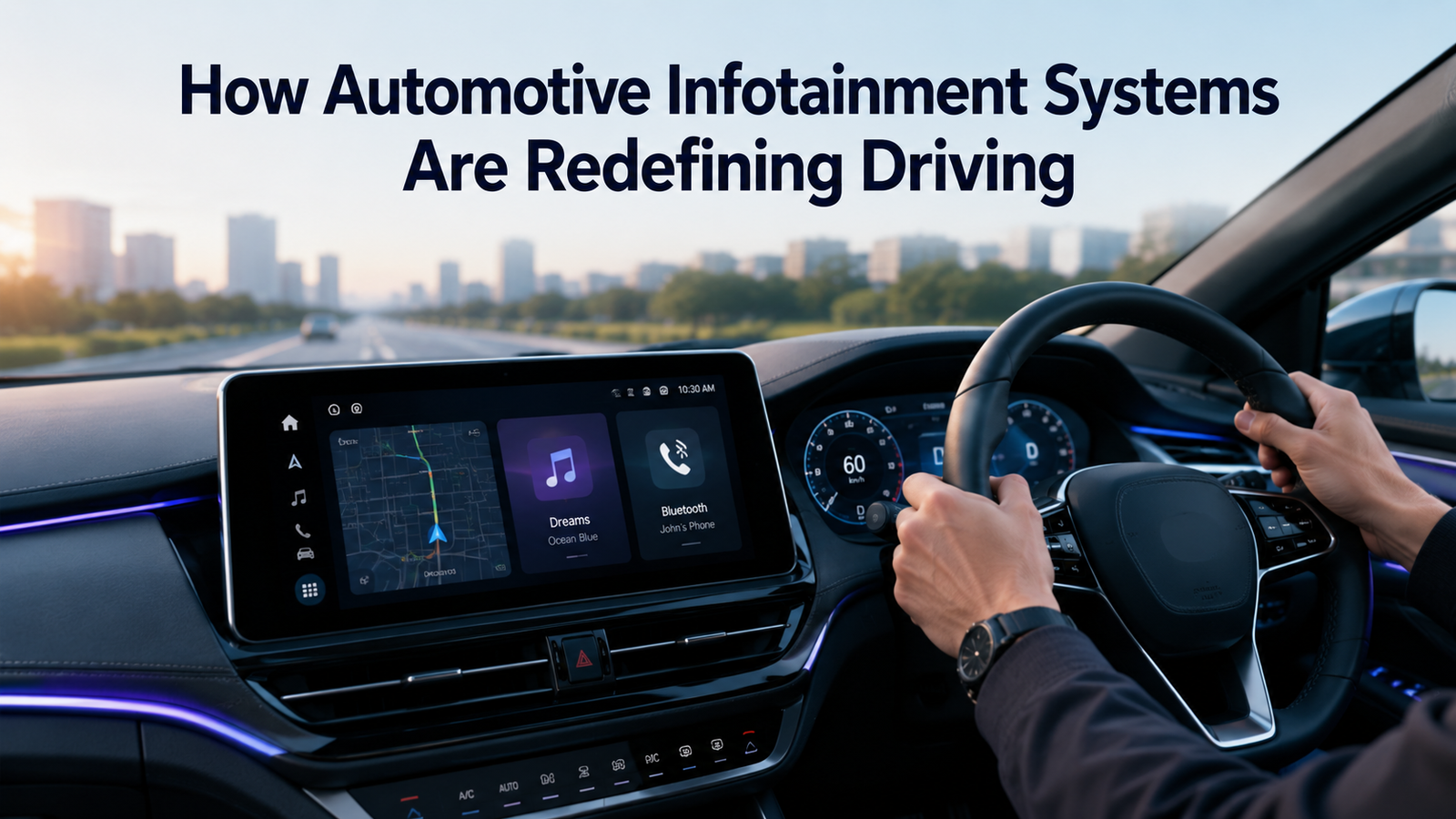
Automotive infotainment systems have evolved far beyond basic radio and navigation functions. Modern vehicles now integrate digital entertainment, connectivity, communication, and real-time information into a unified platform that enhances both driver convenience and passenger experience. As vehicles become increasingly connected, infotainment technology is emerging as a central component of automotive innovation.
The growing demand for seamless smartphone integration, voice-enabled controls, advanced navigation, and personalized in-car experiences is encouraging automakers to invest heavily in infotainment capabilities. Consumers increasingly view digital features as an important factor when purchasing vehicles, prompting manufacturers to develop more sophisticated and intuitive systems.
Growing Demand for Connected Vehicle Experiences
Connected vehicles are transforming expectations for in-car technology. Drivers now expect uninterrupted access to navigation services, music streaming, communication tools, and cloud-based applications while on the move. This shift is encouraging automakers to integrate advanced infotainment platforms that support over-the-air updates and digital services.
According to a Global Automotive Infotainment System industry analysis, the sector is valued at around USD 23.76 billion in 2025 and is projected to reach USD 35.12 billion by 2032, growing at a CAGR of approximately 5.74% during 2026–2032. The study highlights the increasing role of connectivity and software-driven vehicle architectures in supporting industry expansion.
Software-Defined Vehicles Are Changing Infotainment Design
The emergence of software-defined vehicles is fundamentally reshaping infotainment development. Instead of relying solely on hardware upgrades, automakers can now enhance vehicle functionality through software updates delivered remotely. This approach enables manufacturers to continuously improve navigation, entertainment, security, and user interface features throughout a vehicle's lifecycle.
Several automotive brands are adopting embedded operating systems that support cloud connectivity and application ecosystems. This transition allows drivers to access digital services directly from the vehicle interface without depending entirely on mobile devices. As software becomes more important, infotainment systems are increasingly functioning as digital control centers within modern vehicles. Industry analysts note that software-defined architectures are becoming a key driver of next-generation in-vehicle experiences.
Passenger Vehicles Lead Adoption Trends
Passenger vehicles continue to represent the largest segment for infotainment deployment. Rising consumer demand for convenience, entertainment, and safety features is encouraging automakers to include advanced infotainment systems even in mid-range vehicle models. Features that were once exclusive to luxury vehicles are gradually becoming available across broader vehicle categories.
Large touchscreen displays, voice assistants, wireless smartphone connectivity, and personalized user profiles are becoming standard offerings in many passenger cars. As automotive manufacturers compete to improve customer experience, infotainment systems are increasingly serving as a differentiating factor in vehicle purchasing decisions.
Asia-Pacific Remains a Key Growth Hub
Regional trends also play an important role in shaping the future of automotive infotainment. Asia-Pacific currently holds a leading position due to its substantial vehicle production capacity and rapidly expanding automotive manufacturing ecosystem. Countries such as China, India, Japan, and South Korea continue to drive innovation through investments in connected mobility technologies.
The region benefits from growing consumer demand for technologically advanced vehicles and increasing adoption of digital services. Expanding 5G infrastructure, rising smartphone penetration, and supportive automotive manufacturing environments are further accelerating infotainment integration across new vehicle platforms. These factors position Asia-Pacific as a major contributor to industry growth during the coming years.
Artificial Intelligence and Voice Technology Gain Importance
Artificial intelligence is becoming increasingly important within automotive infotainment systems. AI-powered voice assistants allow drivers to control navigation, media, communication, and vehicle settings through natural language commands. These capabilities help reduce distractions and improve driving safety while delivering a more intuitive user experience.
Machine learning technologies can also personalize content recommendations, optimize navigation routes, and adapt vehicle settings based on user preferences. As AI capabilities continue to advance, infotainment systems are expected to become more responsive and context-aware, enabling smarter interactions between drivers and vehicles.
The Future of In-Car Digital Experiences
The automotive industry is entering an era where vehicles increasingly function as connected digital environments. Infotainment systems are evolving into comprehensive platforms that combine entertainment, communication, navigation, vehicle management, and cloud-based services. This transformation reflects broader shifts toward connected mobility and intelligent transportation ecosystems.
Leading companies such as Continental AG, Harman International, Panasonic Corporation, Visteon Corporation, Denso Corporation, Robert Bosch GmbH, LG Electronics, Hyundai Mobis, and Pioneer Corporation continue to invest in technologies that enhance in-car digital experiences. As connectivity, artificial intelligence, and software-defined vehicle architectures mature, infotainment systems are expected to play an even greater role in shaping the future of mobility.


 English
 Arabic
 Français
 Português
 Deutsch
 Türkçe
 Dutch
Dutch
 Italiano
 Russian
 Romaian
 Portuguese (Brazil)
 Greek
Greek