


How SAP Security GRC Enables Secure Access Management
Organizations that rely on SAP systems need effective security measures to protect business data and control user activities. Access management ensures that employees can use the system functions required for their roles while preventing unnecessary or unauthorized access. SAP Governance, Risk, and Compliance (GRC) helps businesses manage permissions, evaluate security risks, and maintain compliance with internal policies. By implementing appropriate access controls, organizations can improve data security, reduce potential threats, and support reliable business processes.
Exploring Access Control in SAP Security GRC
Access control in SAP Security GRC helps organizations determine which users can access specific applications, transactions, and business information. Security administrators can manage authorization assignments, review permissions, and identify potential access issues. Providing employees with the right level of access helps protect confidential data and supports secure system operations. Those interested in learning these concepts can explore SAP Security GRC Online Training to understand the fundamentals of access management and security governance.
Simplifying User Access Requests and Approvals
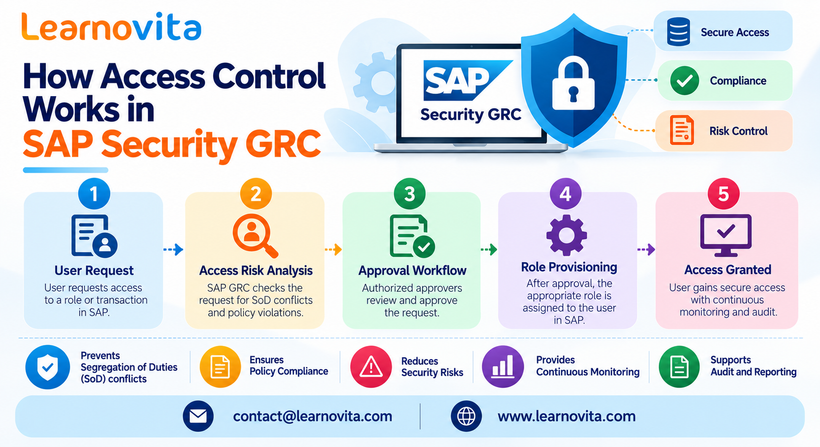
Access Request Management helps organizations follow a structured process when employees need new or updated SAP permissions. Users can submit access requests that are reviewed by designated approvers according to established workflows. Risk checks can help identify potentially conflicting permissions before access is granted. This approach supports consistent authorization decisions, reduces unnecessary access, and improves visibility into how permissions are approved and assigned across the organization.
Managing Authorization Roles and User Permissions
Authorization role management allows administrators to assign permissions based on employees’ responsibilities. For example, an accounts team member may need access to process invoices, while a supervisor may require additional permissions to approve transactions. Organizing access through suitable roles simplifies administration and helps maintain consistent security practices. Organizations should also evaluate segregation-of-duties risks, such as allowing one employee to create supplier records and approve payments. Learning more about these processes through SAP Security GRC Training in Bangalore can help professionals understand role assignments and authorization management.
Analyzing Access Risks and Authorization Conflicts
Access Risk Analysis helps organizations identify permissions that may lead to security violations or compliance concerns. SAP GRC can evaluate user access against predefined risk rules to identify conflicting responsibilities and sensitive authorizations. For example, a user who can create vendors and process payments may have a combination of permissions that requires further assessment. Security teams can address identified risks by adjusting access, redesigning roles, or implementing mitigating controls. This process helps organizations improve access governance and reduce the likelihood of inappropriate system activities.
Controlling Emergency and Privileged System Access
Emergency Access Management helps authorized users perform urgent tasks that require additional system privileges. For example, an administrator may need temporary elevated access to troubleshoot a critical production issue. Organizations can establish approval requirements, record user activities, and review access logs to monitor how these privileges are used. These measures help employees resolve urgent problems while maintaining accountability and reducing the risks associated with privileged access. Effective monitoring ensures that emergency permissions remain controlled and subject to review.
Strengthening Compliance with Regular Access Reviews
Periodic access reviews help organizations confirm that users continue to need their assigned permissions. When employees change positions, move between departments, or leave an organization, their previous access may no longer be appropriate. Regular reviews allow managers and security teams to identify outdated permissions and initiate necessary changes. Maintaining accurate authorization records supports internal security policies and helps organizations prepare for compliance audits. Professionals can explore SAP Security GRC Training in Hyderabad to develop their understanding of access reviews and governance procedures.
Building Career Skills in SAP Security GRC
Understanding user authorization, role management, access risk analysis, emergency access, and compliance monitoring can help professionals prepare for SAP security-related roles. These skills are relevant to opportunities in SAP security administration, GRC consulting, access governance, and risk management. Practical training helps learners understand how organizations process access requests, investigate authorization conflicts, and maintain security controls. Individuals looking to expand their knowledge can explore SAP Security GRC Training in Chennai to strengthen their foundation in SAP security and access governance.
Conclusion:
SAP Security GRC helps organizations protect their systems by managing user permissions, analyzing access risks, controlling privileged activities, and supporting compliance processes. Structured approval workflows, appropriate authorization roles, regular risk assessments, and periodic access reviews contribute to stronger security and better accountability. Understanding these practices helps professionals appreciate how effective access management protects business information and supports secure SAP operations.


 English
 Arabic
 Français
 Español
 Português
 Deutsch
 Türkçe
 Italiano
 Russian
 Romaian
 Portuguese (Brazil)
 Greek