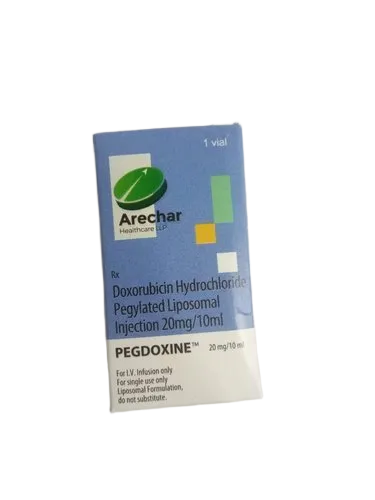
Pegylated liposomal doxorubicin: View uses, side effects, and mechanism

This medication is a specialized chemotherapy drug used in the treatment of ovarian cancer, metastatic breast cancer, and multiple myeloma. The drug doxorubicin is packed inside a tiny fat-like sphere made with a polymer layer called polyethylene glycol (PEG) to help the medication remain in the bloodstream for longer time that kills the cancer cells by halting their growth and division. Pegylated liposomal doxorubicin can cause several side effects such as mouth sores, fatigue, nausea, and loss of appetite which disappear when the body gets adjusted to the drug.
Main uses of the drug
This drug is commonly used to treat:
-
Ovarian cancer
-
Metastatic breast cancer
-
Multiple myeloma
-
AIDS-related kaposi's sarcoma
Clinical benefits of the drug over standard doxorubicin
The primary benefits of the liposomal formulation are as follows:
-
It lowers the risk of heart damage (cardiotoxicity).
-
Chances of hair loss (alopecia) are reduced.
-
Delivery of a more concentrated dose directly to the tumor sites.
-
The coating of PEG allows the drug to remain in the bloodstream for a longer duration.
-
It causes much more milder and manageable side effects as compared to standard doxorubicin which is highly emetogenic.
How does this chemotherapy drug work?
This drug works on the dual mechanism: the liposomal capsule controls where the drug goes in the body, while the chemotherapy drug inside the coating targets and destroy cancer cells.
-
The PEG coating invades the drug from immune system creating a protective layer, so that it remains in the blood for days.
-
Blood vessels feeding tumors broke overtime through which these tiny liposome enter the bloodstream and accumulate inside.
-
Once they are trapped inside, the coating breaks circulating free doxorubicin all over to target and kill cancer cells.
Possible side effects caused due to drug interaction
Like any other medication, doxorubicin can cause some common side effects which include:
-
Hand-foot syndrome
-
Mouth sores
-
Headache
-
Fatigue
-
Mild nausea and loss of appetite
-
Skin and nail changes
-
Low WBCs, RBCs, and platelets
Conclusion
This drug is a chemotherapy drug containing powerful active ingredient called doxorubicin designed to kill cancer cells protecting healthy organs better than traditional drugs. Pegylated liposomal doxorubicin hydrochloride is a chemically stable standard drug which destroys rapidly dividing cells, helping patients increase survival rates and improve quality of life.
FAQs
How is this medication given?
It is given as an intravenous infusion under a guidance of a doctor, administered once every 3 to 4 weeks.
How do I prevent Hand-Foot Syndrome?
It is advised to take preventive measures for 4-5 days after infusion to reduce friction and heat on the skin. Avoid wearing tight clothes, taking hot baths, and strenuous exercises.